

Valoración del libro
Más información sobre el libro
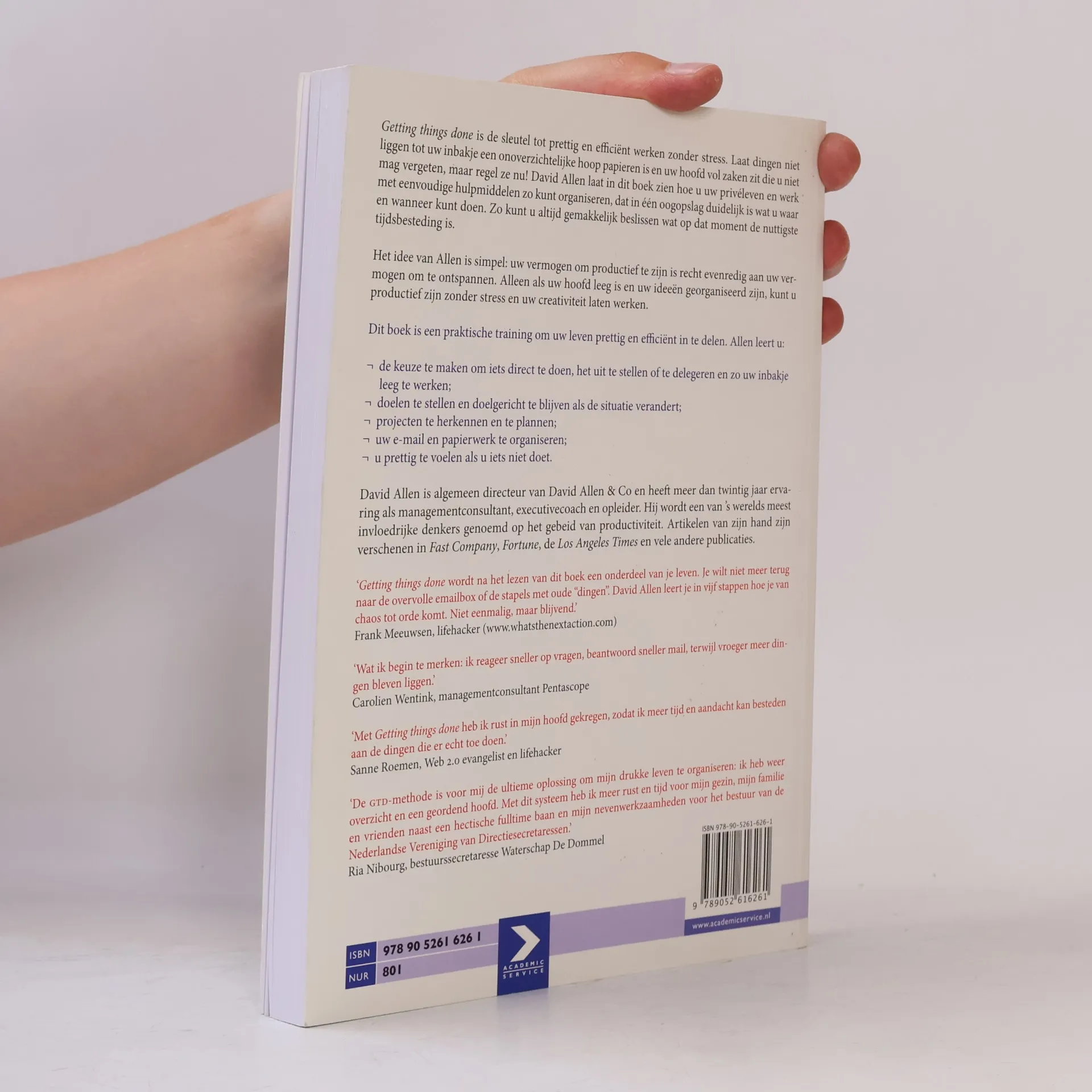
With references to martial arts and Eastern concepts, this self-help guide by David Allen presents a system for managing tasks and freeing your mind to focus. It emphasizes the Western belief that heightened organization can transform us into productivity machines. Instead of meditating while waiting for a flight, Allen suggests using that time to tackle phone calls. His approach to whole-life organization is engaging and therapeutic, beginning with the collection of every piece of paper and task cluttering your mind. You write down each task on a separate scrap of paper and place them in an "in-basket" for processing and prioritization. While the system can become convoluted with its terminology, a straightforward one-page flowchart simplifies the process, making it easy to reference. Another valuable aspect is Allen's Two-Minute Rule: if a task can be completed in two minutes or less, do it immediately to free up time and mental space. This commonsense advice is often overlooked, and Allen effectively shares such insights in this practical self-improvement guide, appealing to a wide audience from CEOs to busy parents.



Compra de libros
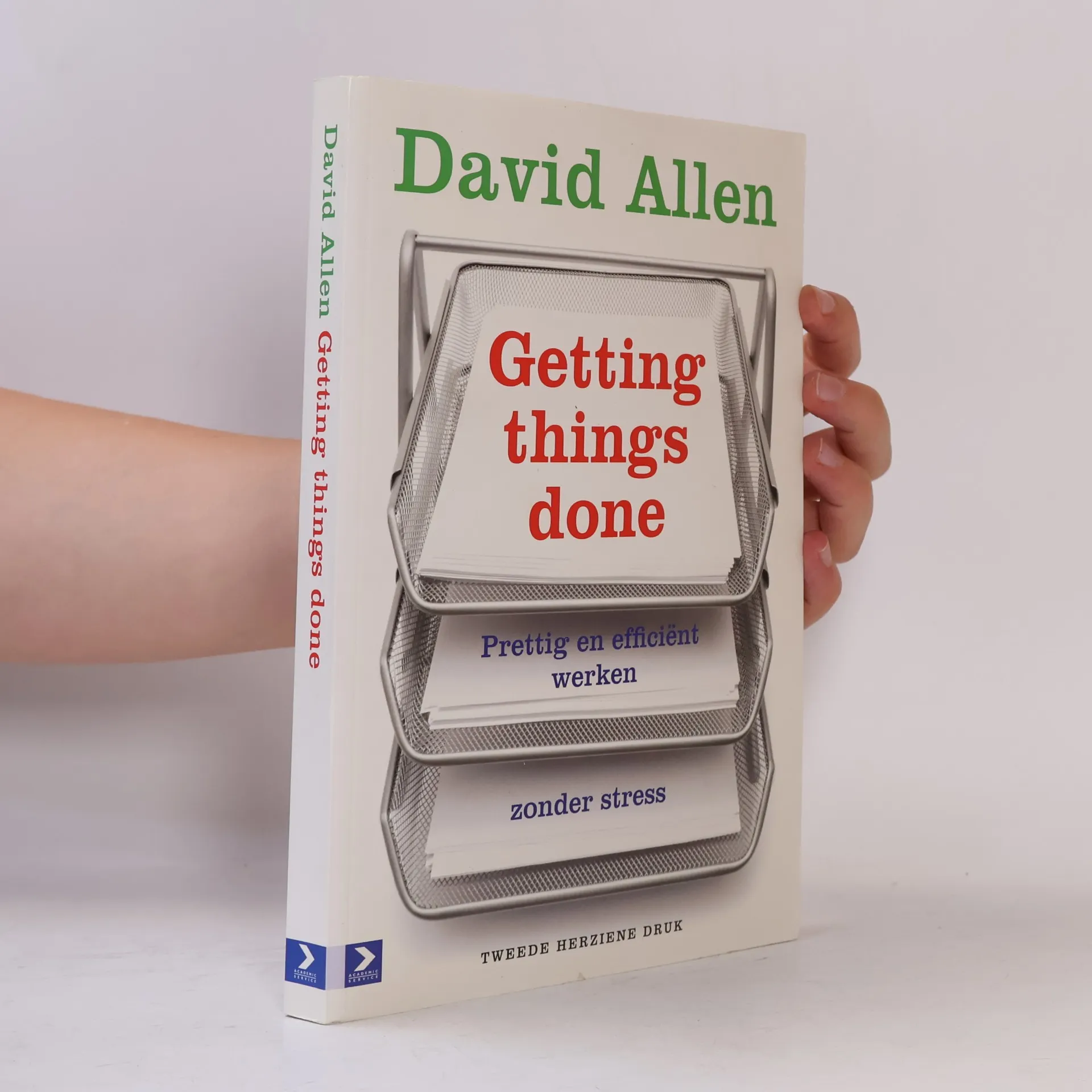
Getting Things Done, David Allen
- Idioma

- Publicado en
- 2009
- Encuadernación
- (Tapa blanda),
- Estado del libro
- Bueno
- Precio
- 4,89 €
Métodos de pago
Nos falta tu reseña aquí
- Título
- Getting Things Done
- Subtítulo
- Prettig en efficiënt werken zonder stress - tweede herziene druk
- Idioma
- Holandés
- Autores
- David Allen
- Editorial
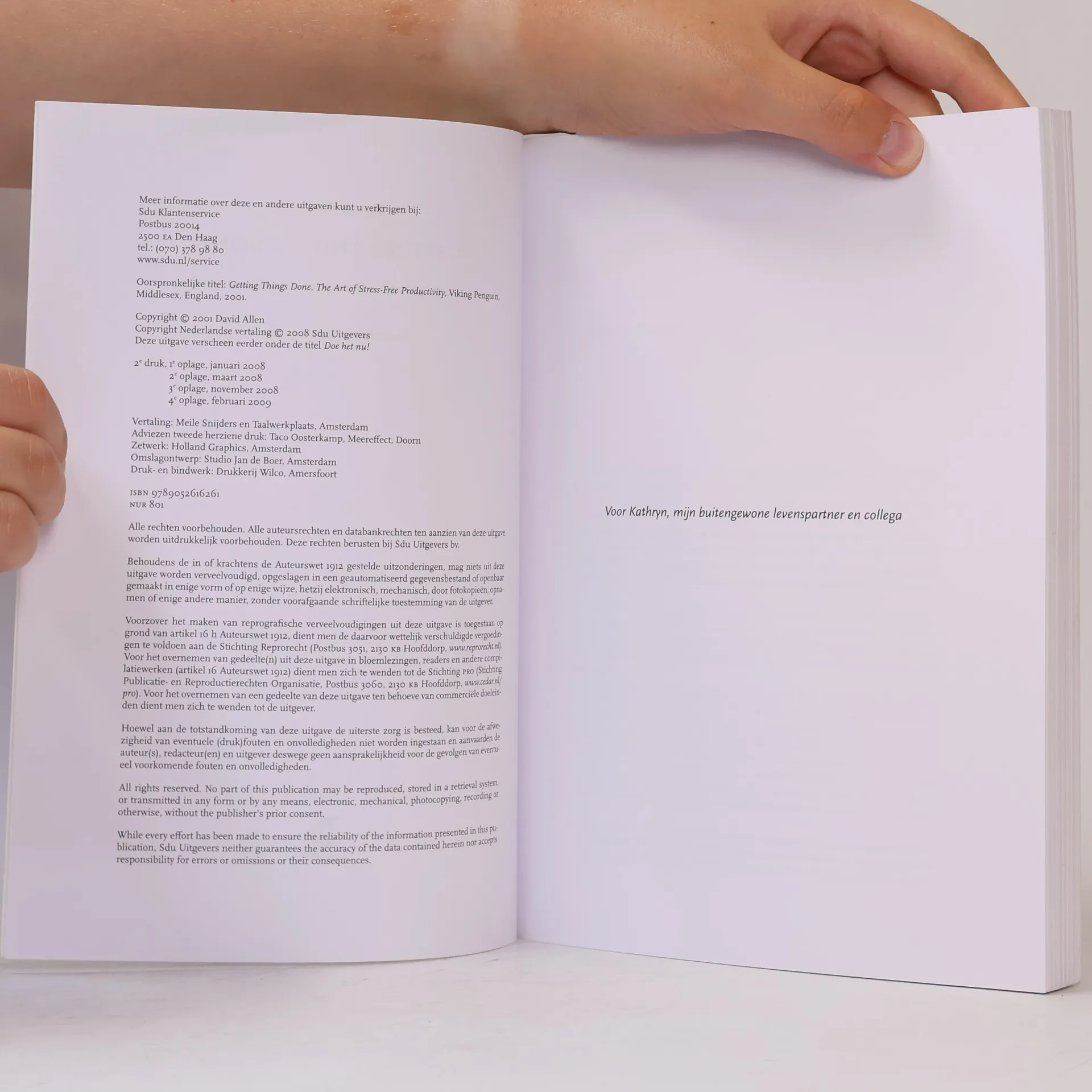
- SDU
- Publicado en
- 2009
- Formato
- Tapa blanda
- Páginas
- 220
- ISBN10
- 9052616264
- ISBN13
- 9789052616261
- Serie
- Categorías
- Etiquetas
- Comercio, Temas psicológicos, Guías y Manuales, Productividad, Estrés, Tiempo, Planificación, Organización del tiempo, Autorrealización, Americanos, Organización del trabajo, Autocontrol
- Primera publicación
- 2001
- Título original
- Getting Things Done: The Art of Stress-Free Productivity
- Calificación
- 4 de 5
- Descripción
- With references to martial arts and Eastern concepts, this self-help guide by David Allen presents a system for managing tasks and freeing your mind to focus. It emphasizes the Western belief that heightened organization can transform us into productivity machines. Instead of meditating while waiting for a flight, Allen suggests using that time to tackle phone calls. His approach to whole-life organization is engaging and therapeutic, beginning with the collection of every piece of paper and task cluttering your mind. You write down each task on a separate scrap of paper and place them in an "in-basket" for processing and prioritization. While the system can become convoluted with its terminology, a straightforward one-page flowchart simplifies the process, making it easy to reference. Another valuable aspect is Allen's Two-Minute Rule: if a task can be completed in two minutes or less, do it immediately to free up time and mental space. This commonsense advice is often overlooked, and Allen effectively shares such insights in this practical self-improvement guide, appealing to a wide audience from CEOs to busy parents.