

¡Agotado, pero muy deseado!
Parámetros
- 168 páginas
- 6 horas de lectura
Más información sobre el libro
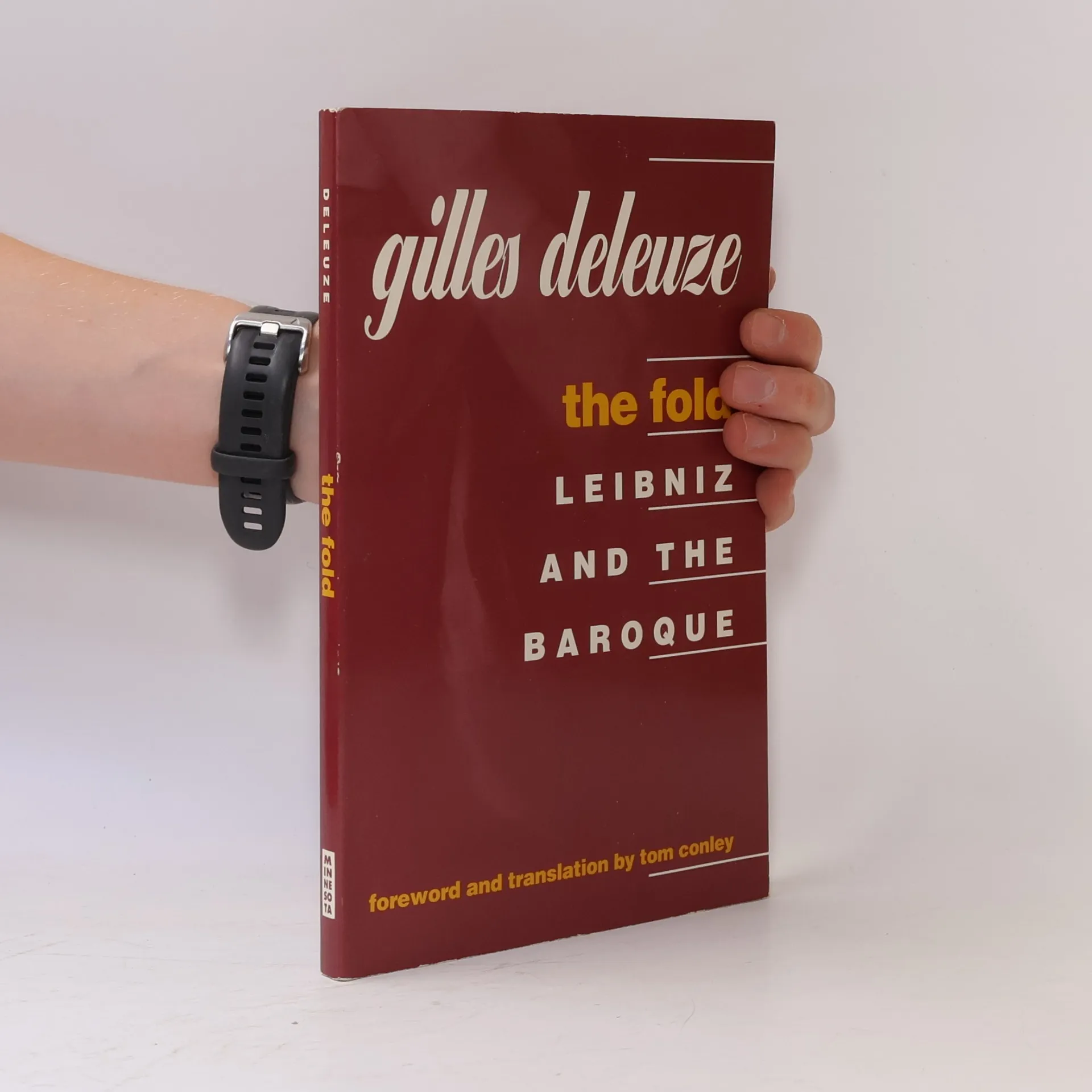
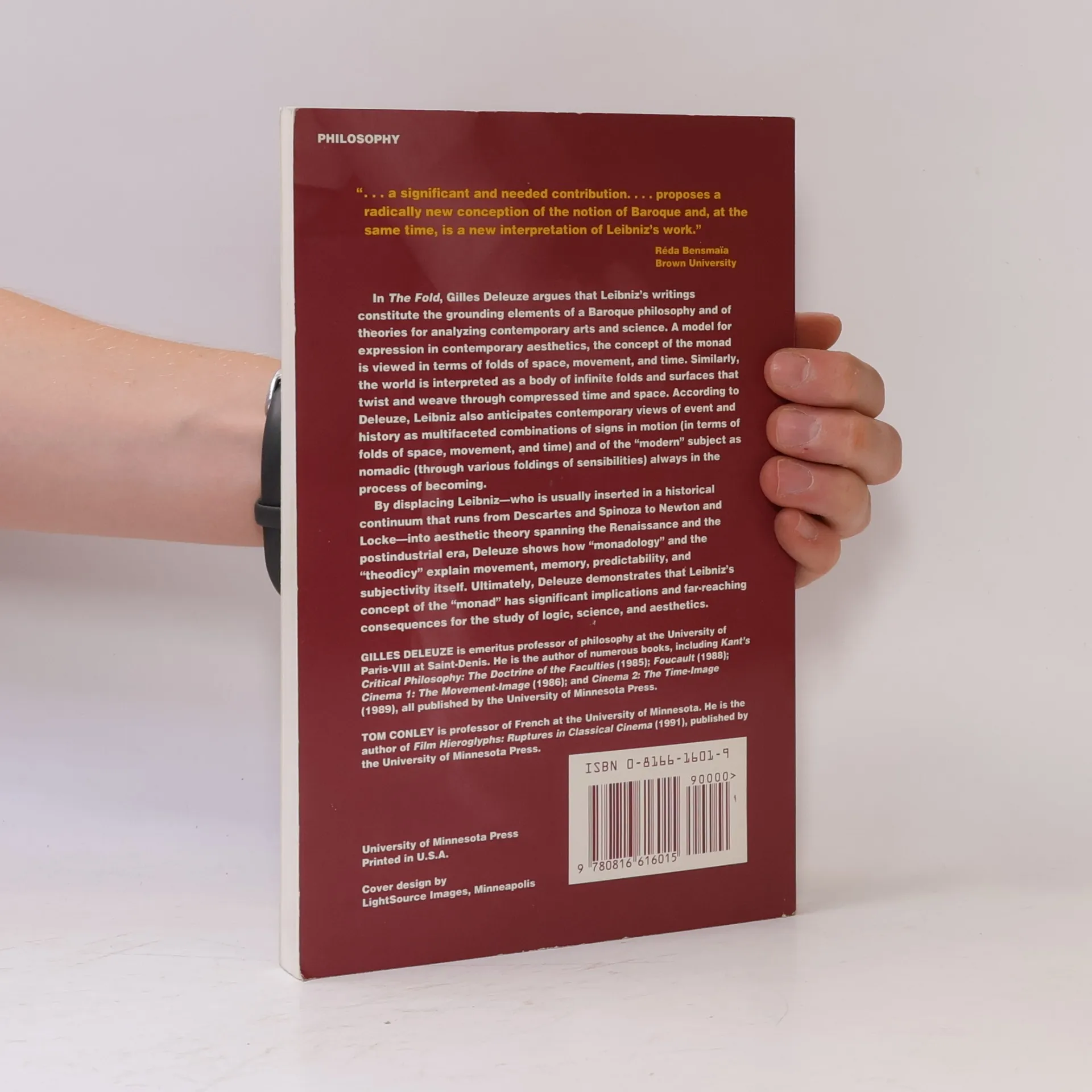
In The Fold, Gilles Deleuze argues that Leibniz’s writings constitute the grounding elements of a Baroque philosophy and of theories for analyzing contemporary arts and science. A model for expression in contemporary aesthetics, the concept of the monad is viewed in terms of folds of space, movement, and time. Similarly, the world is interpreted as a body of infinite folds and surfaces that twist and weave through compressed time and space. According to Deleuze, Leibniz also anticipates contemporary views of event and history as multifaceted combinations of signs in motion and of the “modern” subject as nomadic, always in the process of becoming.


Compra de libros
The Fold, Gilles Deleuze, Tom Conley
- Idioma

- Publicado en
- 1994
- Encuadernación
- (Tapa blanda)
Te avisaremos por correo electrónico en cuanto lo localicemos.
Métodos de pago
Nos falta tu reseña aquí
- Título
- The Fold
- Subtítulo
- Leibniz and the Baroque
- Idioma
- Inglés
- Autores
- Gilles Deleuze, Tom Conley
- Editorial
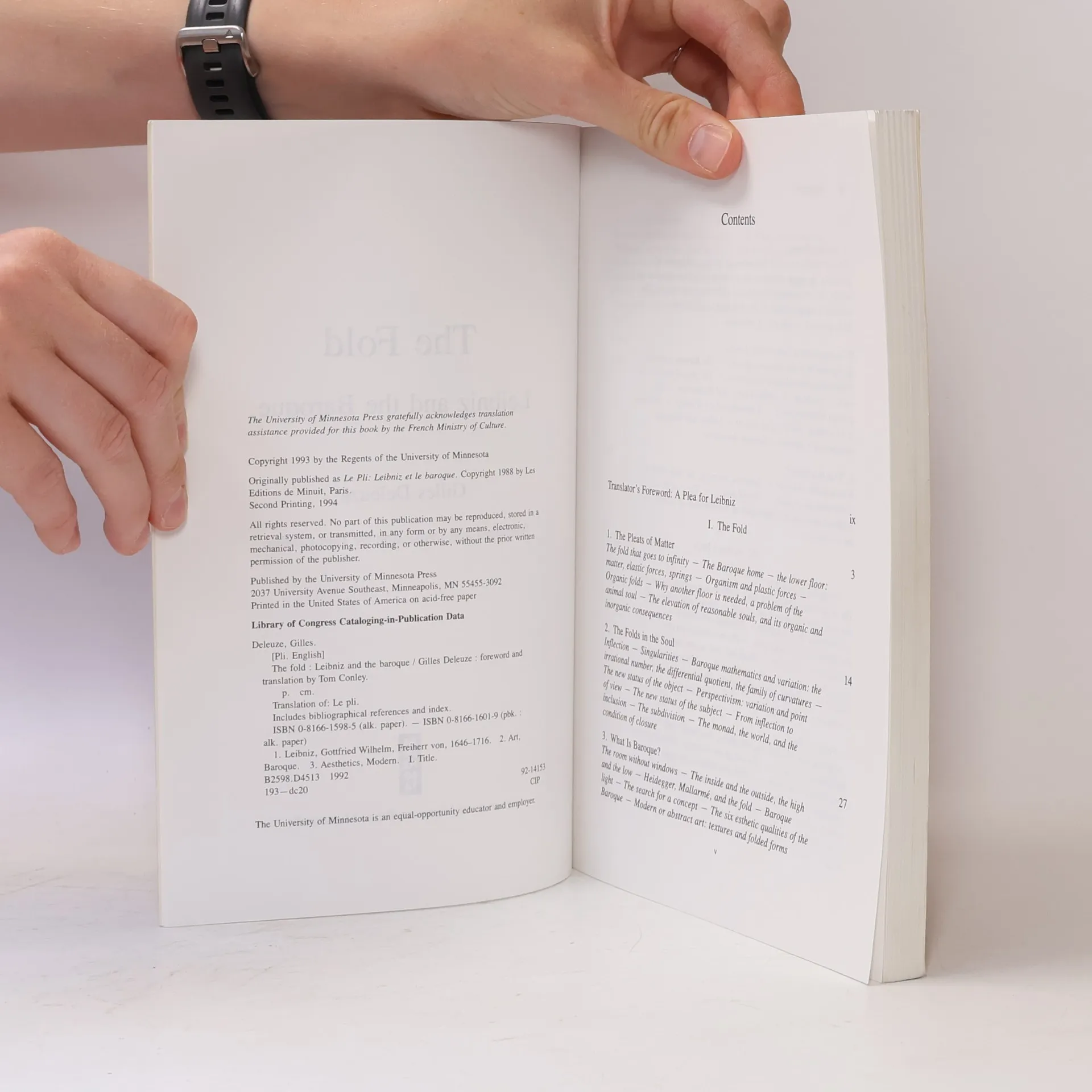
- University of Minnesota Press
- Publicado en
- 1994
- Formato
- Tapa blanda
- Páginas
- 168
- ISBN10
- 0816616019
- ISBN13
- 9780816616015
- Serie
- Etiquetas
- Temática filosófica, Arte, Arquitectura, Francia, Teorías científicas, Dios, Metafísica, Almas, Barroco
- Primera publicación
- 1988
- Título original
- Le Pli: Leibniz et le baroque
- Calificación
- 4,35 de 5
- Descripción
- In The Fold, Gilles Deleuze argues that Leibniz’s writings constitute the grounding elements of a Baroque philosophy and of theories for analyzing contemporary arts and science. A model for expression in contemporary aesthetics, the concept of the monad is viewed in terms of folds of space, movement, and time. Similarly, the world is interpreted as a body of infinite folds and surfaces that twist and weave through compressed time and space. According to Deleuze, Leibniz also anticipates contemporary views of event and history as multifaceted combinations of signs in motion and of the “modern” subject as nomadic, always in the process of becoming.