

Parámetros
- 286 páginas
- 11 horas de lectura
Más información sobre el libro
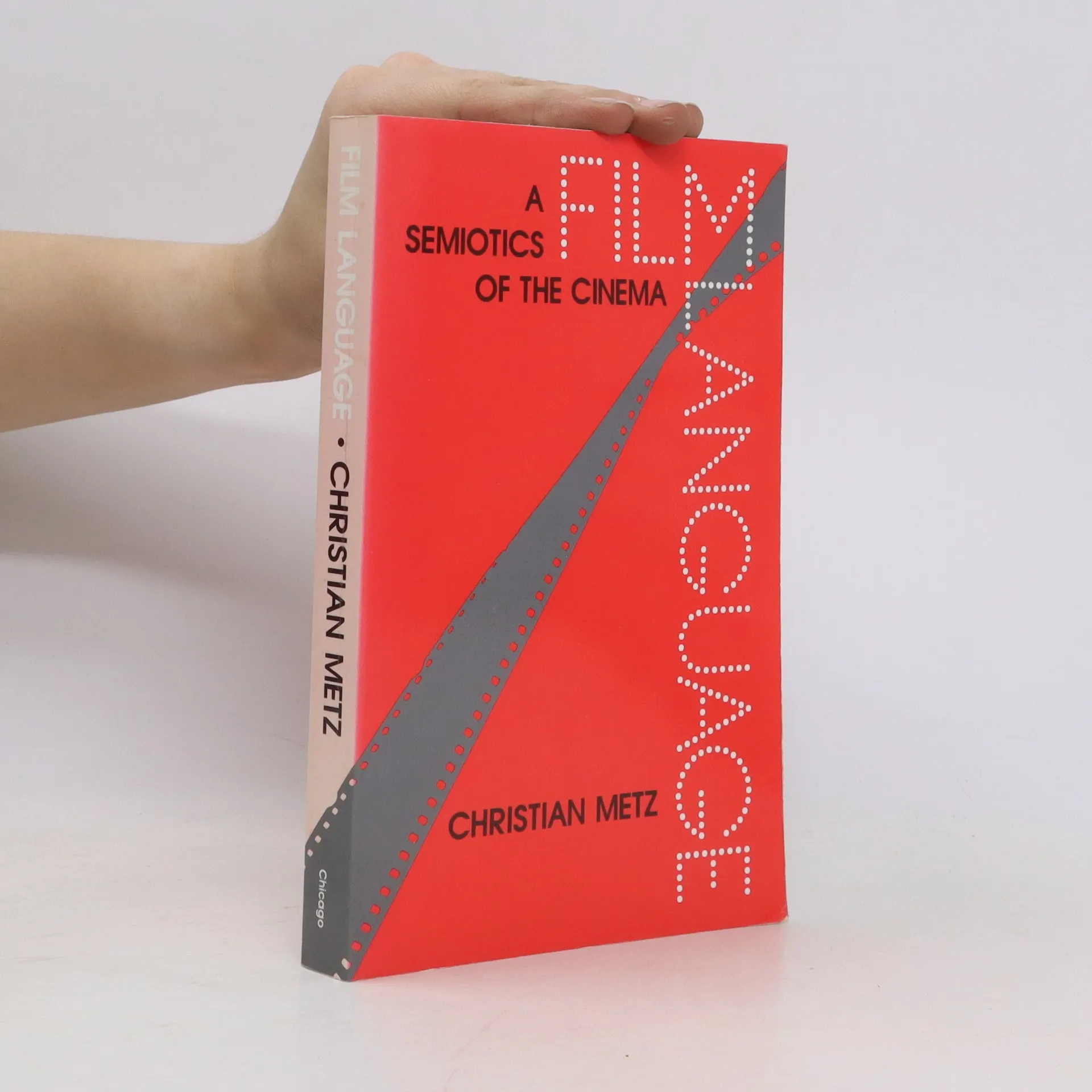
A pioneer in the field, Christian Metz applies insights of structural linguistics to the language of film."The semiology of film . . . can be held to date from the publication in 1964 of the famous essay by Christian Metz, 'Le cinéma: langue ou langage?'"—Geoffrey Nowell-Smith, Times Literary Supplement"Modern film theory begins with Metz."—Constance Penley, coeditor of Camera Obscura"Any consideration of semiology in relation to the particular field signifying practice of film passes inevitably through a reference to the work of Christian Metz. . . . The first book to be written in this field, [Film Language] is important not merely because of this primacy but also because of the issues it raises . . . issues that have become crucial to the contemporary argument."—Stephen Heath, Screen
Compra de libros
Film Language, Christian Metz
- Idioma

- Publicado en
- 1991
- Encuadernación
- (Tapa blanda)
Métodos de pago
Nos falta tu reseña aquí
- Título
- Film Language
- Idioma
- Inglés
- Autores
- Christian Metz
- Editorial
- The University of Chicago Press
- Publicado en
- 1991
- Formato
- Tapa blanda
- Páginas
- 286
- ISBN10
- 0226521303
- ISBN13
- 9780226521305
- Serie
- Calificación
- 3,85 de 5
- Descripción
- A pioneer in the field, Christian Metz applies insights of structural linguistics to the language of film."The semiology of film . . . can be held to date from the publication in 1964 of the famous essay by Christian Metz, 'Le cinéma: langue ou langage?'"—Geoffrey Nowell-Smith, Times Literary Supplement"Modern film theory begins with Metz."—Constance Penley, coeditor of Camera Obscura"Any consideration of semiology in relation to the particular field signifying practice of film passes inevitably through a reference to the work of Christian Metz. . . . The first book to be written in this field, [Film Language] is important not merely because of this primacy but also because of the issues it raises . . . issues that have become crucial to the contemporary argument."—Stephen Heath, Screen