

Más información sobre el libro
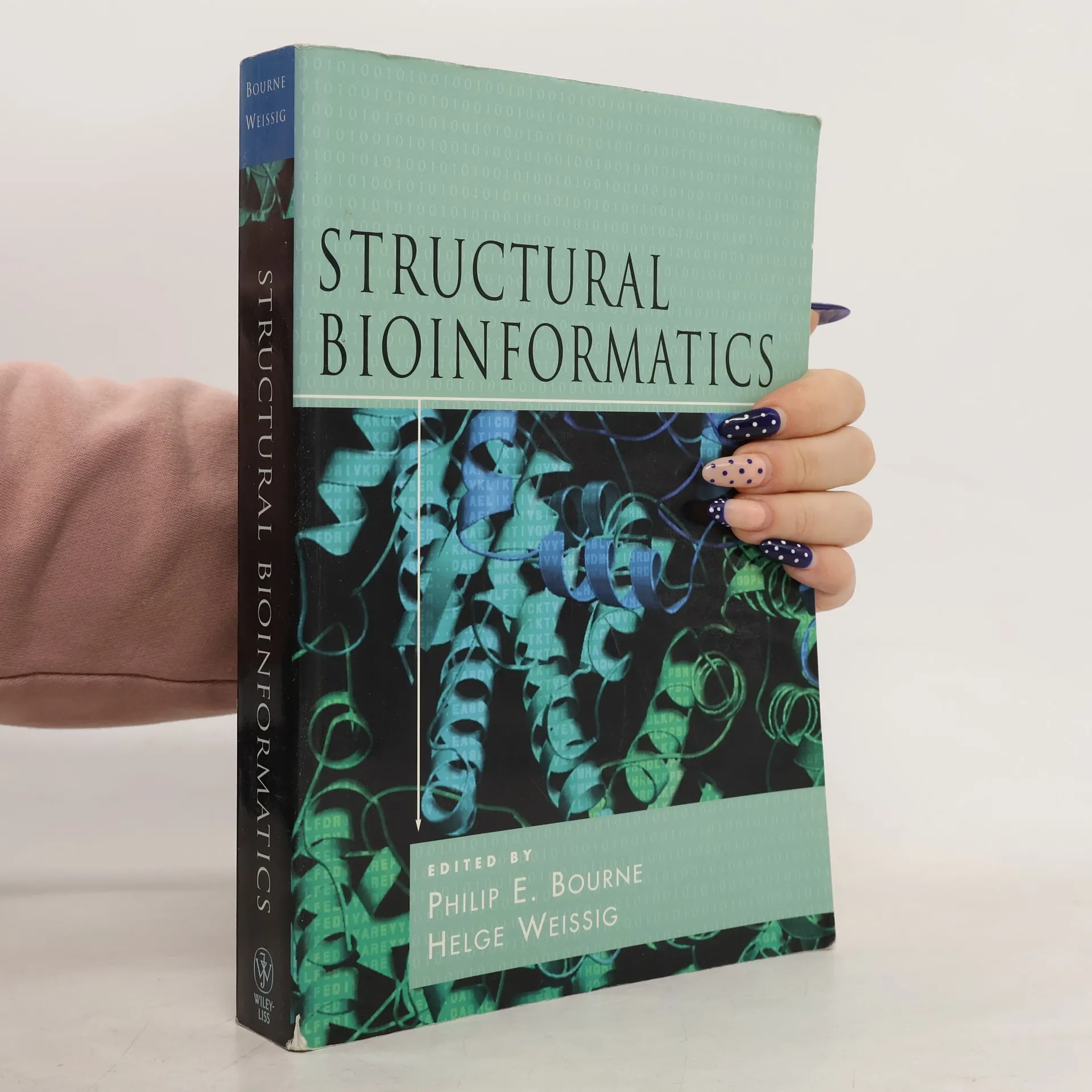
From the Foreword? "[A] must read for all of us committed to understanding the interplay of structure and function...[T]he individual chapters outline the suite of major basic life science questions such as the status of efforts to predict protein structure and how proteins carry out cellular functions, and also the applied life science questions such as how structural bioinformatics can improve health care through accelerating drug discovery." This book provides a basic understanding of the theories, associated algorithms, resources, and tools used in structural bioinformatics. The reader emerges with the ability to make effective use of protein, DNA, RNA, carbohydrate, and complex structures to better understand biological function. Moreover, it draws a clear connection between structural studies and the rational design of new therapies.
Compra de libros
Structural Bioinformatics, Helge Weissig
- Idioma

- Publicado en
- 2003
- Encuadernación
- (Tapa blanda)
Métodos de pago
Nos falta tu reseña aquí
- Título
- Structural Bioinformatics
- Idioma
- Inglés
- Autores
- Helge Weissig
- Editorial
- Wiley-Liss
- Publicado en
- 2003
- Formato
- Tapa blanda
- ISBN10
- 0471201995
- ISBN13
- 9780471201991
- Serie
- Etiquetas
- Salud & Medicina, Ciencias naturales, Libros de texto universitarios, Ciencia, Libros de texto de biología
- Calificación
- 3 de 5
- Descripción
- From the Foreword? "[A] must read for all of us committed to understanding the interplay of structure and function...[T]he individual chapters outline the suite of major basic life science questions such as the status of efforts to predict protein structure and how proteins carry out cellular functions, and also the applied life science questions such as how structural bioinformatics can improve health care through accelerating drug discovery." This book provides a basic understanding of the theories, associated algorithms, resources, and tools used in structural bioinformatics. The reader emerges with the ability to make effective use of protein, DNA, RNA, carbohydrate, and complex structures to better understand biological function. Moreover, it draws a clear connection between structural studies and the rational design of new therapies.