



Parámetros
- 471 páginas
- 17 horas de lectura
Más información sobre el libro
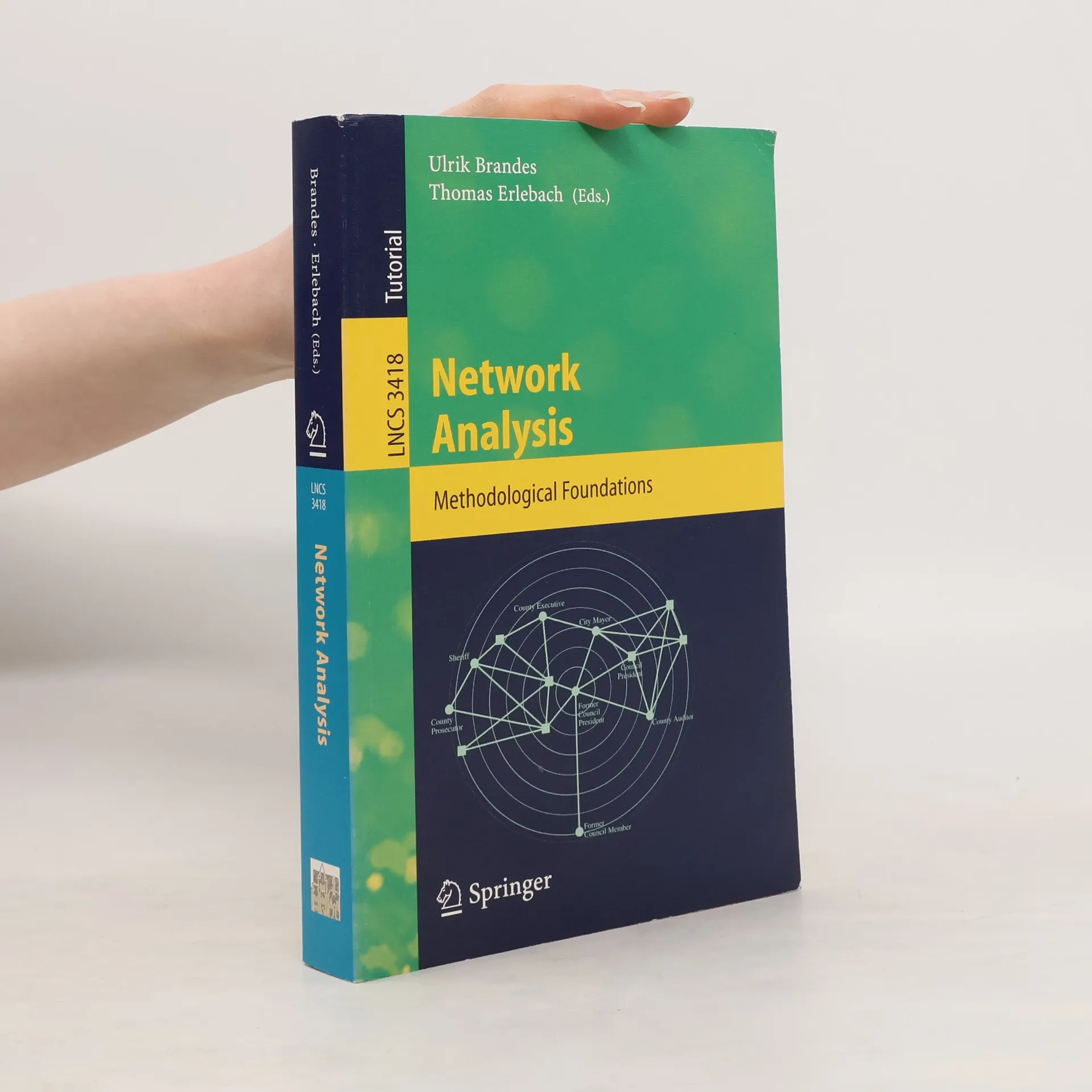
‘Network’ is a heavily overloaded term, so that ‘network analysis’ means different things to different people. Specific forms of network analysis are used in the study of diverse structures such as the Internet, interlocking directorates, transportation systems, epidemic spreading, metabolic pathways, the Web graph, electrical circuits, project plans, and so on. There is, however, a broad methodological foundation which is quickly becoming a prerequisite for researchers and practitioners working with network models. From a computer science perspective, network analysis is applied graph theory. Unlike standard graph theory books, the content of this book is organized according to methods for specific levels of analysis (element, group, network) rather than abstract concepts like paths, matchings, or spanning subgraphs. Its topics therefore range from vertex centrality to graph clustering and the evolution of scale-free networks. In 15 coherent chapters, this monograph-like tutorial book introduces and surveys the concepts and methods that drive network analysis, and is thus the first book to do so from a methodological perspective independent of specific application areas.
Compra de libros
Network Analysis, Ulrik Brandes, Thomas Erlebach
- Idioma

- Publicado en
- 2005
- Encuadernación
- (Tapa blanda)
Métodos de pago
Nos falta tu reseña aquí
- Título
- Network Analysis
- Subtítulo
- Methodological Foundations
- Idioma
- Inglés
- Autores
- Ulrik Brandes, Thomas Erlebach
- Editorial
- Springer
- Publicado en
- 2005
- Formato
- Tapa blanda
- Páginas
- 471
- ISBN10
- 3540249796
- ISBN13
- 9783540249795
- Serie
- Categorías
- Etiquetas
- Ciencia, Tecnología, Obras completas, Internet, Inteligencia Artificial, Estadística, Base de Datos, Algoritmos, Combinatoria
- Calificación
- 4,1 de 5
- Descripción
- ‘Network’ is a heavily overloaded term, so that ‘network analysis’ means different things to different people. Specific forms of network analysis are used in the study of diverse structures such as the Internet, interlocking directorates, transportation systems, epidemic spreading, metabolic pathways, the Web graph, electrical circuits, project plans, and so on. There is, however, a broad methodological foundation which is quickly becoming a prerequisite for researchers and practitioners working with network models. From a computer science perspective, network analysis is applied graph theory. Unlike standard graph theory books, the content of this book is organized according to methods for specific levels of analysis (element, group, network) rather than abstract concepts like paths, matchings, or spanning subgraphs. Its topics therefore range from vertex centrality to graph clustering and the evolution of scale-free networks. In 15 coherent chapters, this monograph-like tutorial book introduces and surveys the concepts and methods that drive network analysis, and is thus the first book to do so from a methodological perspective independent of specific application areas.