


Más información sobre el libro
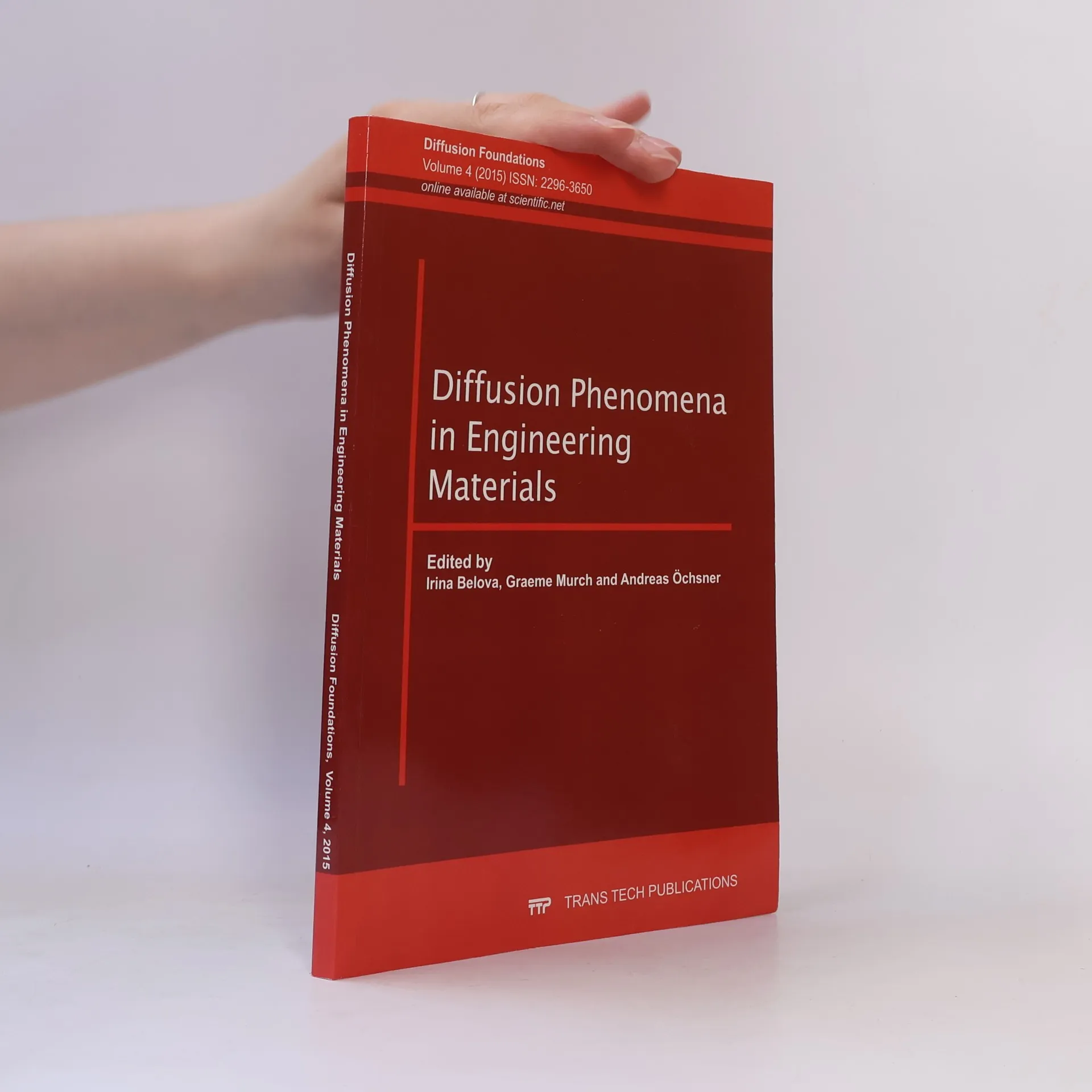
This volume of Diffusion Foundations focuses on diffusion phenomena in engineering materials, highlighting contemporary diffusion in solids, from fundamental science to technological applications. Written by recognized experts, the first chapter by Professor Dayananda reviews significant findings on multicomponent diffusion in alloys. Chapter 2 features Professors Belova and Murch, who present a novel solution for estimating tracer diffusivity in binary alloys based on other diffusivity parameters. In Chapter 3, Professor Lidiard offers insights into the Soret effect and thermodiffusion in solids. Chapter 4, by Professor Kozlowski and colleagues, discusses critical dimensions of ferromagnetic iron nanoparticles. Chapter 5, led by Professor çimenoglu, explores surface hardening in titanium alloys through the diffusion of interstitial atoms like oxygen, nitrogen, and boron. In Chapter 6, Professor Morton-Blake presents intriguing molecular dynamics simulations of sodium and chloride ions in a synthetic ion channel within a membrane. Finally, Chapter 7, by Professor Seetharaman and team, examines the significance of diffusion phenomena in process metallurgy. We extend our gratitude to the authors for their contributions and to the reviewers for their valuable feedback.
Compra de libros
Diffusion Foundations - 4: Diffusion Phenomena in Engineering Materials, Irina Borisovna Belova, Graeme E. Murch, Andreas Ochsner
- Idioma

- Publicado en
- 2015
- Encuadernación
- (Tapa blanda)
Métodos de pago
Nadie lo ha calificado todavía.
- Título
- Diffusion Foundations - 4: Diffusion Phenomena in Engineering Materials
- Idioma
- Inglés
- Editorial
- Trans Tech Publications
- Publicado en
- 2015
- Formato
- Tapa blanda
- Páginas
- 157
- ISBN10
- 3038354961
- ISBN13
- 9783038354963
- Serie
- Categorías
- Etiquetas
- Ciencias naturales, Ciencia, Tecnología, Literatura especializada, Ingeniería, Europa Occidental
- Descripción
- This volume of Diffusion Foundations focuses on diffusion phenomena in engineering materials, highlighting contemporary diffusion in solids, from fundamental science to technological applications. Written by recognized experts, the first chapter by Professor Dayananda reviews significant findings on multicomponent diffusion in alloys. Chapter 2 features Professors Belova and Murch, who present a novel solution for estimating tracer diffusivity in binary alloys based on other diffusivity parameters. In Chapter 3, Professor Lidiard offers insights into the Soret effect and thermodiffusion in solids. Chapter 4, by Professor Kozlowski and colleagues, discusses critical dimensions of ferromagnetic iron nanoparticles. Chapter 5, led by Professor çimenoglu, explores surface hardening in titanium alloys through the diffusion of interstitial atoms like oxygen, nitrogen, and boron. In Chapter 6, Professor Morton-Blake presents intriguing molecular dynamics simulations of sodium and chloride ions in a synthetic ion channel within a membrane. Finally, Chapter 7, by Professor Seetharaman and team, examines the significance of diffusion phenomena in process metallurgy. We extend our gratitude to the authors for their contributions and to the reviewers for their valuable feedback.