

Más información sobre el libro
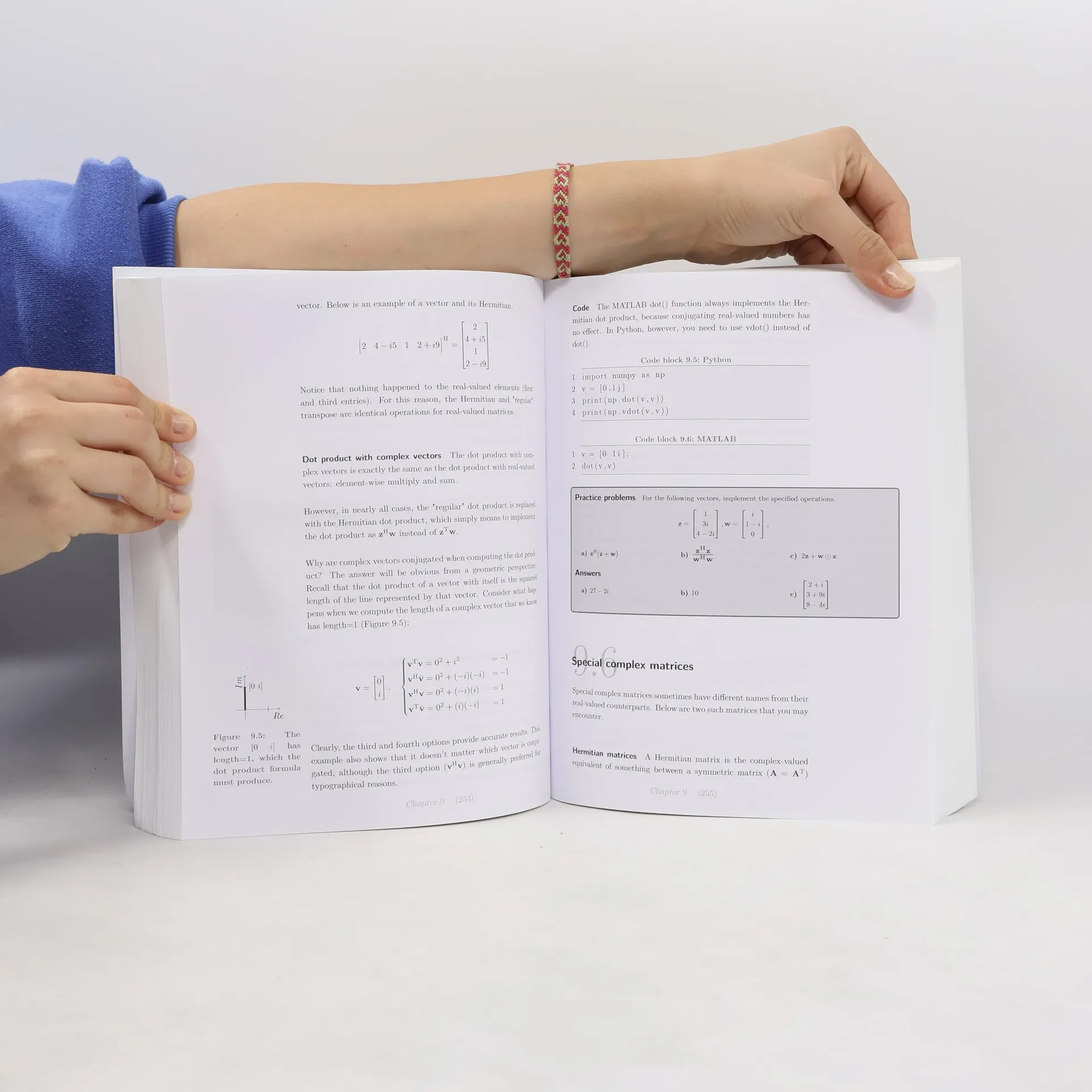
Linear algebra is a crucial branch of mathematics for computational sciences, encompassing machine learning, AI, data science, statistics, simulations, computer graphics, and signal processing. Traditional textbooks often present linear algebra differently from its practical applications in these fields. For instance, while the "determinant" of a matrix is significant in theory, its practical utility may be limited. This book is designed for those eager to grasp mathematical concepts in linear algebra and matrix analysis while applying them to data analyses on computers, such as statistics and signal processing. Key features include clear explanations of concepts and theories, multiple perspectives on the same ideas to enhance learning, and visualizations that bolster geometric intuition. Implementations in MATLAB and Python are emphasized, as real-world applications require software proficiency. The content ranges from beginner to intermediate topics, covering vectors, matrix multiplications, least-squares projections, eigendecomposition, and singular-value decomposition. The focus is on modern, application-oriented aspects of linear algebra, with intuitive visual explanations of diagonalization, eigenvalues, and eigenvectors. The book also includes codes for practical understanding and a mix of hand-solved exercises and advanced coding challenges, reinforcing that math is an active pursuit, not a passive one.
Compra de libros
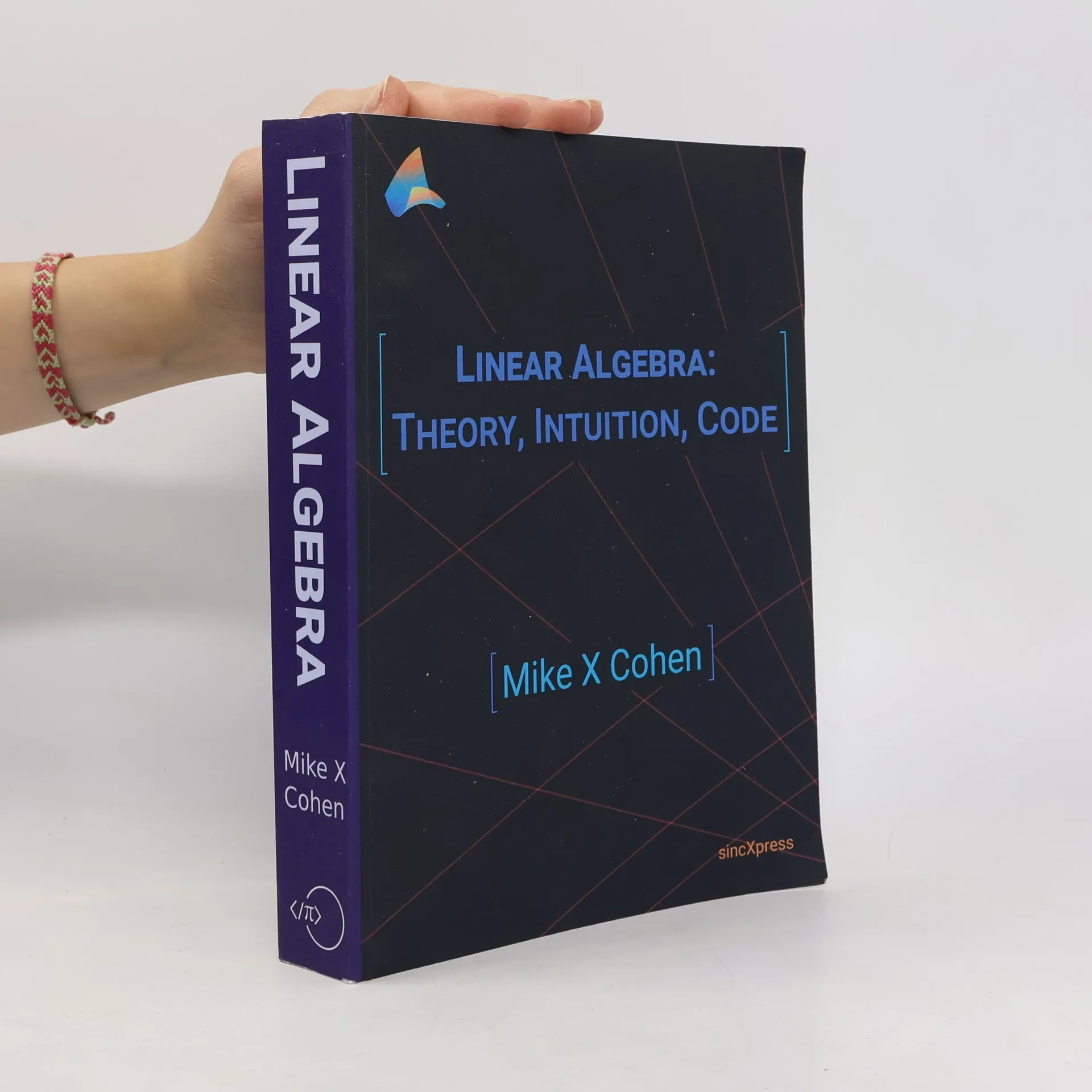
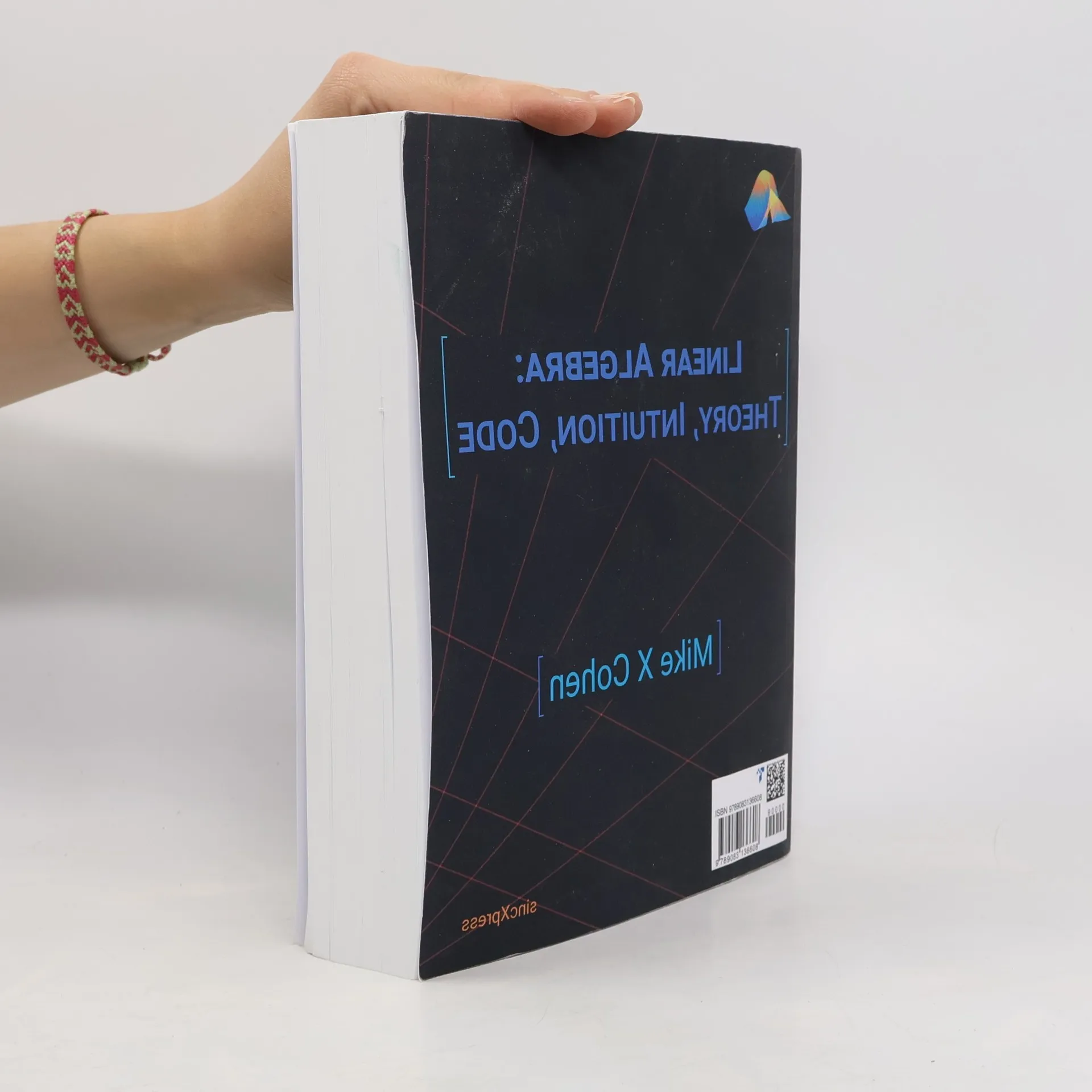
Linear Algebra, Mike X. Cohen
- Idioma

- Publicado en
- 2021
- Encuadernación
- (Tapa blanda)
Métodos de pago
Nadie lo ha calificado todavía.
- Título
- Linear Algebra
- Subtítulo
- Theory, Intuition, Code
- Idioma
- Inglés
- Autores
- Mike X. Cohen
- Editorial
- Sincxpress BV
- Publicado en
- 2021
- Formato
- Tapa blanda
- Páginas
- 589
- ISBN10
- 9083136604
- ISBN13
- 9789083136608
- Serie
- Categorías
- Etiquetas
- Tecnología
- Descripción
- Linear algebra is a crucial branch of mathematics for computational sciences, encompassing machine learning, AI, data science, statistics, simulations, computer graphics, and signal processing. Traditional textbooks often present linear algebra differently from its practical applications in these fields. For instance, while the "determinant" of a matrix is significant in theory, its practical utility may be limited. This book is designed for those eager to grasp mathematical concepts in linear algebra and matrix analysis while applying them to data analyses on computers, such as statistics and signal processing. Key features include clear explanations of concepts and theories, multiple perspectives on the same ideas to enhance learning, and visualizations that bolster geometric intuition. Implementations in MATLAB and Python are emphasized, as real-world applications require software proficiency. The content ranges from beginner to intermediate topics, covering vectors, matrix multiplications, least-squares projections, eigendecomposition, and singular-value decomposition. The focus is on modern, application-oriented aspects of linear algebra, with intuitive visual explanations of diagonalization, eigenvalues, and eigenvectors. The book also includes codes for practical understanding and a mix of hand-solved exercises and advanced coding challenges, reinforcing that math is an active pursuit, not a passive one.