



Más información sobre el libro
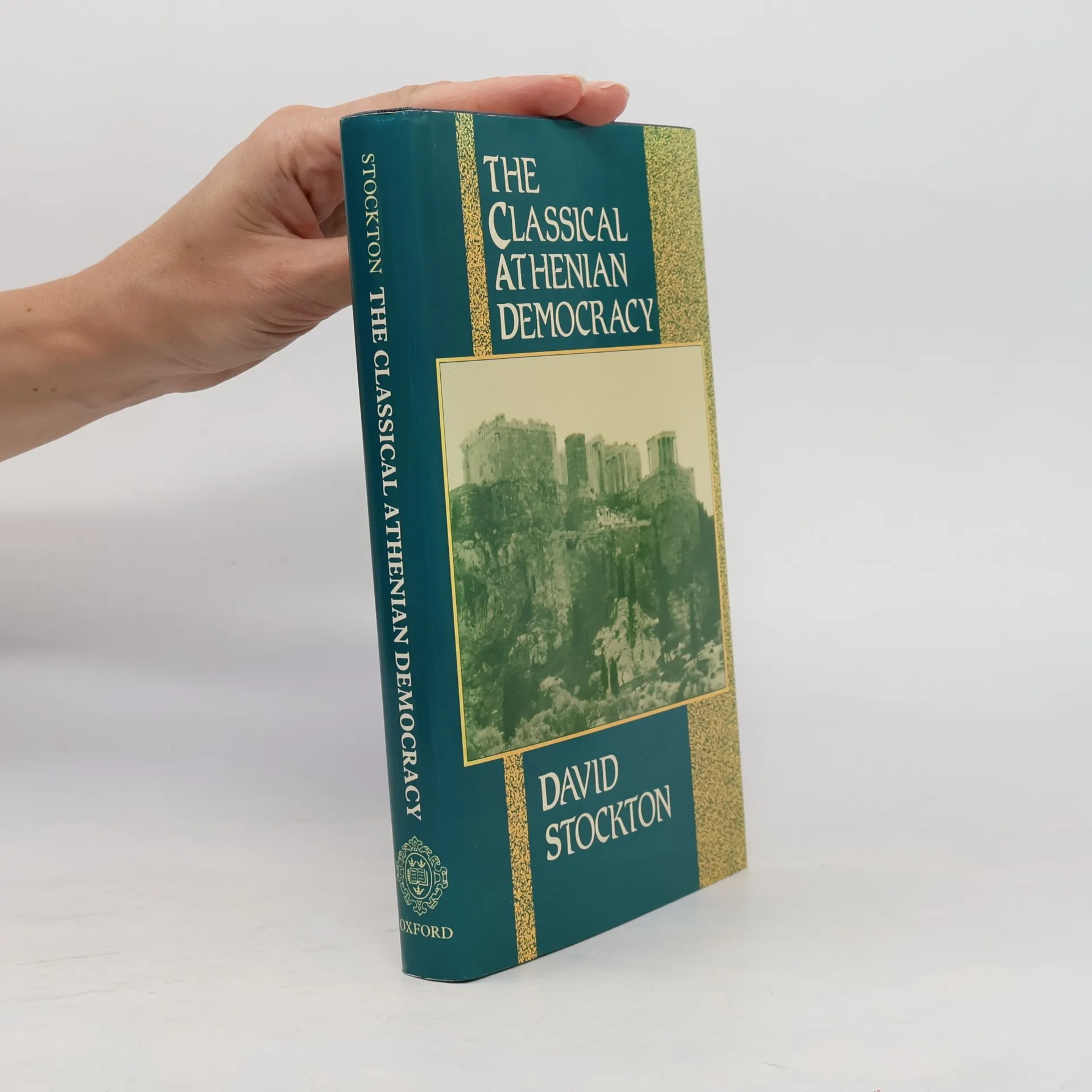
The term demokratia, meaning 'the power of the people,' first appears in Herodotus' History during the fifth century BC, likely coined after Cleisthenes' reforms that established Athenian democracy. By 431 BC, Pericles described Athenian governance as unique, serving the interests of the majority rather than a privileged few. However, Athenian democracy, which thrived for two centuries post-Cleisthenes, differed significantly from modern democracies. This critical study aims to elucidate the institutions and workings of classical Athenian democracy, focusing on the fully developed system of the post-Ephialtic period. It includes a chapter tracing the evolution of the Athenian constitution from Solon's early sixth-century reforms to Ephialtes' changes in the late 460s, providing essential historical context. Stockton's work integrates recent research from historians, epigraphists, and archaeologists, making it accessible to sixth-form and first-year undergraduate students, as well as general readers. All Greek text is translated, complex terminology is clarified, and comprehensive suggestions for further reading are provided in endnotes for each chapter.
Compra de libros
The Classical Athenian Democracy, David L. Stockton
- Idioma

- Publicado en
- 1990
- Encuadernación
- (Tapa dura),
- Estado del libro
- Bueno
- Precio
- 6,49 €
Métodos de pago
Nadie lo ha calificado todavía.
- Título
- The Classical Athenian Democracy
- Idioma
- Inglés
- Autores
- David L. Stockton
- Editorial
- Oxford University Press
- Publicado en
- 1990
- Formato
- Tapa dura
- Páginas
- 214
- ISBN10
- 0198146973
- ISBN13
- 9780198146971
- Serie
- Etiquetas
- Política, Antigüedad, Democracia
- Descripción
- The term demokratia, meaning 'the power of the people,' first appears in Herodotus' History during the fifth century BC, likely coined after Cleisthenes' reforms that established Athenian democracy. By 431 BC, Pericles described Athenian governance as unique, serving the interests of the majority rather than a privileged few. However, Athenian democracy, which thrived for two centuries post-Cleisthenes, differed significantly from modern democracies. This critical study aims to elucidate the institutions and workings of classical Athenian democracy, focusing on the fully developed system of the post-Ephialtic period. It includes a chapter tracing the evolution of the Athenian constitution from Solon's early sixth-century reforms to Ephialtes' changes in the late 460s, providing essential historical context. Stockton's work integrates recent research from historians, epigraphists, and archaeologists, making it accessible to sixth-form and first-year undergraduate students, as well as general readers. All Greek text is translated, complex terminology is clarified, and comprehensive suggestions for further reading are provided in endnotes for each chapter.