

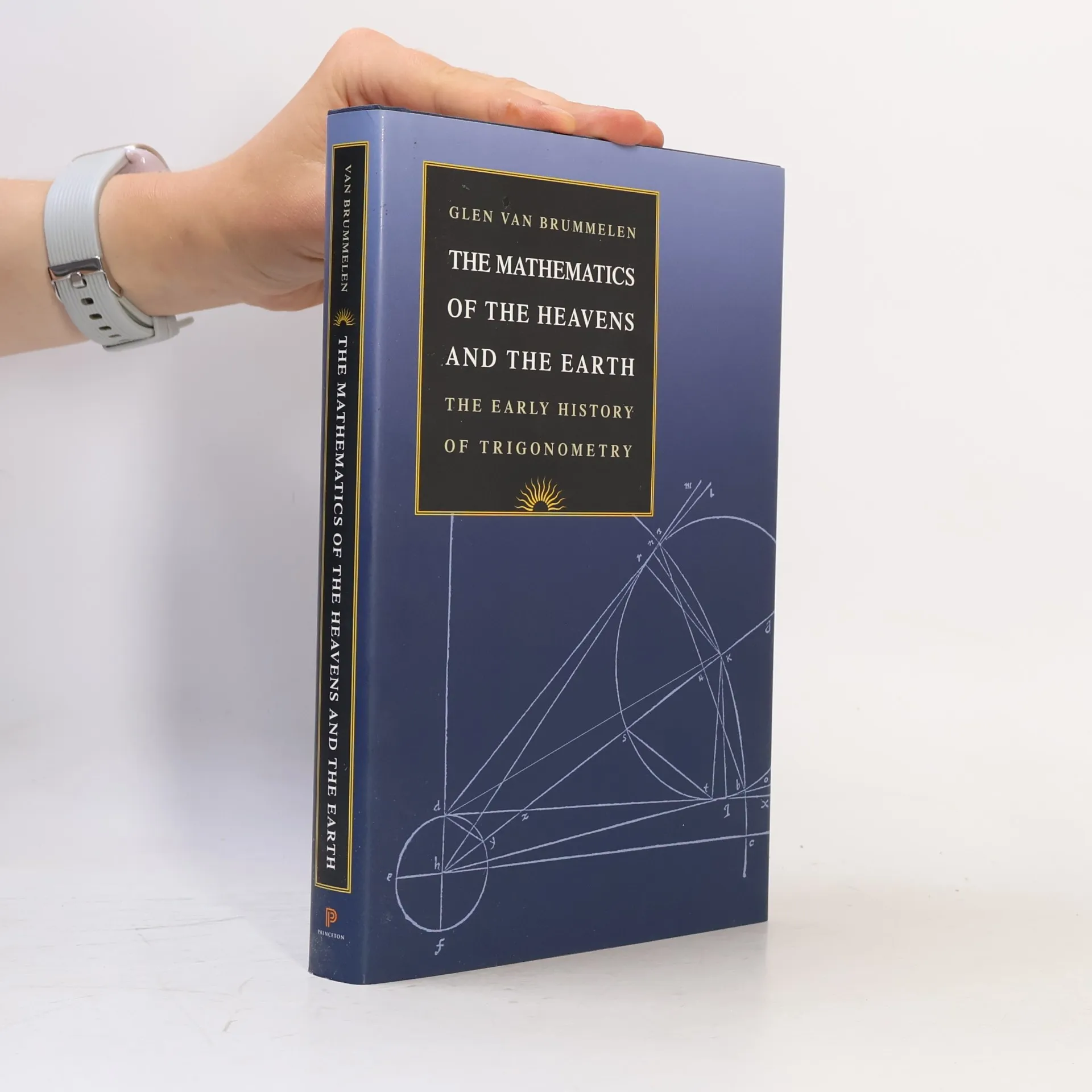
Más información sobre el libro
This book presents the first comprehensive history in English of trigonometry's origins and early development. Glen Van Brummelen identifies the earliest trigonometric precursors in ancient Egypt, Babylon, and Greece, highlighting Hipparchus, the Greek astronomer who systematically utilized trigonometry in the second century BC to study celestial motions. The narrative follows trigonometry's evolution into a robust mathematical discipline in India and the Islamic world, examining its applications in geography and navigation during the European Middle Ages and Renaissance. It illustrates how trigonometry maintained its ancient roots while becoming integral to modern mathematics. The text also addresses controversies surrounding Hipparchus's role as the father of trigonometry, the originality of Indian trigonometry compared to Greek influences, and the debt of Western science to Islamic contributions. Additionally, the book includes extended excerpts of original texts and provides detailed yet accessible explanations of the mathematics involved. No other work on trigonometry offers such historical breadth, analytical depth, and coverage of non-Western mathematics, making this an essential read for those interested in the subject.
Compra de libros
The Mathematics of the Heavens and the Earth, Glen Van Brummelen
- Idioma

- Publicado en
- 2009
- Encuadernación
- (Tapa dura)
Métodos de pago
Nadie lo ha calificado todavía.
- Título
- The Mathematics of the Heavens and the Earth
- Subtítulo
- The Early History of Trigonometry
- Idioma
- Inglés
- Autores
- Glen Van Brummelen
- Editorial
- Princeton University Press
- Publicado en
- 2009
- Formato
- Tapa dura
- Páginas
- 352
- ISBN10
- 0691129738
- ISBN13
- 9780691129730
- Serie
- Etiquetas
- Ciencia, EE.UU., Literatura especializada, Grecia, Geometría, Antiguo Egipto, Historia de las matemáticas, Teoría de números, Babilonia
- Descripción
- This book presents the first comprehensive history in English of trigonometry's origins and early development. Glen Van Brummelen identifies the earliest trigonometric precursors in ancient Egypt, Babylon, and Greece, highlighting Hipparchus, the Greek astronomer who systematically utilized trigonometry in the second century BC to study celestial motions. The narrative follows trigonometry's evolution into a robust mathematical discipline in India and the Islamic world, examining its applications in geography and navigation during the European Middle Ages and Renaissance. It illustrates how trigonometry maintained its ancient roots while becoming integral to modern mathematics. The text also addresses controversies surrounding Hipparchus's role as the father of trigonometry, the originality of Indian trigonometry compared to Greek influences, and the debt of Western science to Islamic contributions. Additionally, the book includes extended excerpts of original texts and provides detailed yet accessible explanations of the mathematics involved. No other work on trigonometry offers such historical breadth, analytical depth, and coverage of non-Western mathematics, making this an essential read for those interested in the subject.