



Parámetros
- 450 páginas
- 16 horas de lectura
Más información sobre el libro
Many results of modern physics, such as those from quantum mechanics, present themselves in a probabilistic manner. This raises questions about the meaning of probabilities in physics: Are they objective facts, as objectivists argue, or merely expressions of ignorance or belief, as suggested by Bayesians? Additionally, how are these probabilistic hypotheses validated by empirical evidence, and what implications do they have for our understanding of the world? This volume offers a philosophical examination of probabilities across various physical theories and models, aiming to clarify probabilistic statements and establish a coherent epistemology and metaphysics of probabilities. The essays delve into statistical physics, probabilistic modeling, and quantum mechanics, evaluating the strengths and weaknesses of objectivist and subjectivist perspectives. Key discussions include Bayesian and Humean interpretations of probabilities and the nuances of Boltzmann's typicality approach. Contributions on quantum mechanics address quantum correlations, the justification of the Born Rule, and the role of probabilities in quantum field theory. The collection also explores foundational issues in physics, including the Reversibility Paradox, entropy, and the ontology of quantum mechanics, as well as Humean supervenience and the determinism of the physical world.
Compra de libros
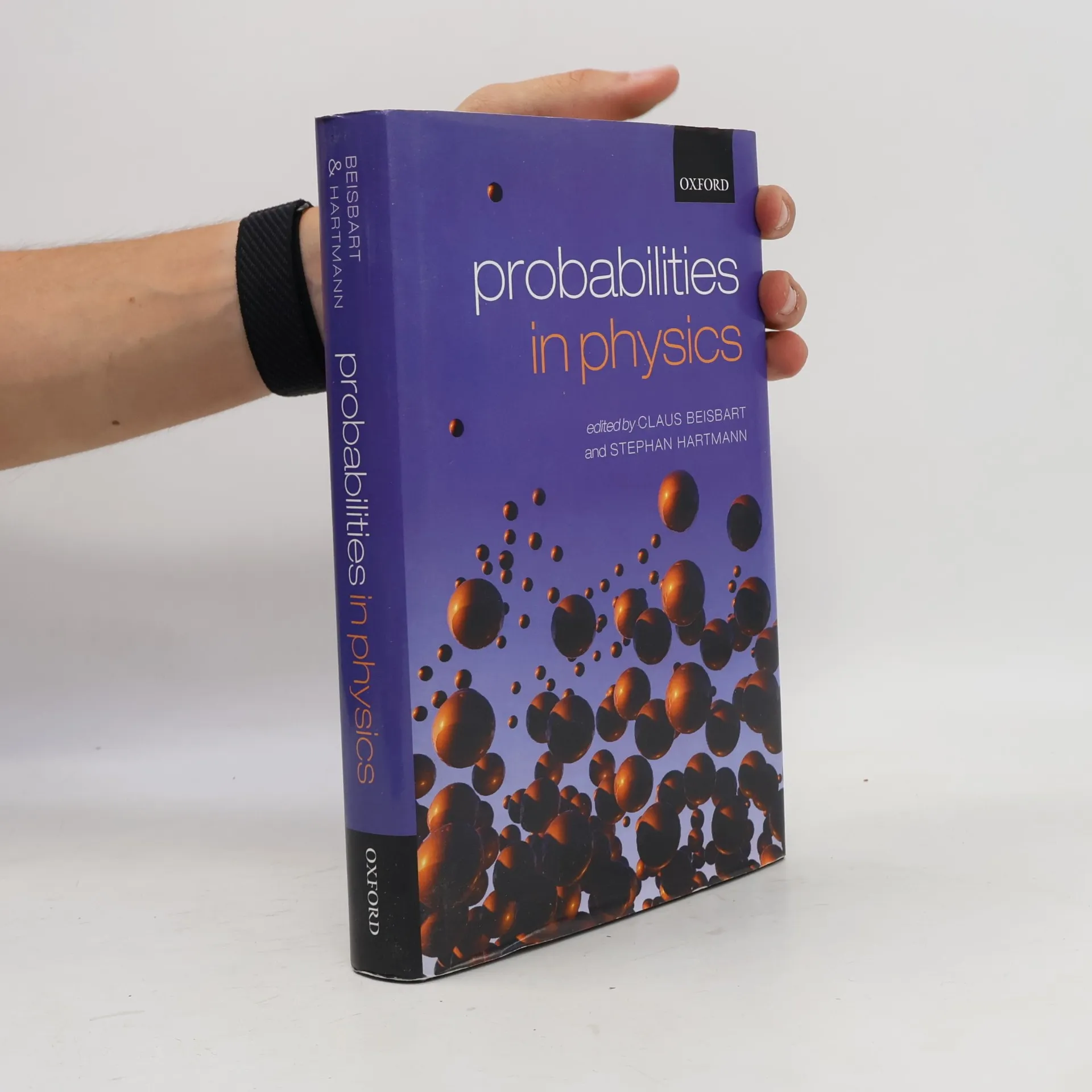
Probabilities in Physics, Claus Beisbart, Stephan Hartmann
- Idioma

- Publicado en
- 2011
- Encuadernación
- (Tapa dura)
Métodos de pago
Nadie lo ha calificado todavía.
- Título
- Probabilities in Physics
- Idioma
- Inglés
- Autores
- Claus Beisbart, Stephan Hartmann
- Editorial
- Oxford University Press
- Publicado en
- 2011
- Formato
- Tapa dura
- Páginas
- 450
- ISBN10
- 0199577439
- ISBN13
- 9780199577439
- Serie
- Etiquetas
- Ciencias naturales, Temática filosófica, Ciencia, Metafísica, Filosofía de la Ciencia, Física Teórica
- Descripción
- Many results of modern physics, such as those from quantum mechanics, present themselves in a probabilistic manner. This raises questions about the meaning of probabilities in physics: Are they objective facts, as objectivists argue, or merely expressions of ignorance or belief, as suggested by Bayesians? Additionally, how are these probabilistic hypotheses validated by empirical evidence, and what implications do they have for our understanding of the world? This volume offers a philosophical examination of probabilities across various physical theories and models, aiming to clarify probabilistic statements and establish a coherent epistemology and metaphysics of probabilities. The essays delve into statistical physics, probabilistic modeling, and quantum mechanics, evaluating the strengths and weaknesses of objectivist and subjectivist perspectives. Key discussions include Bayesian and Humean interpretations of probabilities and the nuances of Boltzmann's typicality approach. Contributions on quantum mechanics address quantum correlations, the justification of the Born Rule, and the role of probabilities in quantum field theory. The collection also explores foundational issues in physics, including the Reversibility Paradox, entropy, and the ontology of quantum mechanics, as well as Humean supervenience and the determinism of the physical world.