

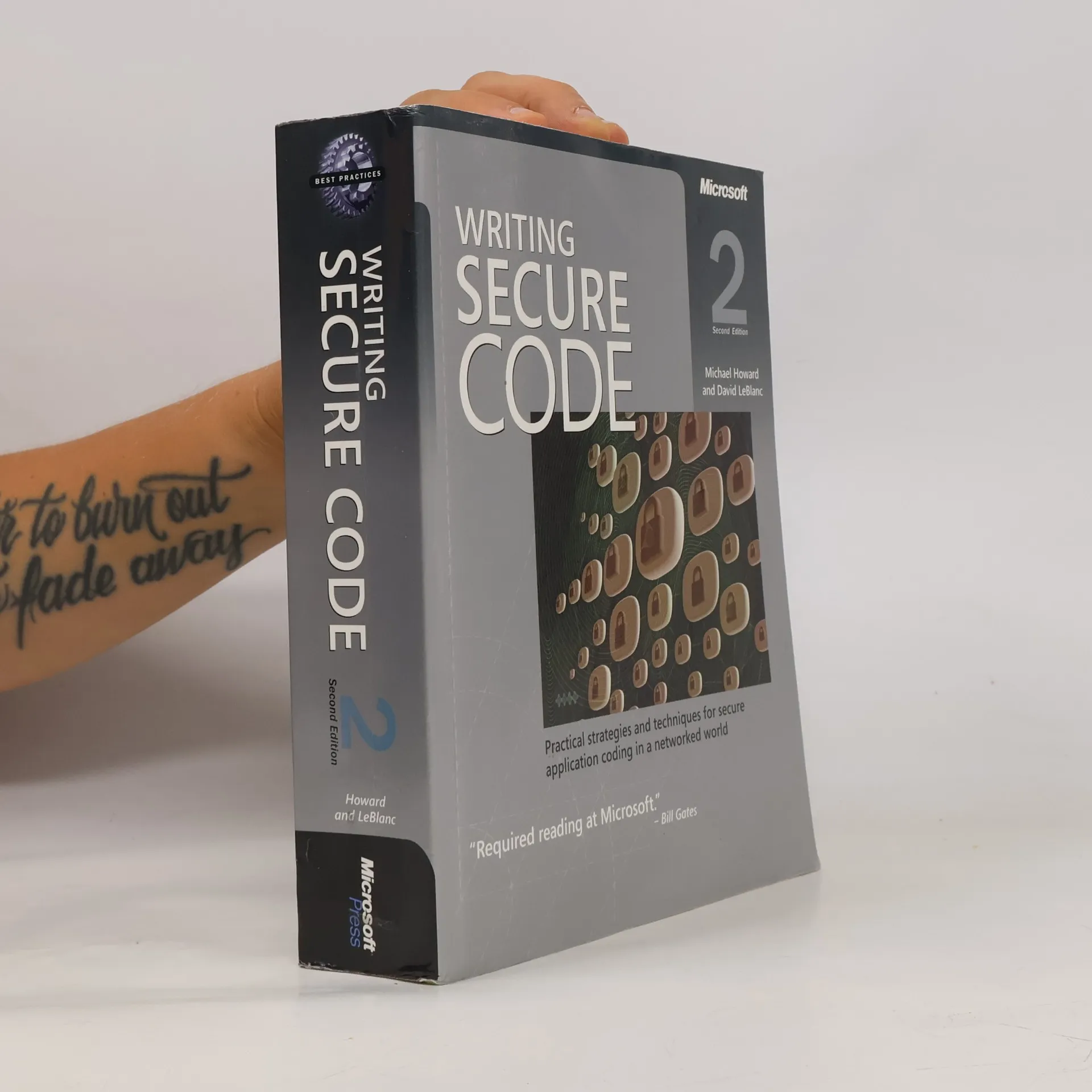


Más información sobre el libro
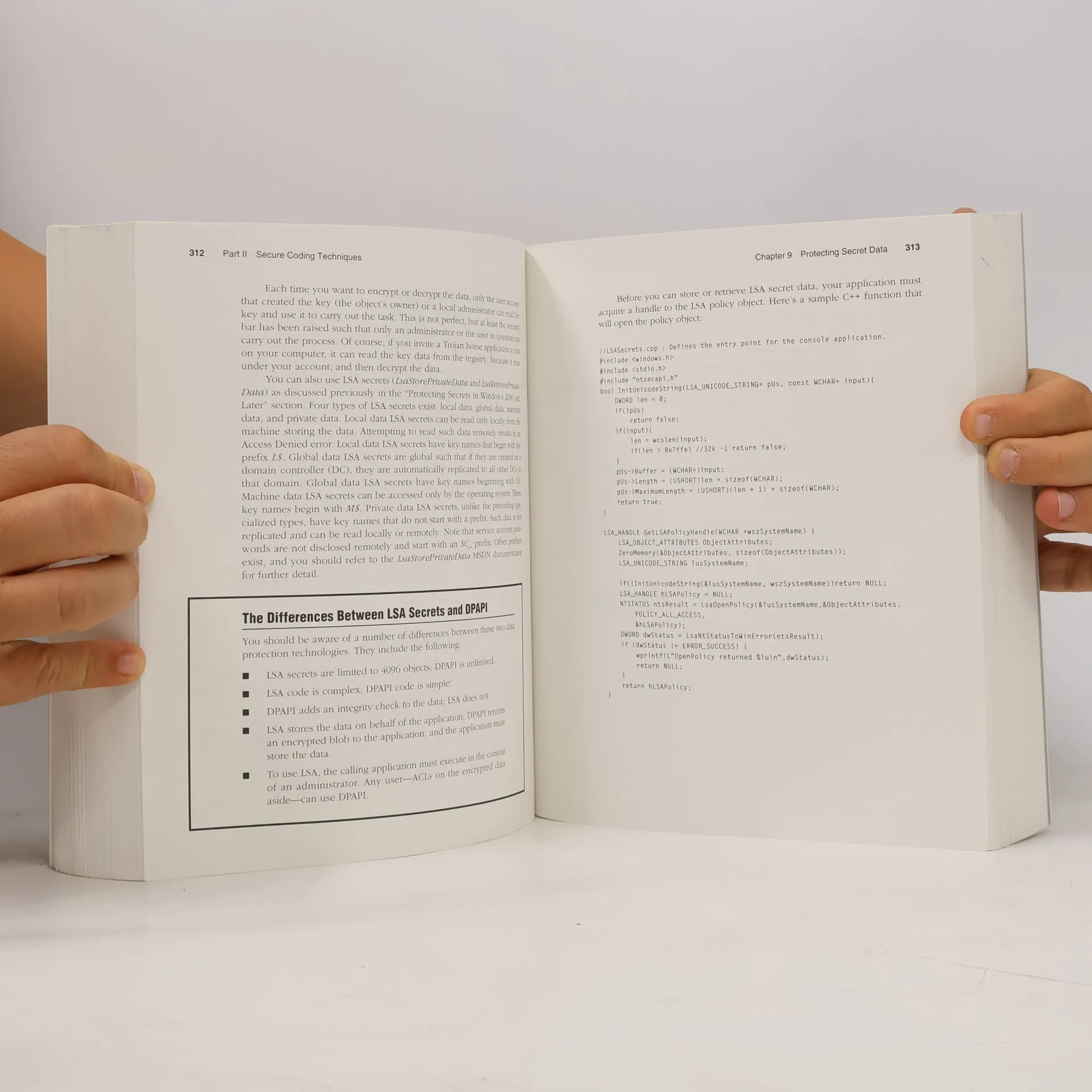
The Barnes & Noble ReviewYour code will be attacked. You need to assume it will run in the most hostile environments imaginable -- and design, code, and test accordingly. Writing Secure Code, Second Edition shows you how. This edition draws on the lessons learned and taught throughout Microsoft during the firm s massive 2002 Windows Security Push. It s a huge upgrade to the respected First Edition, with new coverage across the board. Michael Howard and David LeBlanc first help you define what security means to your customers -- and implement a three-pronged strategy for securing design, defaults, and deployment. There s especially useful coverage of threat modeling -- decomposing your application, identifying threats, ranking them, and mitigating them. Then, it s on to in-depth coverage of today s key security issues from the developer s standpoint. Everyone knows buffer overruns are bad: Here s a full chapter on avoiding them. You ll learn how to establish appropriate access controls and default to running with least privilege. There s detailed coverage of overcoming attacks on cryptography (for example, avoiding poor random numbers and bit-flipping attacks). You ll learn countermeasures for virtually every form of user input attack, from malicious database updates to cross-site scripting. We ve just scratched the surface: There are authoritative techniques for securing sockets and RPC, protecting against DOS attacks, building safer .NET applications, reviewing and testing code, adding privacy features, and even writing high-quality security documentation. Following these techniques won t just improve security -- it ll dramatically improve robustness and reliability, too. Bill CamardaBill Camarda is a consultant, writer, and web/multimedia content developer. His 15 books include Special Edition Using Word 2000 and Upgrading & Fixing Networks For Dummies®, Second Edition.
Compra de libros
Writing Secure Code, Michael Howard, David C. LeBlanc
- Idioma

- Publicado en
- 2005
- Encuadernación
- (Tapa blanda),
- Estado del libro
- Bueno
- Precio
- 8,49 €
Métodos de pago
Nadie lo ha calificado todavía.
- Título
- Writing Secure Code
- Subtítulo
- Practical Strategies and Techniques for Secure Application Coding in a Networked World - Second Edition
- Idioma
- Inglés
- Autores
- Michael Howard, David C. LeBlanc
- Editorial
- Microsoft Press
- Publicado en
- 2005
- Formato
- Tapa blanda
- Páginas
- 768
- ISBN10
- 0735617228
- ISBN13
- 9780735617223
- Serie
- Etiquetas
- Guías y Manuales, EE.UU., Tecnología, Software, Seguridad, Desarrollo de Software
- Descripción
- The Barnes & Noble ReviewYour code will be attacked. You need to assume it will run in the most hostile environments imaginable -- and design, code, and test accordingly. Writing Secure Code, Second Edition shows you how. This edition draws on the lessons learned and taught throughout Microsoft during the firm s massive 2002 Windows Security Push. It s a huge upgrade to the respected First Edition, with new coverage across the board. Michael Howard and David LeBlanc first help you define what security means to your customers -- and implement a three-pronged strategy for securing design, defaults, and deployment. There s especially useful coverage of threat modeling -- decomposing your application, identifying threats, ranking them, and mitigating them. Then, it s on to in-depth coverage of today s key security issues from the developer s standpoint. Everyone knows buffer overruns are bad: Here s a full chapter on avoiding them. You ll learn how to establish appropriate access controls and default to running with least privilege. There s detailed coverage of overcoming attacks on cryptography (for example, avoiding poor random numbers and bit-flipping attacks). You ll learn countermeasures for virtually every form of user input attack, from malicious database updates to cross-site scripting. We ve just scratched the surface: There are authoritative techniques for securing sockets and RPC, protecting against DOS attacks, building safer .NET applications, reviewing and testing code, adding privacy features, and even writing high-quality security documentation. Following these techniques won t just improve security -- it ll dramatically improve robustness and reliability, too. Bill CamardaBill Camarda is a consultant, writer, and web/multimedia content developer. His 15 books include Special Edition Using Word 2000 and Upgrading & Fixing Networks For Dummies®, Second Edition.