



Parámetros
- 128 páginas
- 5 horas de lectura
Más información sobre el libro
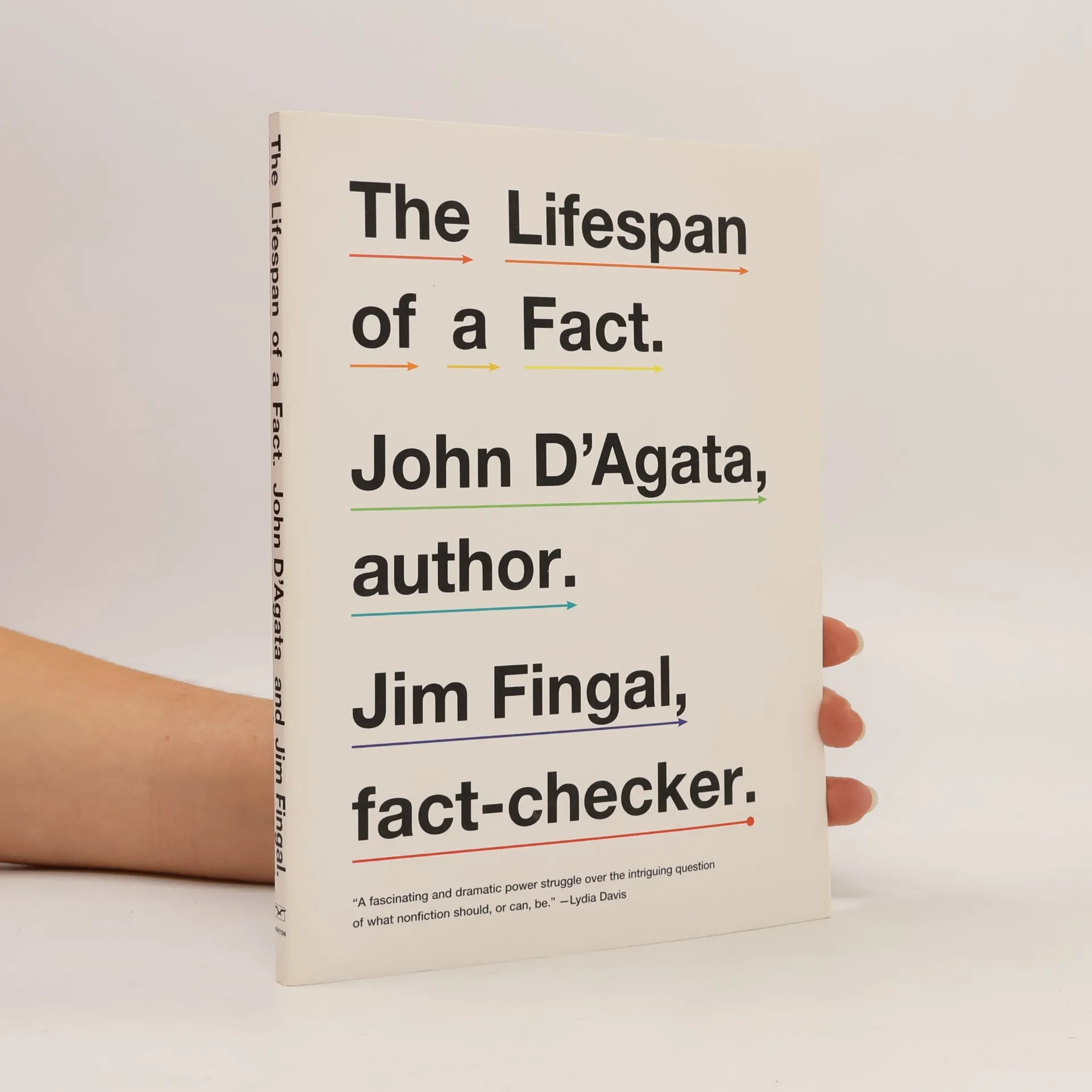
Now a Broadway Play. An innovative essayist and his fact-checker do battle about the use of truth and the definition of nonfiction. How negotiable is a fact? In 2003, after publishing his book of experimental essays, <em>Halls of Fame</em>, John D’Agata was approached by <em>Harper’s</em> magazine to write an essay for them, one that was eventually rejected due to disagreements related to its fact checking. That essay which eventually became the foundation of D’Agata’s critically acclaimed <em>About a Mountain</em> was accepted by another magazine, the <em>Believer</em>, but not before they handed it to their own fact-checker, Jim Fingal. What resulted from that assignment, and beyond the essay’s eventual publication in the magazine, was seven years of arguments, negotiations, and revisions as D’Agata and Fingal struggled to navigate the boundaries of literary nonfiction. This book includes an early draft of D’Agata’s essay, along with D’Agata and Fingal’s extensive discussion around the text. What emerges is a brilliant and eye-opening meditation on the relationship between “truth” and “accuracy” and a penetrating conversation about whether it is appropriate for a writer to substitute one for the other.
Compra de libros
Lifespan of a Fact, John D'Agata, Jim Fingal
- Idioma

- Publicado en
- 2012
- Encuadernación
- (Tapa blanda),
- Estado del libro
- Bueno
- Precio
- 11,49 €
Métodos de pago
Nadie lo ha calificado todavía.
- Título
- Lifespan of a Fact
- Idioma
- Inglés
- Autores
- John D'Agata, Jim Fingal
- Editorial
- W. W. Norton & Company
- Publicado en
- 2012
- Formato
- Tapa blanda
- Páginas
- 128
- ISBN10
- 0393340732
- ISBN13
- 9780393340730
- Serie
- Categorías
- Etiquetas
- Periodismo narrativo, EE.UU., Literatura especializada, Memorias, Obras de teatro, Periodismo y Publicidad, Escritura, Ética, Sobre libros, Suicidio, Ciencias humanas, Verdad, Discusión, Derecho de Autor, Diálogo
- Descripción
- Now a Broadway Play. An innovative essayist and his fact-checker do battle about the use of truth and the definition of nonfiction. How negotiable is a fact? In 2003, after publishing his book of experimental essays, <em>Halls of Fame</em>, John D’Agata was approached by <em>Harper’s</em> magazine to write an essay for them, one that was eventually rejected due to disagreements related to its fact checking. That essay which eventually became the foundation of D’Agata’s critically acclaimed <em>About a Mountain</em> was accepted by another magazine, the <em>Believer</em>, but not before they handed it to their own fact-checker, Jim Fingal. What resulted from that assignment, and beyond the essay’s eventual publication in the magazine, was seven years of arguments, negotiations, and revisions as D’Agata and Fingal struggled to navigate the boundaries of literary nonfiction. This book includes an early draft of D’Agata’s essay, along with D’Agata and Fingal’s extensive discussion around the text. What emerges is a brilliant and eye-opening meditation on the relationship between “truth” and “accuracy” and a penetrating conversation about whether it is appropriate for a writer to substitute one for the other.