



Parámetros
- 256 páginas
- 9 horas de lectura
Más información sobre el libro
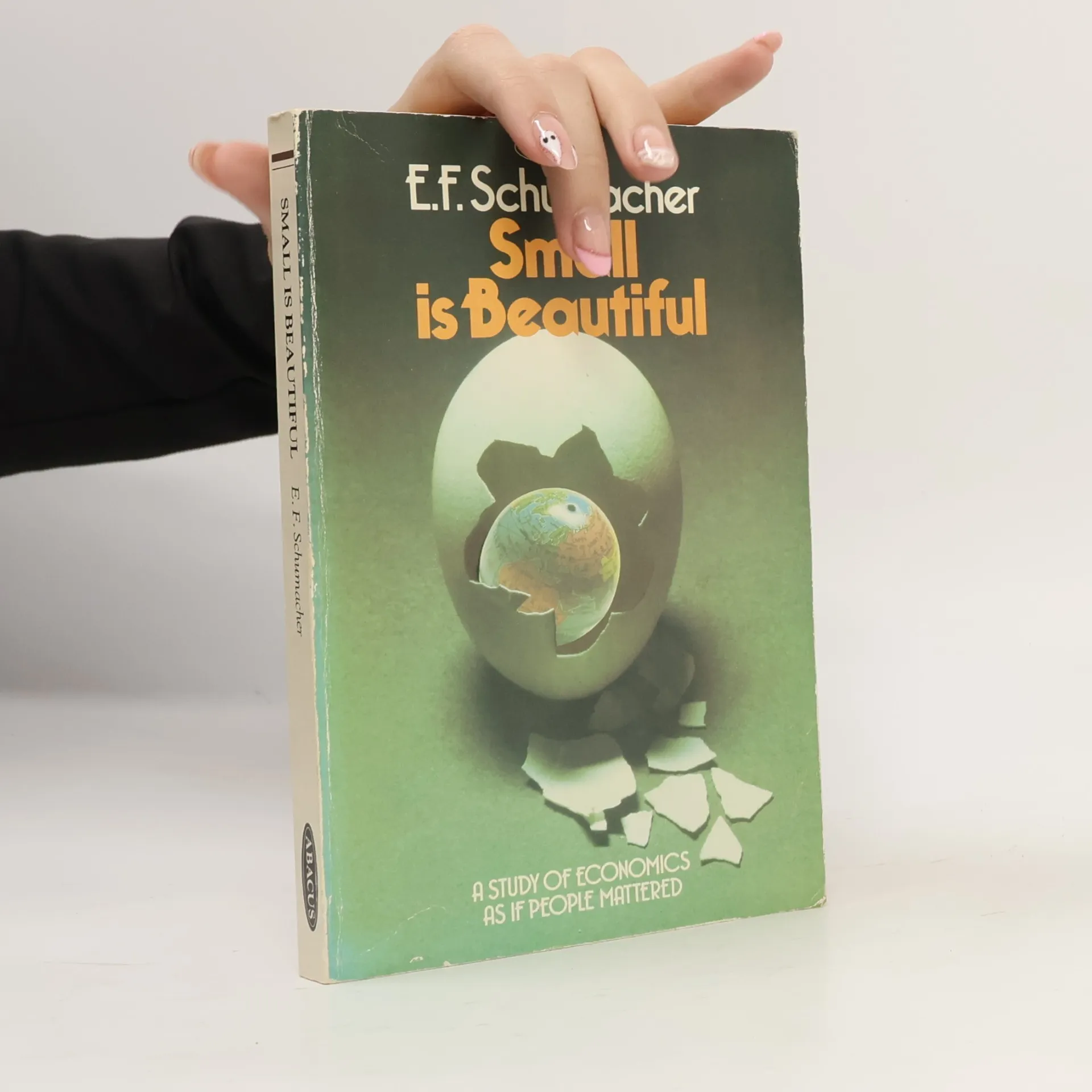
"Nothing less than a full-scale assault on conventional economic wisdom." —<i>Newsweek</i> <b>One the 100 most influential books published since World War II</b> —<i>The Times Literary Supplement</i> Hailed as an "eco-bible" by <i>Time</i> magazine, E.F. Schumacher's riveting, richly researched statement on sustainability has become more relevant and vital with each year since its initial groundbreaking publication during the 1973 energy crisis. A landmark statement against "bigger is better" industrialism, Schumacher's <i>Small Is Beautiful</i> paved the way for twenty-first century books on environmentalism and economics, like Jeffrey Sachs's <i>The End of Poverty</i>, Paul Hawken's <i>Natural Capitalism</i>, Mohammad Yunis's <i>Banker to the Poor</i>, and Bill McKibben's <i>Deep Economy</i>. This timely reissue offers a crucial message for the modern world struggling to balance economic growth with the human costs of globalization.
Compra de libros
Small is Beautiful, Ernst Friedrich Schumacher
- Idioma

- Publicado en
- 1974
- Encuadernación
- (Tapa blanda),
- Estado del libro
- Bueno
- Precio
- 10,99 €
Métodos de pago
Nadie lo ha calificado todavía.
- Título
- Small is Beautiful
- Subtítulo
- A Study of Economics as if People Mattered
- Idioma
- Inglés
- Autores
- Ernst Friedrich Schumacher
- Editorial
- Sphere
- Publicado en
- 1974
- Formato
- Tapa blanda
- Páginas
- 256
- ISBN10
- 0349131384
- ISBN13
- 9780349131382
- Serie
- Categorías
- Etiquetas
- Comercio, Política, Sociedad, Sostenibilidad, Justicia Social, Desarrollo
- Descripción
- "Nothing less than a full-scale assault on conventional economic wisdom." —<i>Newsweek</i> <b>One the 100 most influential books published since World War II</b> —<i>The Times Literary Supplement</i> Hailed as an "eco-bible" by <i>Time</i> magazine, E.F. Schumacher's riveting, richly researched statement on sustainability has become more relevant and vital with each year since its initial groundbreaking publication during the 1973 energy crisis. A landmark statement against "bigger is better" industrialism, Schumacher's <i>Small Is Beautiful</i> paved the way for twenty-first century books on environmentalism and economics, like Jeffrey Sachs's <i>The End of Poverty</i>, Paul Hawken's <i>Natural Capitalism</i>, Mohammad Yunis's <i>Banker to the Poor</i>, and Bill McKibben's <i>Deep Economy</i>. This timely reissue offers a crucial message for the modern world struggling to balance economic growth with the human costs of globalization.