


Más información sobre el libro
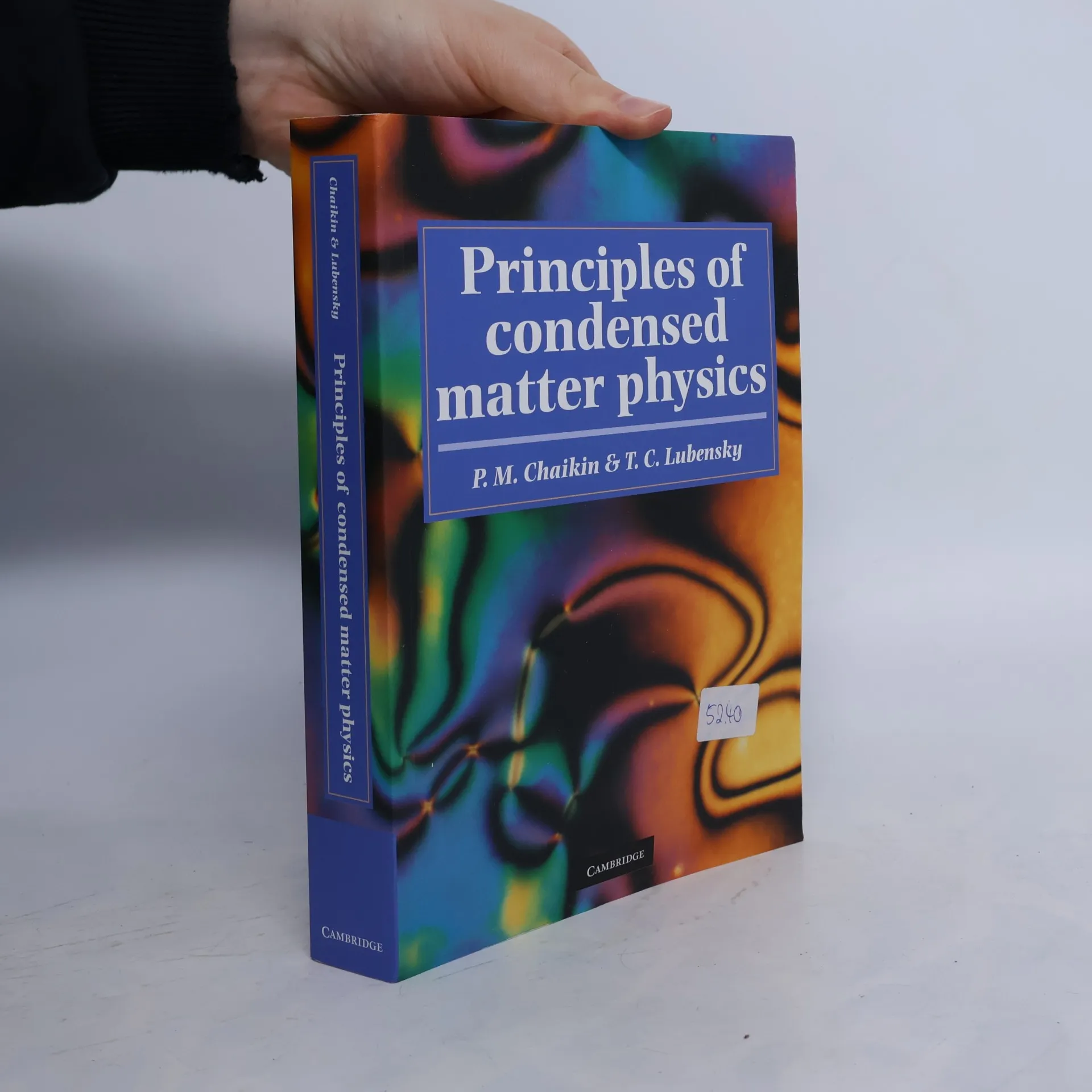
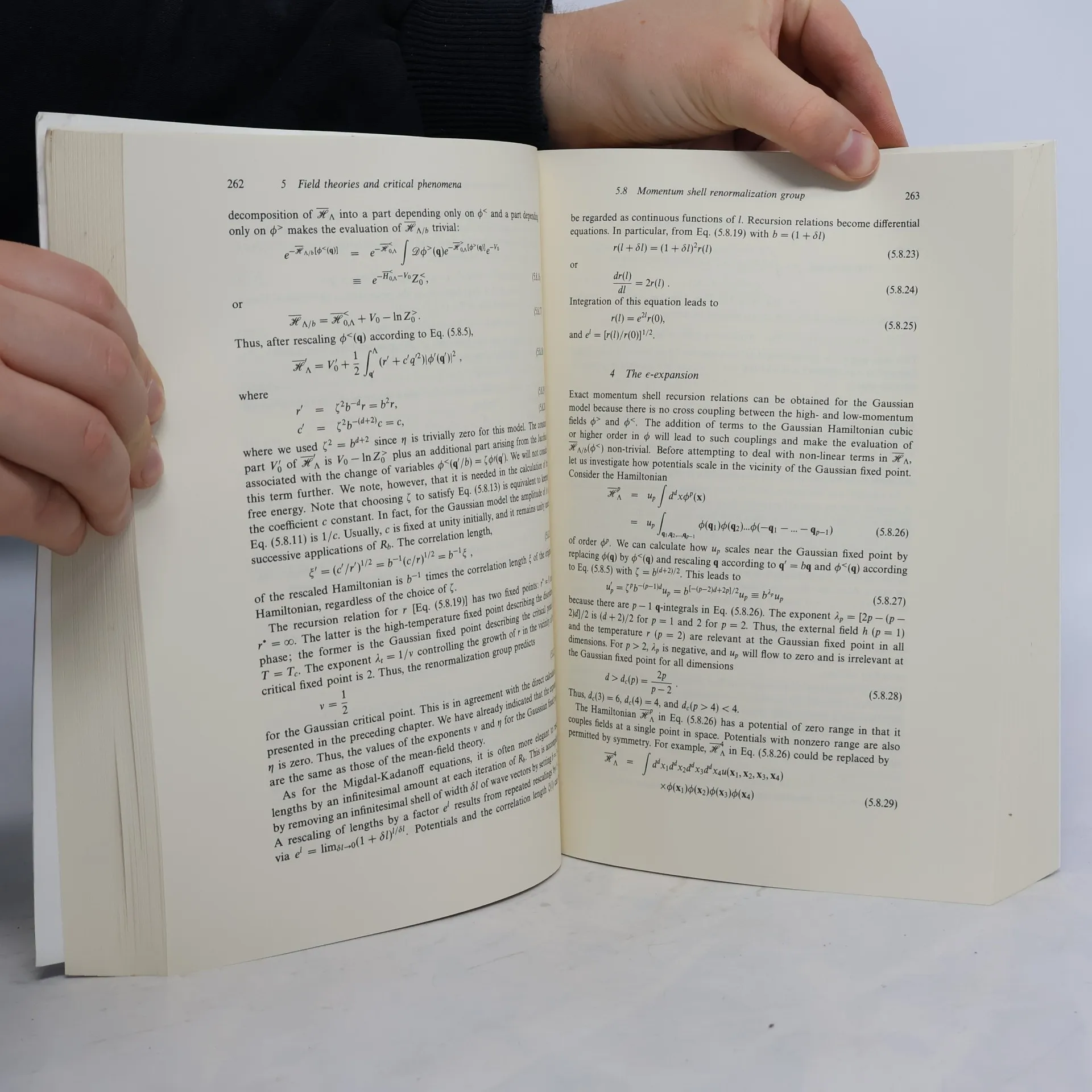
Now in paperback, this book provides an overview of the physics of condensed matter systems. Assuming a familiarity with the basics of quantum mechanics and statistical mechanics, the book establishes a general framework for describing condensed phases of matter based on symmetries and conservation laws. After surveying the structure and properties of materials with different symmetries, it explores the role of spatial dimensionality and microscopic interactions in determining the nature of phase transitions. Particular attention is given to critical phenomena and renormalization group methods. The properties of liquids, liquid crystals, quasicrystals, crystalline solids, magnetically ordered systems and amorphous solids are investigated in terms of their symmetry, generalized rigidity, hydrodynamics and topological defect structure. In addition to serving as a course text, this book is an essential reference for students and researchers in physics, applied physics, chemistry, materials science and engineering, who are interested in modern condensed matter physics.
Compra de libros
Principles of Condensed Matter Physics, P. M. Chaikin, T. C. Lubensky
- Idioma

- Publicado en
- 2000
- Encuadernación
- (Tapa blanda),
- Estado del libro
- Bueno
- Precio
- 36,49 €
Métodos de pago
Nadie lo ha calificado todavía.
- Título
- Principles of Condensed Matter Physics
- Idioma
- Inglés
- Autores
- P. M. Chaikin, T. C. Lubensky
- Editorial
- Cambridge University Press
- Publicado en
- 2000
- Formato
- Tapa blanda
- Páginas
- 720
- ISBN10
- 0521794501
- ISBN13
- 9780521794503
- Serie
- Etiquetas
- Ciencia, Electrónica
- Descripción
- Now in paperback, this book provides an overview of the physics of condensed matter systems. Assuming a familiarity with the basics of quantum mechanics and statistical mechanics, the book establishes a general framework for describing condensed phases of matter based on symmetries and conservation laws. After surveying the structure and properties of materials with different symmetries, it explores the role of spatial dimensionality and microscopic interactions in determining the nature of phase transitions. Particular attention is given to critical phenomena and renormalization group methods. The properties of liquids, liquid crystals, quasicrystals, crystalline solids, magnetically ordered systems and amorphous solids are investigated in terms of their symmetry, generalized rigidity, hydrodynamics and topological defect structure. In addition to serving as a course text, this book is an essential reference for students and researchers in physics, applied physics, chemistry, materials science and engineering, who are interested in modern condensed matter physics.