Bookbot

Eugene Richards Orden de los libros (cronológico)

    Reporter ohne Grenzen: Fotos für die Pressefreiheit 2010
    Bring ‘Em All
    Stepping Through the Ashes
    Americans We
    The Blue Room
    • Bring ‘Em All

      Chaos. Care. Stories From Medicine’s Front Line.

      “THE DIVERSE SPECTRUM OF CLINICIANS you are about to meet is a testament to the men and women on whose backs this specialty was built. Their stories reflect the commitment we all share to those we serve.” – Brian Zink, MD, FACEP “Bring ‘EM All. Chaos. Care. Stories from Medicine’s Front Line pays homage to the heroic men and women of America’s emergency care system, who work to preserve the health of their communities every second of every hour of every day, 365 days a year.”—Donald E. Stader III, MD, FACEP Famed photographer Eugene Richards, influential author of The Knife and Gun Club, captures the breathtaking moments of the lives and careers of American emergency physicians. Through a collection of 50 stirring photo essays, clinicians from across the country share their perspectives and insights on life and death amidst an ever-changing medical landscape. Celebrate the depth and diversity of emergency medicine with ACEP's poignant new anniversary book Learn how this book reveals how far the specialty has come in its relatively short, vibrant life
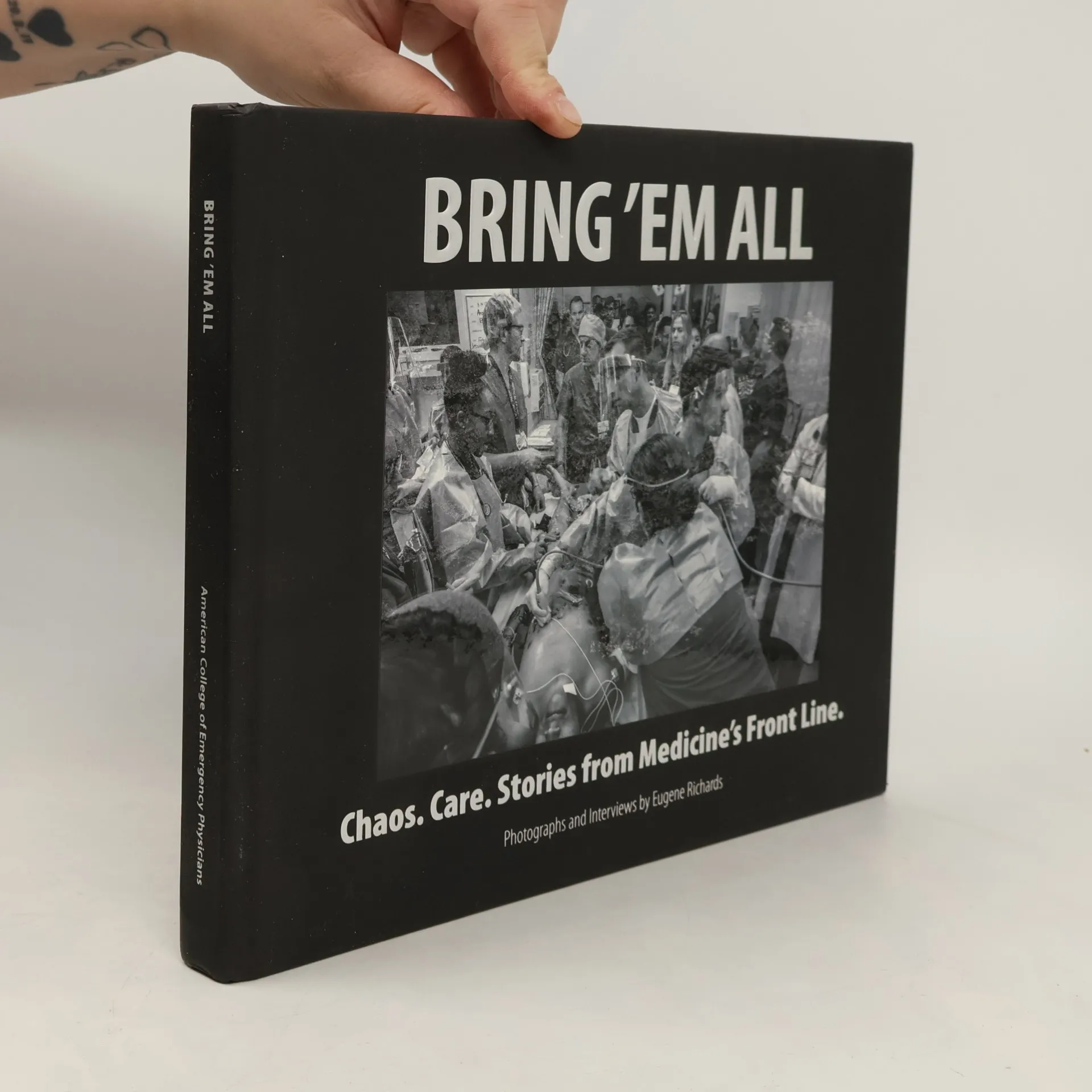
      Bring ‘Em All2018
    • The Blue Room

      • 168 páginas
      • 6 horas de lectura

      Eugene Richards is one of America’s greatest living social documentary photographers. His intense vision and unswerving commitment to documenting the plight of the disadvantaged has produced powerful work on topics such as drug addiction, poverty, the mentally disabled, ageing and the personal consequences of war. The Blue Room is his first colour project, a moving, highly personal project that brings together the themes that encompass all of Richards’ work – what he describes as the ‘transient nature of things’. The photographs are portraits of the abandoned and forgotten houses of western America in areas such as the plains of Kansas, Nebraska, New Mexico and the Dakotas. In the early twentieth century, railroads lured settlers west with the promises of homesteads and towns rose across the plains. But in the wake of the Depression and the dust storms of the 1930s the towns faltered then failed. Richards enigmatic photographs of these forgotten homes are a meditation on memory and loss – family photographs stuck on a wall, a wedding dress hanging in a bedroom, snow falling on a bed by an open window, a wild horse standing at an open kitchen window. Richards’ contemplative, beautiful photographs inspire us to imagine the lives of the former occupants, and make a quiet statement on the inevitability of the circle of life and death, and the vulnerability of man in the face of shifting economic opportunities and the climate.

      The Blue Room2008
      4,4
    • Stepping Through the Ashes

      • 194 páginas
      • 7 horas de lectura

      Steppping Through the Ashes is a photographic elegy to those who died on September 11, and a portrait of how people are coping in the wake of the terrorist attack on New York. Many photographers have recorded the devastation, but Eugene Richards transcends description to offer instead a way of coming to terms with this tragedy. Interviews with survivors and victims' relatives complement Richards' beautiful and poignant images. It may be the best photo book yet on those hard days.-- Albuquerque JournalRichards is arguably the most empathetic photographer working when it comes to showing the hard parts of people's lives... Once again, Richards has wrought a personal elegy for those who are just learning to cope with what has happened to them.-- New Yorker

      Stepping Through the Ashes2002
      3,3
    • Americans We

      • 123 páginas
      • 5 horas de lectura

      In the course of his extraordinary career as a photo-journalist, Eugene Richards has seen many faces of America. From years of poignant, often riveting and sometimes controversial reporting, both on and off assignment, comes Americans We. In turn tender, funny, disturbing, and sublime, Richards's photographs and writing cohere like poetic verse. His talent for rendering the very essence of contemporary life has never before been so discernable, whether depicting a Memorial Day parade, the birth of a child, an inmate on death row, or a farm couple threatened with foreclosure. From darkness and light Richards forges a vivid and idiosyncratic portrait of the American experience.

      Americans We1994
      4,3