
Compra 10 libros por 10 € aquí!
Bookbot

Michael Auping

    Philip Guston
    Arshile Gorky
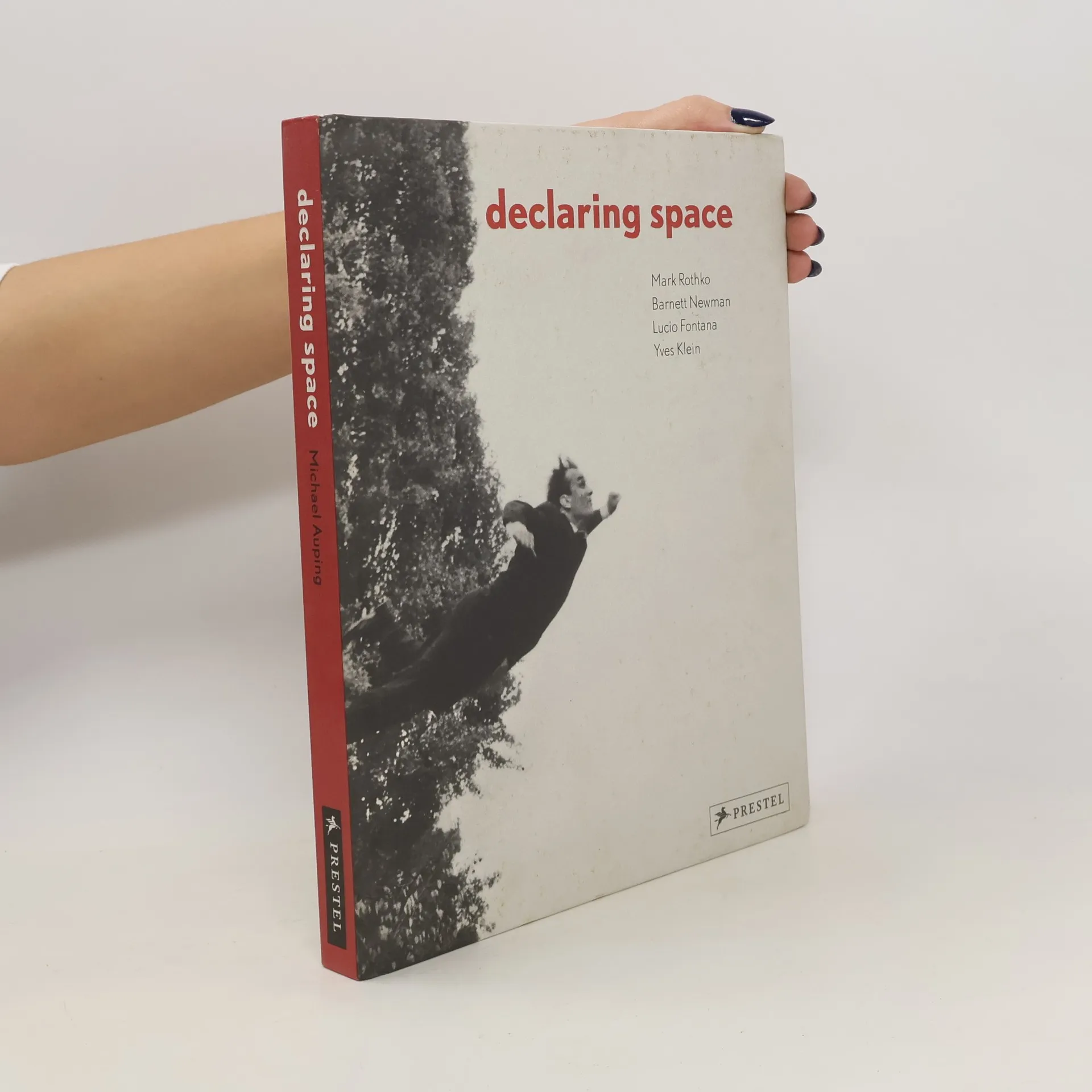
    Declaring space
    • Declaring space

      • 184 páginas
      • 7 horas de lectura

      The evolution and philosophy of color field painting, as revealed by four masters of the movement. Developed at the tail end of the abstract expressionist movement, color field painting is distinguished by pure, unmodulated areas of color, flat, two-dimensional space, and large, often irregularly shaped canvases. The genre is often associated with American painting, but was actually embraced by an international group of artists. Four of the most exciting of those practitioners are the focus of this penetrating study. Michael Auping sees the work of each of these artists as representing a different stage in the development of abstract painting in the 1950s and 1960s. He comments, "To my mind Rothko draws back the curtains, if you will, on the opening up of this space. Newman emphatically `declares' an almost totemic space, while Fontana literally slices through the picture's plane with a razor, and Klein, as he pronounced it, leaps into the void." Illustrated with color images of the artists' seminal works, Declaring Space shows how each painter made his own individual mark in a new realm of abstract art.

      Declaring space
    • Arshile Gorky (1904-1948) is recognized as one of the most crucial and intriguing figures in the early shaping of Abstract Expressionism. Gorky pioneered a complex vocabulary of forms by fusing landscapes remembered from his childhood home in Armenia with surrealist imagery and abstract plumes of color. In so doing, he helped create a distinctly new vision for painting, leading American art into one of the most experimental periods in its history. Gorky's most important paintings and drawings were executed from 1940 through 1947, powerfully expansive years that many regard as his breakthrough period. His rich, mature work of these years is the focus of this illuminating volume, the most comprehensive book on the subject. Michael Auping's valuable text provides an introduction to the life and art of Arshile Gorky as well as an insightful consideration of the grand psychological landscape The Liver is the Cock's Comb, 1944, a work pivotal to the development of Gorky's style. Dore Ashton writes a lucid account of this artist who tends to resist classification, contributing an art historical overview of Gorky's appreciation of such modern innovators of abstraction and Surrealism as Miro and Kandinsky. Matthew Spender provides biographical details of Gorky's early years, while a selection of Gorky's personal letters further sheds an intimate light on the artist and his achievements.

      Arshile Gorky
    • Philip Guston

      Retrospective

      • 271 páginas
      • 10 horas de lectura

      This book, the most comprehensive survey of Guston's art to date, is published on the occasion of a major international exhibition. It brings together for the first time the different bodies of the artist's work, exposing the connective threads between each of his developmental stages. In-depth essays by a noted group of critics and art historians explore Guston's early influences and the emergence of symbols that resurfaced and played prominent roles in his late work. They provide insight into Guston's philosophy regarding abstraction, his role within its development, and the social and art historical context from which his so-called "Klan" paintings emerged. In addition, one of Guston's own essays on art and innovation is reprinted.Also included are selections of drawings that act as both prelude and restatement at each stage of the artist's career; a number of works from Guston's Estate that have never been exhibited before and that shed new light on his development; an extensive illustrated chronology of the artist's life and career; and a comprehensive bibliography.

      Philip Guston