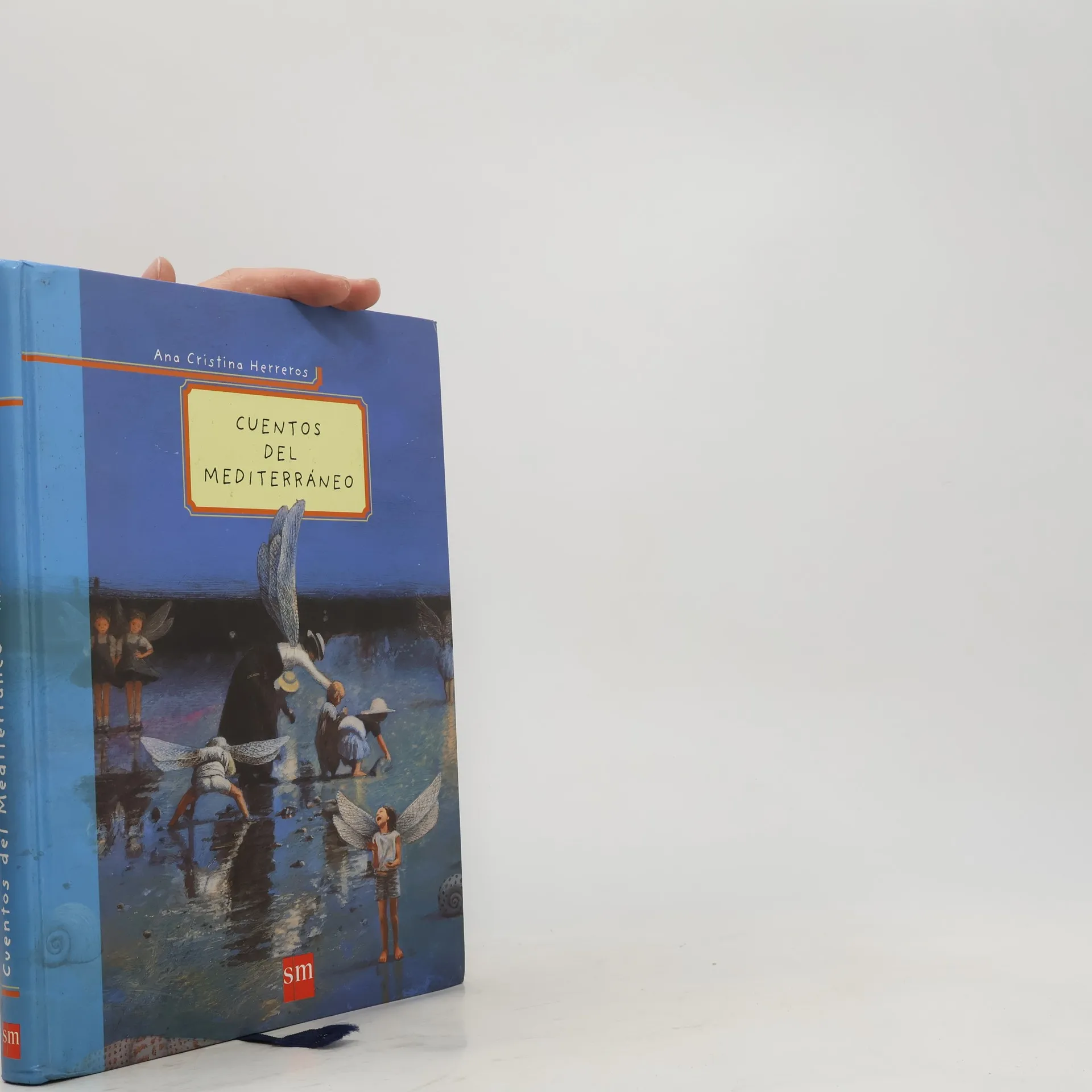
Cuentos del Mediterráneo
- 163 páginas
- 6 horas de lectura
Cuentos del Mediterráneo es una antología pensada para que los niños y niñas, de la mano de la voz de los mayores -sean estos padres o maestros-, se inicien en el mágico mundo de los cuentos.

Ana Cristina Herreros Ferreira, filóloga y especialista en literatura tradicional, se dedica a dar vida a las historias antiguas. Como narradora bajo el seudónimo de Ana Griott, insufla vitalidad a cuentos populares y romances en diversos escenarios, desde bibliotecas hasta prisiones. Su trabajo se centra en el poder de la narración y en cómo los textos tradicionales pueden hacerse accesibles al público contemporáneo. Combina su conocimiento académico con el arte de la interpretación oral, ofreciendo experiencias literarias cautivadoras a lectores y oyentes.


Cuentos del Mediterráneo es una antología pensada para que los niños y niñas, de la mano de la voz de los mayores -sean estos padres o maestros-, se inicien en el mágico mundo de los cuentos.
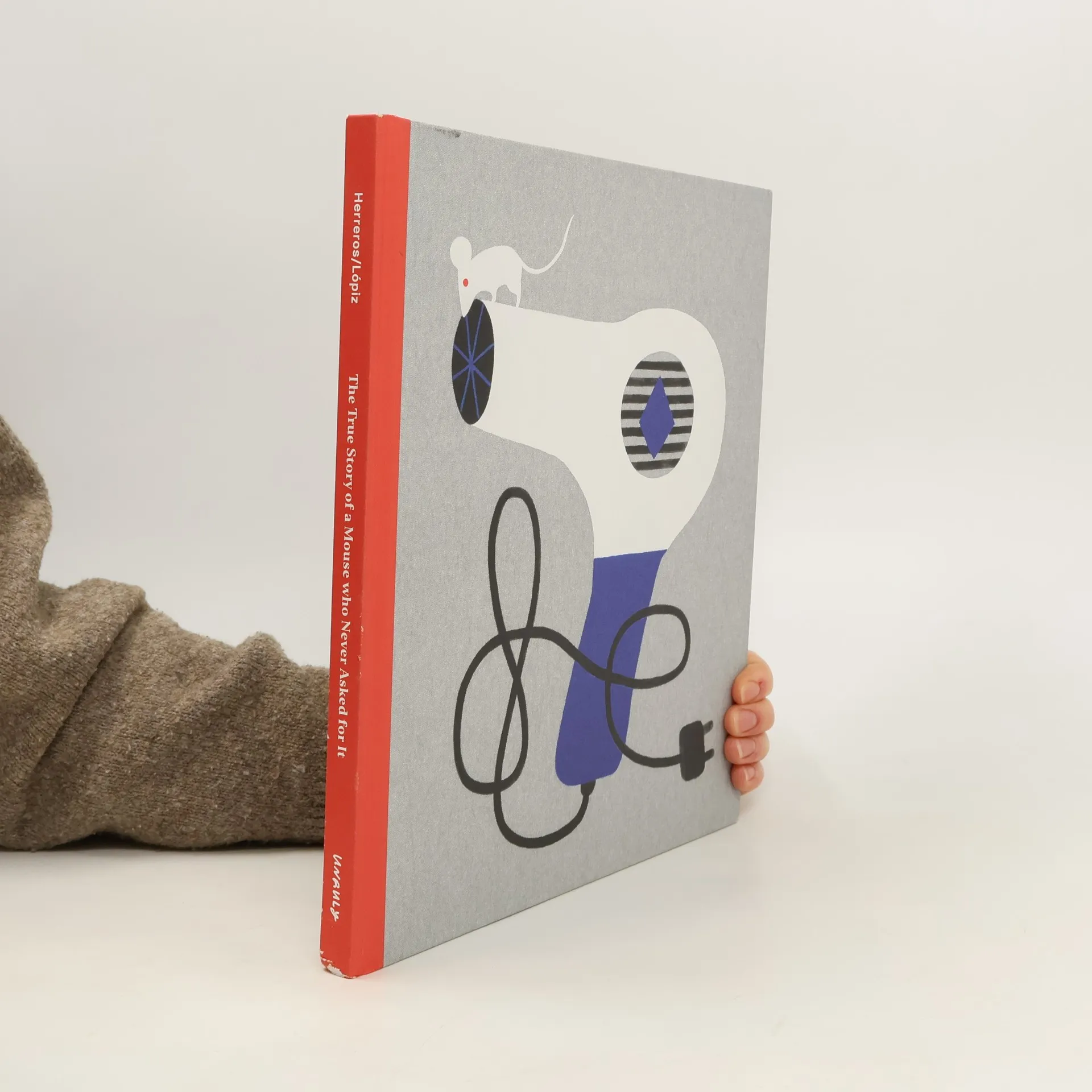
Does every country have a Tooth Fairy? Well, in Spain and other Spanish- speaking countries, it happens to be a Tooth Mouse, and this is his story! Long ago, throughout the Spanish-speaking world, the Tooth Mouse brought children their permanent teeth, strong and straight as a mouse’s. Tracing the Tooth Mouse’s beginnings through to his descendants, this book artfully weaves the Tooth Mouse’s changing habits as the world industrializes, with the growing independence of the child, as teeth fall out and the child learns to care for themselves. It’s also a playful, thought-provoking history of our changing world—as even Tooth Mice and children must adapt their customs when faced with the culture-shifting forces of urbanization, migration, and capitalism... Just remember, magic can always be recovered, and the real gift in losing baby teeth is growing up!
The True Story of a Mouse Who Never Asked for It is a visually striking, deeply feminist, contemporary retelling of a Spanish folk tale, rediscovered and brought to new life by author Ana Cristina Herreros and illustrator Violeta Lopiz. In Herreros and Lopiz's version--which sharply diverges from the most mainstream and popularized telling of the story--a mouse is approached by many suitors, rejecting all but one: a cat, whose gentle meow assures her that he won't bring her harm. But one must remember that a kitten always grows up to be a cat...and thusly, will devour the mouse.
Baśnie o Śmierci to zbiór 44 historii zaczerpniętych z rozmaitych kultur (m.in. hiszpańskiej, greckiej, irlandzkiej, chińskiej, tybetańskiej, arabskiej, indyjskiej, azteckiej, aborygeńskiej, buszmeńskiej czy kultury Inuitów), których wspólną bohaterką jest Śmierć. Z poszczególnych opowieści wyłania się obraz Śmierci jako Matki, która towarzyszy ludziom od chwili narodzin (czasem wręcz fizycznie, jak w micie zairskim, gdzie pomaga przy porodach) i wszystkich, bez względu na status, traktuje jednakowo. Śmierć jest przedstawiona w różnych odsłonach (jako sprawiedliwa, przyjaciółka czy zakochana), a poszczególne opowieści poświęcone są postrzeganiu jej w kulturach niemal z całego świata. Wiele z nich jest dość egzotycznych, jak chociażby walencjańska historia o staruszce, która uwięziła śmierć na swojej gruszy, czy meksykańska baśń o śmierci, którą drwal poratował jedzeniem i w zamian za to otrzymał dar uzdrawiania, a także legendy Aborygenów, Azteków czy Inuitów.