
Compra 10 libros por 10 € aquí!
Bookbot

Kathrin Barbara Zimmer

    Im Zeichen der Schönheit
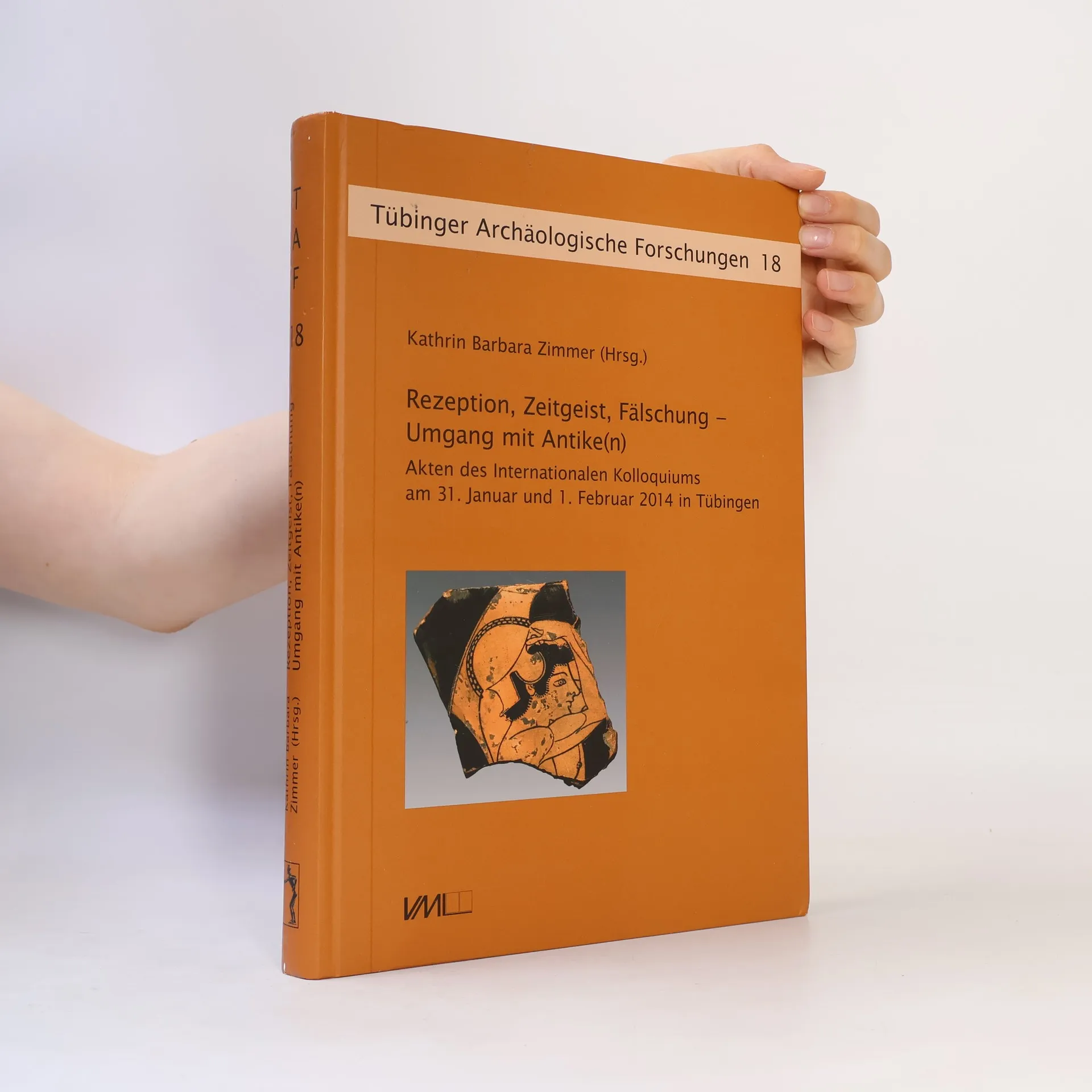
    Rezeption, Zeitgeist, Fälschung - Umgang mit Antike(n)
    Der Tübinger Waffenläufer
    Von der Reproduktion zur Rekonstruktion - Umgang mit Antike(n) II.
    • Comparable to the colloquium “Umgang mit Antike(n)” [TAF 19] a summer school was held parallel to the temporary exhibition “Gaudy gods. Colours in ancient sculpture” in the Knights’ Hall of Hohentübingen Castle from 11/04/14 to 15/01/15. The volume contains an introduction and 24 contributions organised in sections on architecture, sculpture, techniques and methods as well as projects and theses. In detail, there are papers on the way from monument to reconstruction, the archaeological parks of Xanten and Kempten, the “Schinkel project” for the Thorvaldsen Museum in Copenhagen, the eastern frieze of the Siphnian Treasury and the colouration of kouroi, of the statue of Zeus at Olympia, of a head of a Persian, of the girl’s statue Akro. 682, of a head of Caesar, and of ancient grave stelae. Other topics are the handwritings of ancient polychromers, so-called chrysocolla, metal applications, attachments in marble and metal, the “youth with a victor’s fillet”, the effect of inlaid eyes, the project “Digital Forum Romanum”, the Hunting Frieze at Vergina, non-destructive methods of x-ray analyses, the casting of griffin protomes, the “Grotta di Tiberio”, and a statue of Venus at Bordeaux.

      Von der Reproduktion zur Rekonstruktion - Umgang mit Antike(n) II.
    • Mit dem sogenannten „Tübinger Waffenläufer" besitzt die Universität Tübingen einen herausragenden Schatz aus dem antiken Griechenland. Die qualitätsvolle Bronzestatuette fiel Ende des 18. Jahrhunderts als private Stiftung an die Universität und begründete die heute etwa 11 000 Objekte umfassende Originalsammlung des Instituts für Klassische Archäologie. Der ursprünglich mit Helm und Schild gewappnete Athlet in Startposition wurde um 490/480 vor Christus in der Umgebung von Athen gefertigt und als Geschenk eines erfolgreichen Waffenläufers zum Dank für seinen Sieg in einem griechischem Heiligtum geweiht.

      Der Tübinger Waffenläufer
    • The colloquium was held in the context of the exhibition “Deceptively authentic” in Hohentübingen Castle which presented objects whose authenticity had been doubted at some stage. The volume contains an introduction and 24 papers on the “Augustus from the Allgäu region”, the appropriation of antique models in Renaissance times, Leon Battista Alberti’s doctrine of the reproduction of statues, forgeries and imitations of famous antiques, fakes in the Caylus Collection, Roman lamps with “fishermen in the harbour of Carthage”, creative copies, imitations of famous heads of Apollo, trading and forgeries of antiques in the 19th century, antique originals and literary antiques, false and missing exempla in music, fakes of Late Antique textiles, object art, meta art, and the contempt of the trompe-l’œil, amended and forged Roman marble urns, a portrait of Nero, a biconical urn with a helmet, fakes of Cypriot antiques, the Paduan coins of Giovanni da Cavino, a modern bronze Hercules, a forgery by Alceo Dossena, coin fakes in the Tux Collection, replicas of Tanagra figurines, archaeology at eBay, and the copying of archaeological finds for purposes of research and teaching.

      Rezeption, Zeitgeist, Fälschung - Umgang mit Antike(n)
    • Im Zeichen der Schönheit

      • 244 páginas
      • 9 horas de lectura

      By two examples, the author investigates the handling of traditional images of gods in Hellenism. It turns out that exact formal repetition did not matter as much as did the fact that the observer should recognise the original without having seen it him/herself. The content of the image was presented in different sizes and materials for all kinds of customers and purposes and was often subject to major changes for practical reasons. Apart from this, artists were anxious about varying their model according to prevailing Hellenistic taste, e. g. by adding jewellery. Such representations reflect an altered relationship with the Olympic gods that were now meant to be as lively and humane as Hellenistic divine kings. All in all, the reception attests high appreciation, and adaptation to the prevailing taste increased the understandability and attractiveness of statues. Reception, beginning in the mid-2nd century B. C., was most intense at places with a mixed and well-travelled public including Romans. Gradually, the reliability of copies grew parallel to the knowledge of originals. In Augustan times true-to-detail reproductions came up, which only reflected the prevailing taste in facial features, incarnate, and robe pleats.

      Im Zeichen der Schönheit