

Compra 10 libros por 10 € aquí!
Bookbot

Janina Wellmann

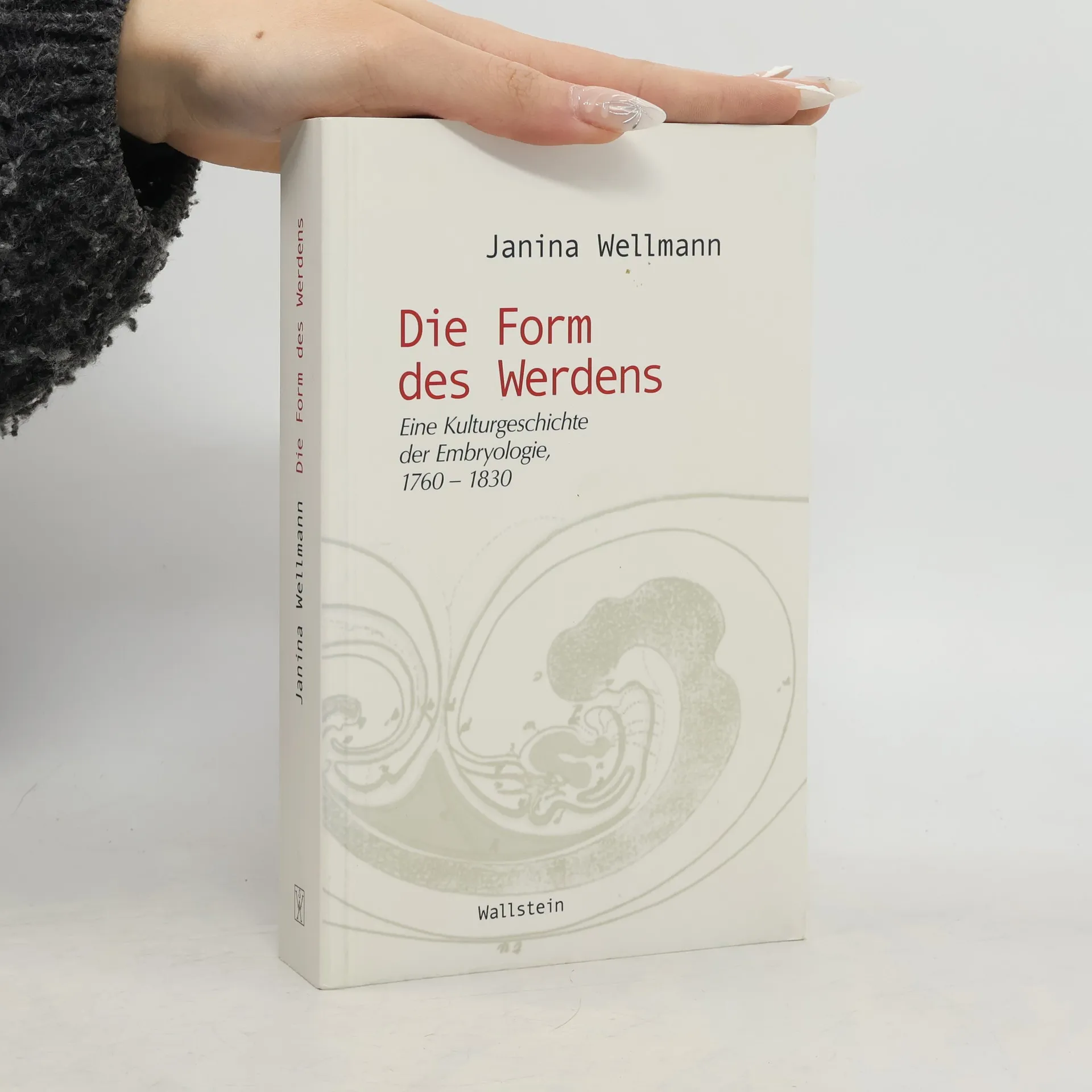
    Die Form des Werdens
    The form of becoming
    • The form of becoming

      • 424 páginas
      • 15 horas de lectura

      An examination of the constitutive role of rhythm and movement in the visualization of developing life. In The Form of Becoming Janina Wellmann offers an innovative understanding of the emergence around 1800 of the science of embryology and a new notion of development, one based on the epistemology of rhythm. She argues that between 1760 and 1830, the concept of rhythm became crucial to many fields of knowledge, including the study of life and living processes. She juxtaposes the history of rhythm in music theory, literary theory, and philosophy with the concurrent turn in biology toward understanding the living world in terms of rhythmic patterns, rhythmic movement, and rhythmic representations. Common to all these fields was their view of rhythm as a means of organizing time—and of ordering the development of organisms. With The Form of Becoming, Wellmann, a historian of science, has written the first systematic study of visualization in embryology. Embryological development circa 1800 was imagined through the pictorial technique of the series, still prevalent in the field today. Tracing the origins of the developmental series back to seventeenth-century instructional graphics for military maneuvers, dance, and craft work, The Form of Becoming reveals the constitutive role of rhythm and movement in the visualization of developing life.

      The form of becoming
    • Die Form des Werdens

      Eine Kulturgeschichte der Embryologie, 1760-1830

      • 429 páginas
      • 16 horas de lectura

      Die Autorin untersucht die Entwicklung des modernen Verständnisses biologischer Entwicklung und Embryologie zwischen 1760 und 1830 aus kultur- und wissenschaftshistorischer Sicht. In dieser Zeit veränderte sich die Wahrnehmung des Lebendigen grundlegend: Die Natur wurde nicht mehr als starre Ordnung, sondern als dynamischer Prozess des Werdens und der kontinuierlichen Umgestaltung betrachtet. Wellmann argumentiert, dass in verschiedenen Wissensbereichen wie Musiktheorie, Dichtungstheorie und Philosophie der Rhythmus als neue epistemische Kategorie entstand. Diese Entwicklung ist entscheidend für das Verständnis biologischer Theorien. Um 1800 wurde die lebendige Welt, insbesondere das Konzept der Entwicklung, in Begriffen von rhythmischen Mustern und Bewegungen neu gedacht. Zudem zeigt Wellmann, wie die Rhythmisierung nicht nur die theoretischen Ansätze, sondern auch die visuelle Darstellung von Bewegung beeinflusste und in die wissenschaftliche Darstellung lebendiger Prozesse integriert wurde. Diese Forschung leistet einen wichtigen Beitrag zur Geschichte der modernen Biologie und wurde 2008 mit dem Förderpreis der Berlin-Brandenburgischen Akademie der Wissenschaften ausgezeichnet.

      Die Form des Werdens