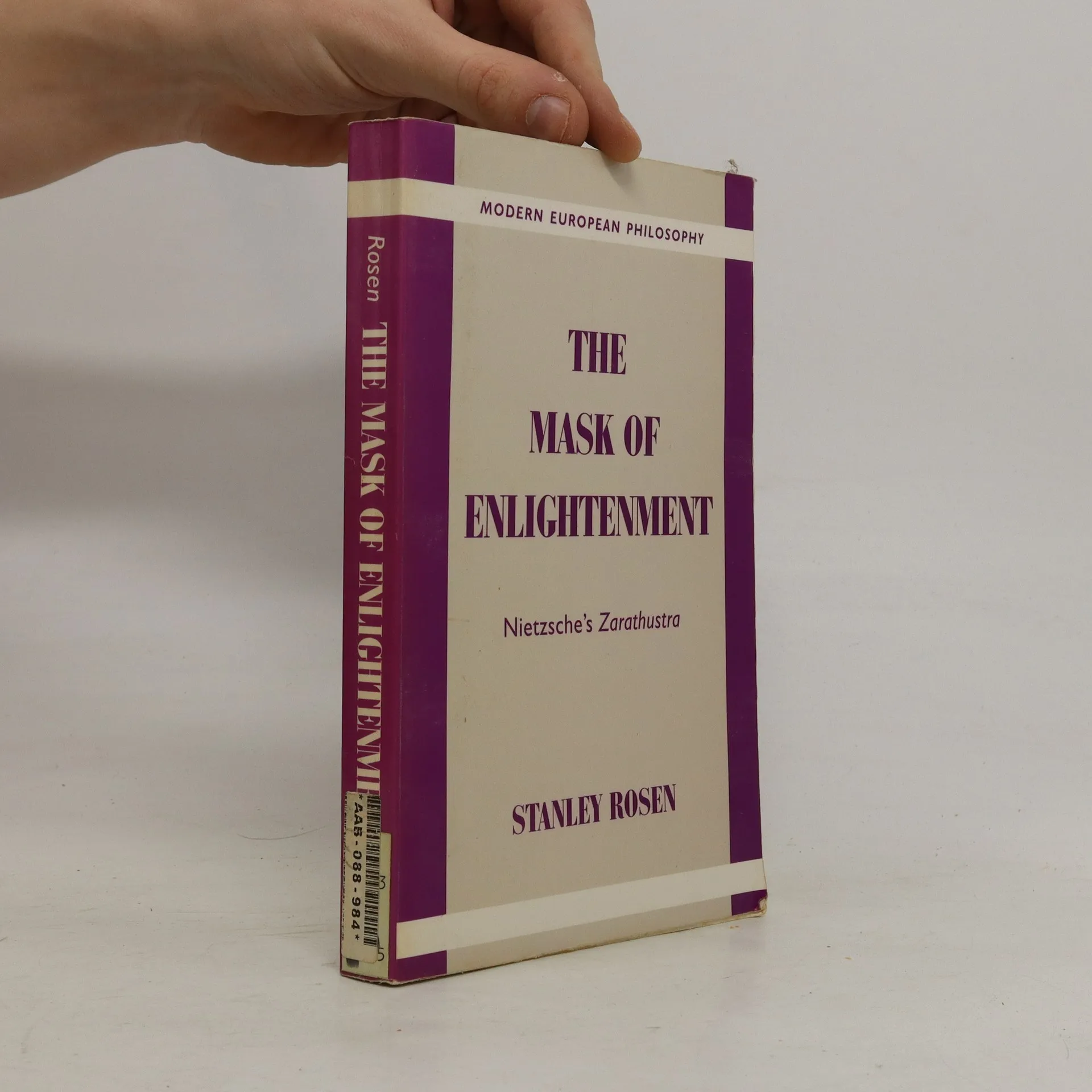
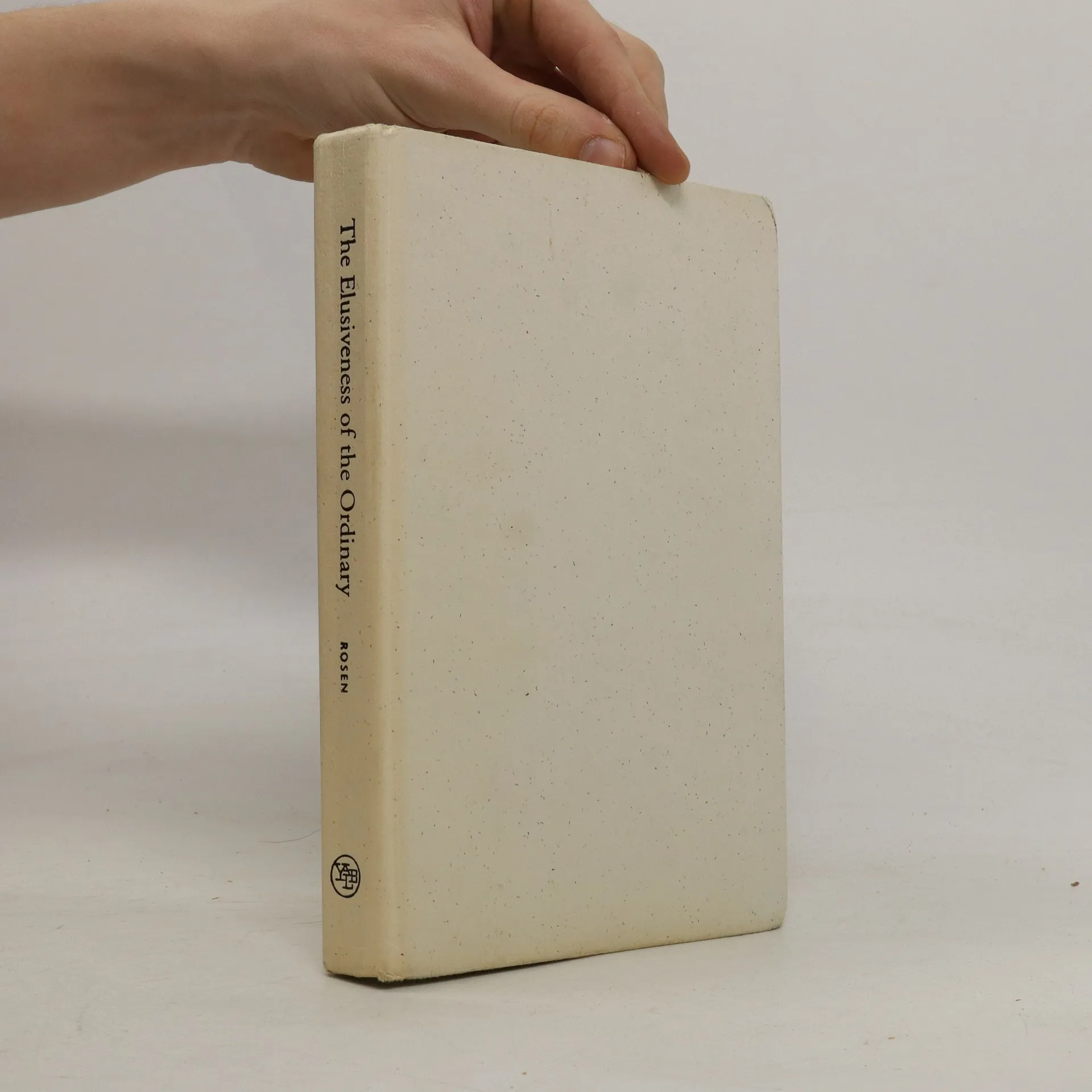
Este autor se adentra en las cuestiones fundamentales de la filosofía y sus figuras históricas más importantes, desde Platón hasta Heidegger. Su obra explora profundas corrientes intelectuales, ofreciendo nuevas perspectivas sobre tradiciones filosóficas perdurables.
In this text, philosopher Stanley Rosen takes a new look at the "quarrel" that moderns have with the ancients, analyzing and comparing ancient philosophers and modern Continental and analytical thinkers from Plato, Descartes and Kant to Fichte, Nietzche and Rorty.
The concept of the ordinary, along with such cognates as everyday life, ordinary language, and ordinary experience, has come into special prominence in late modern philosophy. Thinkers have employed two opposing yet related responses to the notion of the ordinary - scientific and phenomenological approaches on the one hand, and on the other, more informal or even anti-scientific procedures. Eminent philosopher Stanley Rosen here presents the first comprehensive study of the main approaches to theoretical mastery of ordinary experience. He evaluates the responses of a wide range of modern and contemporary thinkers and grapples with the peculiar problem of the ordinary - how to define it in its own terms without transforming it into a technical (and so, extraordinary) artifact.