

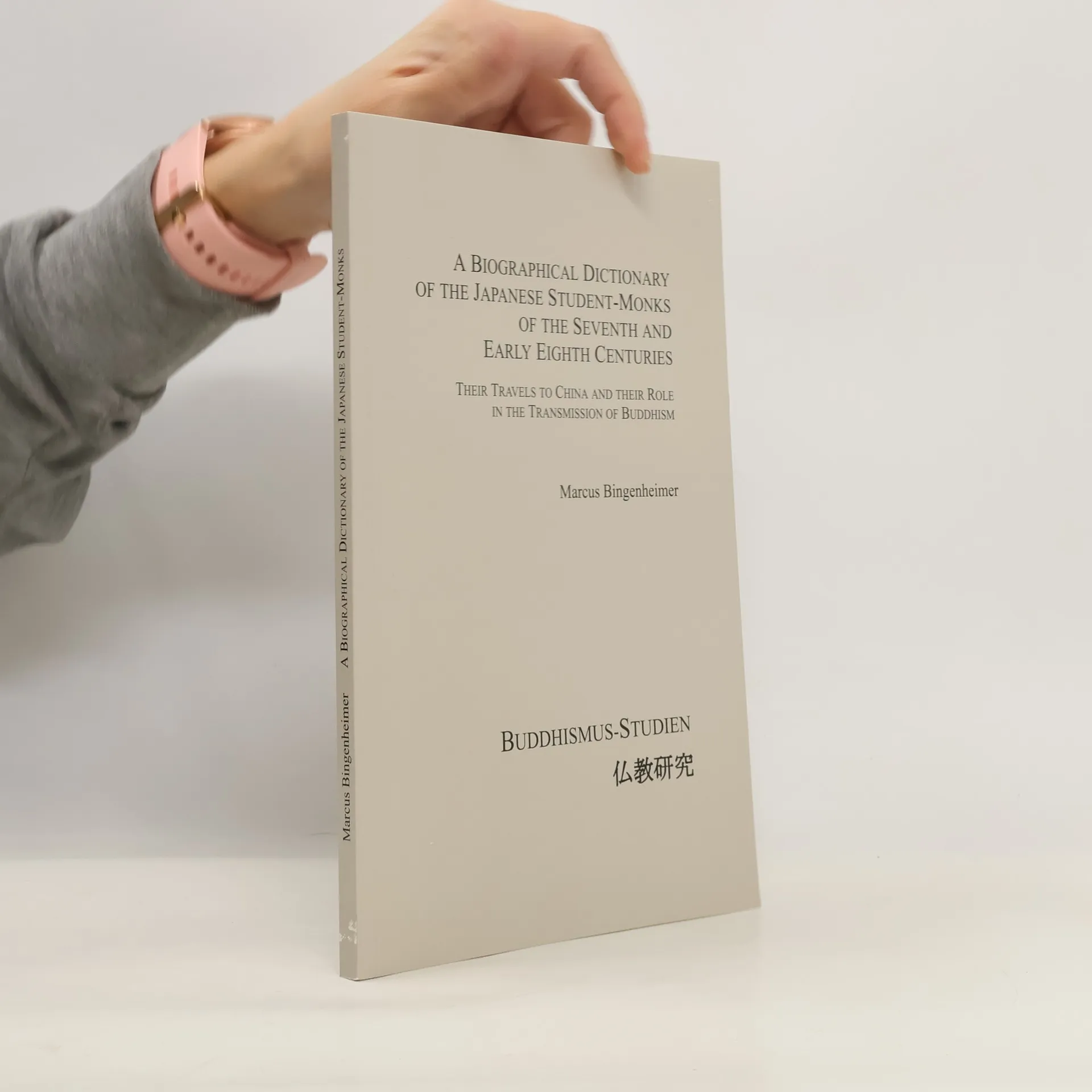
A biographical dictionary of the Japanese student monks of the seventh and early eighth centuries
- 138 páginas
- 5 horas de lectura
The early Japanese student-monks who traveled to Sui and Tang China to study Buddhism have received limited attention due to scarce textual evidence and the tentative reconstruction of their biographies. This study outlines the historical context and examines the student-monks' role in the transmission of Buddhism. It includes a biographical dictionary featuring 54 known student-monks who journeyed to China between 607 and 732. This period began with Japan’s first embassy to the Sui and concluded with Fusho and Yoei's quest for Vinaya masters, leading to Ganjin's arrival in Japan, which marked the end of the Nara schools' transmission. The historical setting discusses the political background, the introduction of Buddhism to Japan, and Shotoku Taishi's influence. It also details the early embassies to China, the impact of student-monks on the Taika Reforms, and the dynamics of Buddhism in both China and Japan during the early Tang period. Additionally, the study explores the role of Korea in shaping cultural and political relations with Japan, particularly before and after 663. The comprehensive biographical dictionary and bibliography provide further insights into these significant figures and their contributions to Buddhism's development in Japan.