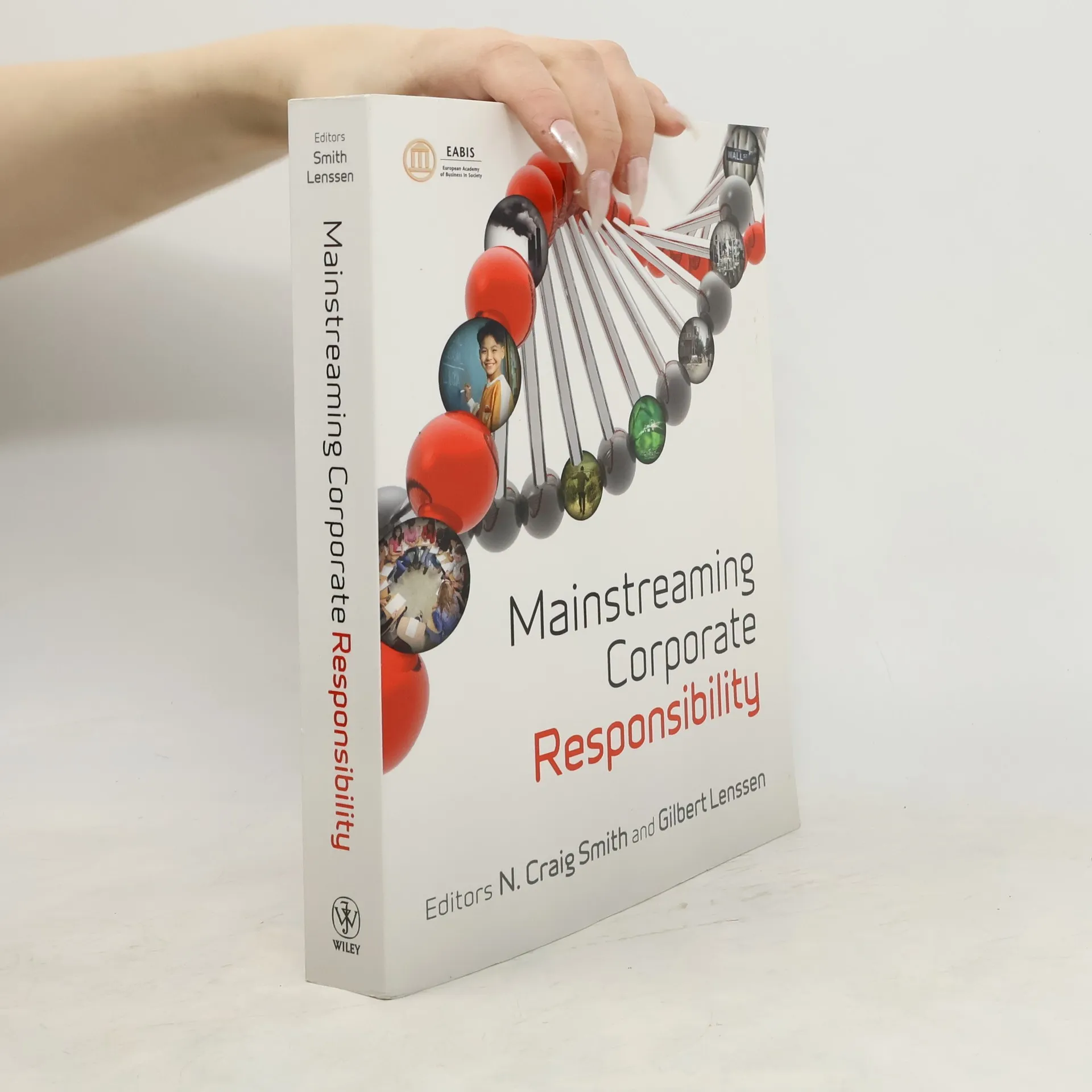
This book examines whether firms as organizations can be considered morally responsible for their actions. This question has profound practical implications as well as theoretical significance, not least when we are today so frequently confronted with misconduct in business.
Corporate Responsibility (CR) has never been more prominent on the corporate agenda. More companies are coming to understand that it is in their economic interest to address social and environmental impacts in a manner that is integrated with their operations. CR encompasses issues such as sustainability (meeting the needs of the present without compromising the ability of future generations to meet their needs), stakeholder management, and corporate governance, as well as corporate philanthropy. Mainstreaming Corporate Responsibility takes an innovative approach to CSR. Based around case studies commissioned by EABIS, the book is structured around major subject areas in the business school curriculum. It provides a chapter on the relevance of CR to each subject area and identify CR issues to be addressed.
This book offers 32 texts and case studies from across a wide range of business sectors around a managerial framework for Sustainable Business. The case studies are developed for and tested in executive education programmes at leading business schools. The book is based on the premise that the key for managing the sustainable business is finding the right balance over time between managing competitiveness and profitability AND managing the context of the business with its political, social and ecological risks and opportunities. In that way, a sustainable business is highly responsive to the demands and challenges from both markets and societies and managers embrace the complexity, ambivalence and uncertainty that goes along with this approach. The book presents a framework that facilitates the adoption of best business practice. This framework leads executives through a systematic approach of strategic analysis and business planning in risk management, issues management, stakeholder management, sustainable business development and strategic differentiation, business model innovation and developing dynamic capabilities. The approach helps broaden the understanding of what sustainable performance means, by protecting business value against sustainability risks and creating business value from sustainability opportunities.