

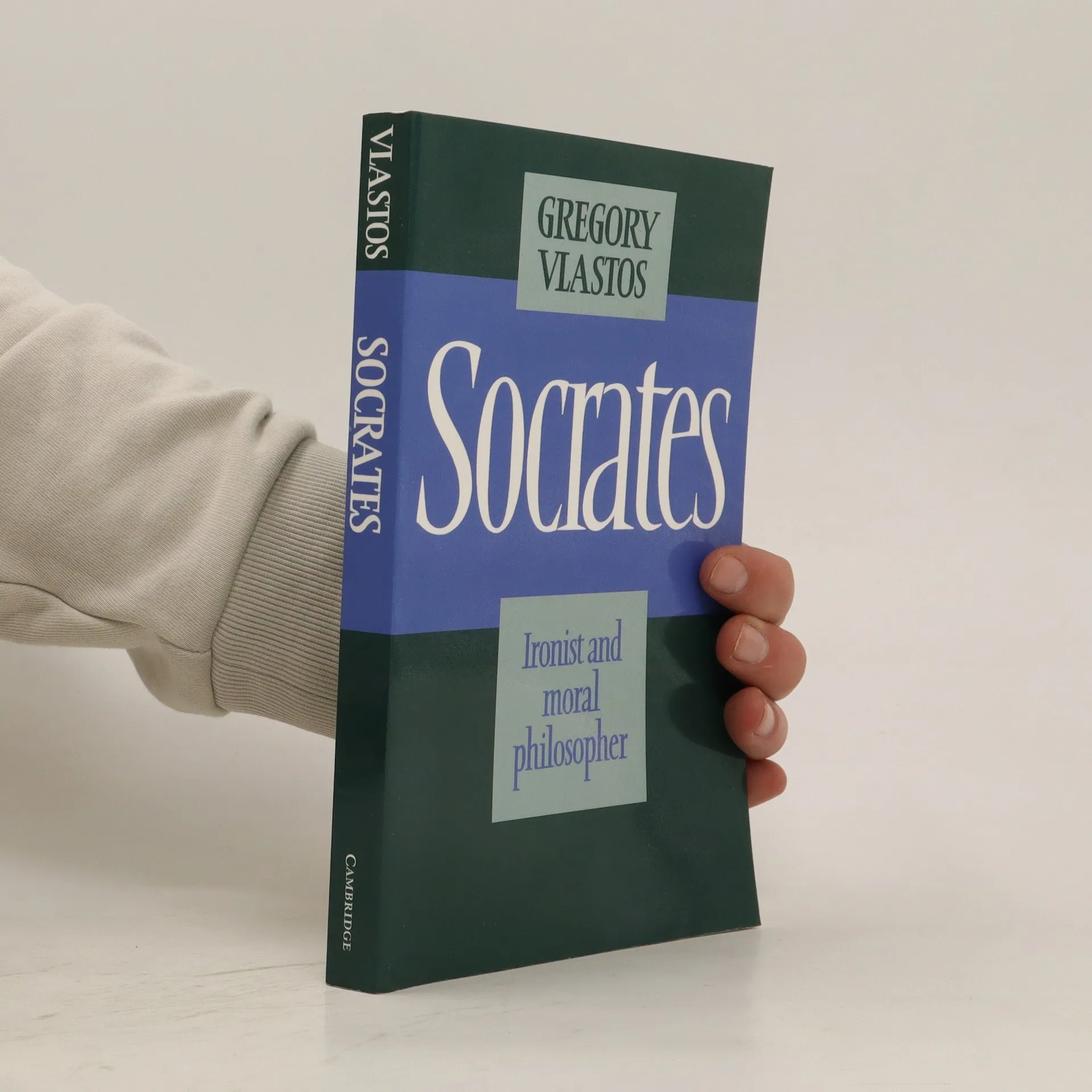
This long-awaited study of the most enigmatic figure of Greek philosophy reclaims Socrates' ground-breaking originality. Written by a leading historian of Greek thought, it argues for a Socrates who, though long overshadowed by his successors Plato and Aristotle, marked the true turning point in Greek philosophy, religion and ethics. The quest for the historical figure focuses on the Socrates of Plato's earlier dialogues, setting him in sharp contrast to that other Socrates of later dialogues, where he is used as a mouthpiece for Plato's often anti-Socratic doctrine. At the heart of the book is the paradoxical nature of Socratic thought. But the paradoxes are explained, not explained away. The book highlights the tensions in the Socratic search for the answer to the question 'How should we live?' Conceived as a divine mandate, the search is carried out through elenctic argument, and dominated by an uncompromising rationalism. The magnetic quality of Socrates' personality is allowed to emerge throughout the book. Clearly and forcefully written, philosophically sophisticated but entirely accessible to non-specialists, this book will be of major importance and interest to all those studying ancient philosophy and the history of Western thought.
Gregory Vlastos Libros
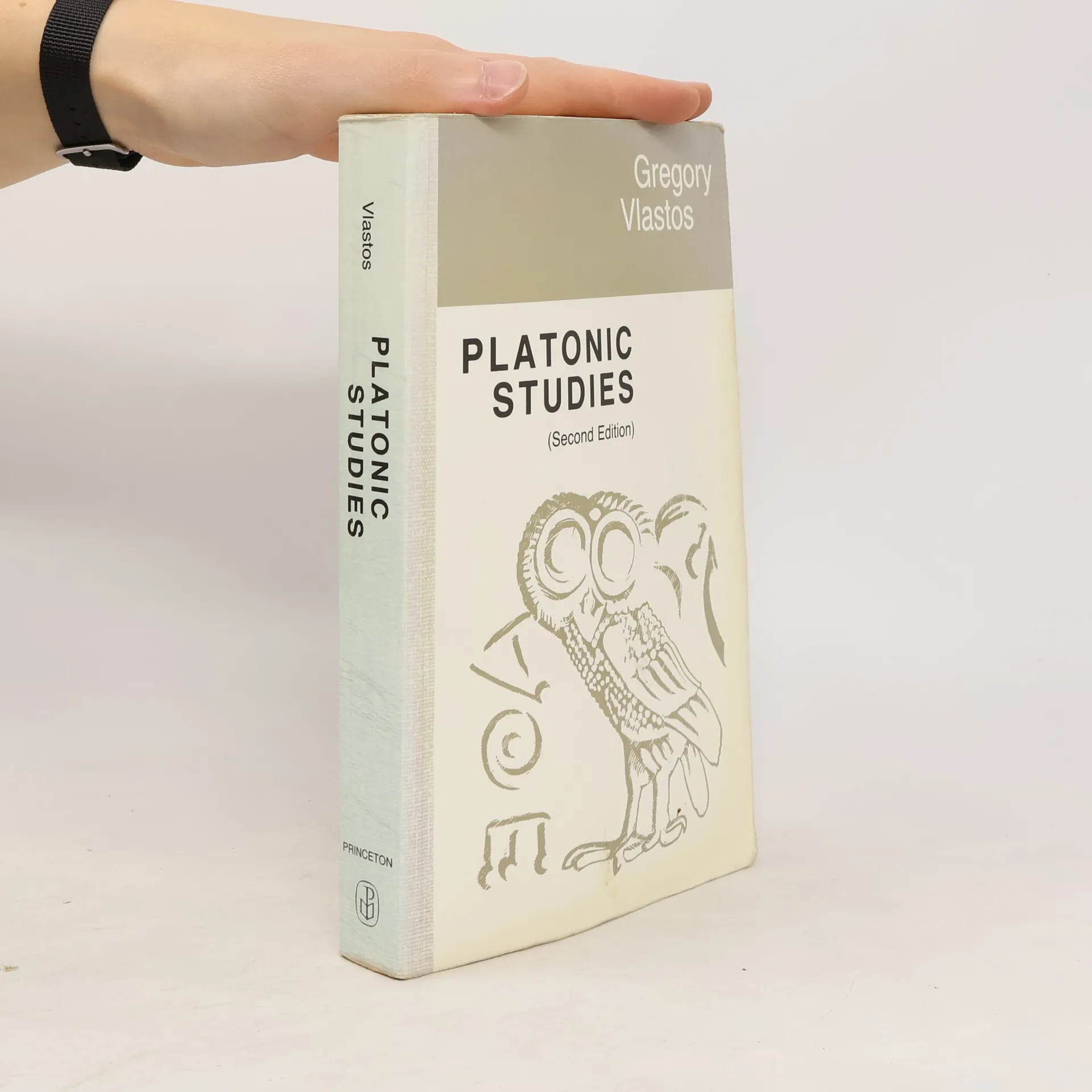
This book consists of Gregory Vlastos' studies on a variety of themes in Plato's metaphysics, epistemology, ethics, and social philosophy. Although many of the essays have appeared in various philosophical and classical journals or symposia, new in the volume are two major studies. One is on Plato's theory of love, exploring its metaphysical dimension and its far-reaching implications for personal and political relations. The other centers on semantic and logical problems in the Sophist ; it offers solutions to crucial difficulties in this fundamental Platonic work. In these essays the author presents ideas which are likely to provoke comment and may be discussed as vigorously in scholarly journals as has some of his earlier work. The other papers, some of them extensively revised, comprise virtually all the author's published work on Plato, with the exception of a few papers easily accessible elsewhere. This second edition includes three additional essays and extensive notes that were not included in the original edition.
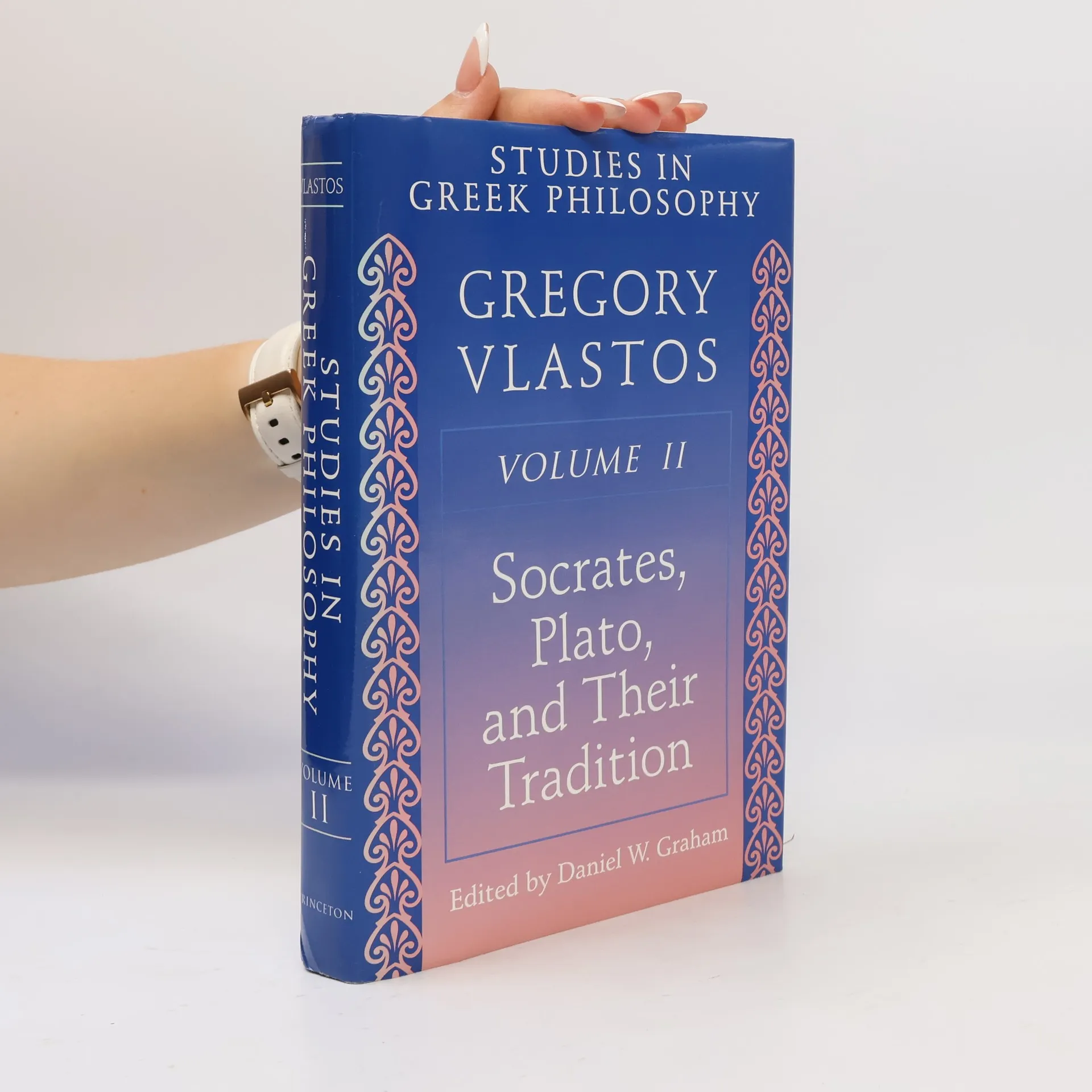
Studies in Greek Philosophy - 2: Socrates, Plato, and Their Tradition
- 344 páginas
- 13 horas de lectura
Gregory Vlastos (1907-91) was a pivotal figure in the study of ancient philosophy, recognized for his extensive contributions over more than fifty years. His essays and book reviews established him as a leading authority on early Greek philosophy. The two volumes of Studies in Greek Philosophy feature nearly forty of his key works, many of which are now considered classics in the discipline. Vlastos significantly elevated the standards of research, analysis, and exposition in classical philosophy, serving as a model for generations of scholars. This comprehensive collection showcases his unique ability to merge the skills of a philosopher, philologist, and historian of ideas, tackling some of ancient philosophy's most challenging problems. Volume I focuses on Presocratic philosophy, linking Greek science, religion, and politics with philosophical inquiry. It includes in-depth studies of major figures such as Heraclitus, Parmenides, Anaxagoras, and Democritus, along with a notable series on Zeno of Elea that highlights Vlastos's expertise in source criticism and logical analysis. Volume II shifts to the thoughts of Socrates, Plato, and later thinkers, addressing ethical, social, political issues, as well as metaphysics, science, and the foundations of mathematics.