

Compra 10 libros por 10 € aquí!
Bookbot

Graham Smith

    Civil War Weapons: An Illustrated Guide to the Wide Range of Weaponry Used on the Battlefield
    Democratic Innovations
    Past Echoes
    The Kindred Killers
    Abolish the Monarchy
    Can Democracy Safeguard the Future?
    • 2023

      Fighting Men of World War II - Axis

      • 384 páginas
      • 14 horas de lectura

      Focusing on the Axis Forces, this volume delves into the weapons and equipment utilized by the average soldier during World War II. It provides an in-depth examination of the military gear that defined the conflict, offering insights into the experiences of those who fought. This book is part of a two-volume set, with the companion volume covering Allied Forces, allowing for a comprehensive understanding of both sides of the war.

      Fighting Men of World War II - Axis
    • 2023

      It's wrong in principle and it doesn't work in practice. (And no, it's not good for tourism.) It doesn't have to be this way. They say Britain should be proud to have the mother of parliaments, a shining beacon of democracy and an example to other nations. But there's an elephant in the room. At the heart of power is a single family. They weren't elected but they live off the public purse. They aren't accountable to anyone, and yet between them, they are privy to more government secrets than many cabinet ministers. Divinely appointed using a special hat, the head of the family is your superior, you his subject. Apparently he is guardian of our constitution - but we're also told he wouldn't dream of interfering in politics. If you accept the monarchy, you must accept the moral compromise that comes with it, from its erosion of the principle of equality to the secret interference in our laws. But the good news is that we don't have to accept it. True democracy is within our reach.


      Abolish the Monarchy
    • 2022
    • 2021

      Can Democracy Safeguard the Future?

      • 160 páginas
      • 6 horas de lectura

      Our democracies repeatedly fail to safeguard the future. From pensions to pandemics, health and social care through to climate, biodiversity and emerging technologies, democracies have been unable to deliver robust policies for the long term. In this book, Graham Smith, a leading scholar of democratic theory and practice, asks why? Exploring the drivers of the short-termism that dominate contemporary politics, he considers ways of reshaping legislatures and constitutions and proposes strengthening independent offices whose overarching goals do not change at every election. More radically, Smith argues that forms of participatory and deliberative politics offer the most effective democratic response to the current political myopia as well as a powerful means of protecting the interests of generations to come.

      Can Democracy Safeguard the Future?
    • 2020

      On the Wrong Side of The Law

      Complaints Against Metropolitan Police, 1829-1964

      • 232 páginas
      • 9 horas de lectura

      Focusing on the historical evolution of complaints against Metropolitan police officers, this study examines the period from the force's inception in 1829 to the Police Act of 1964. It emphasizes a complainant-centered perspective, highlighting how victims' interests have often been overlooked in favor of law enforcement efficiency. The book critiques the decline of officer accountability in the 19th century and explores missed reform opportunities from several key inquiries throughout the 20th century, setting the stage for the second volume.

      On the Wrong Side of The Law
    • 2019

      How to Survive A Horror Movie

      • 176 páginas
      • 7 horas de lectura

      Written by bestselling author, screenwriter, and producer Grahame-Smith (The Lego Batman Movie; Stephen King's It), this is a hilarious must-read for any horror movie fan--and it just might save his or her life.life.

      How to Survive A Horror Movie
    • 2018

      Past Echoes

      • 312 páginas
      • 11 horas de lectura

      Jake Boulder embarks on a gripping personal mission that pits him against a relentless professional killer. As the tension escalates, readers are drawn into a fast-paced narrative filled with suspense and action. The story showcases Boulder’s determination and resourcefulness as he navigates dangerous encounters, making it a thrilling ride from start to finish.

      Past Echoes
    • 2017

      The Kindred Killers

      • 322 páginas
      • 12 horas de lectura

      The story introduces a formidable new hero, characterized by his quick wit and sharp tongue, alongside his physical prowess in combat. This tough protagonist navigates challenges with a blend of intelligence and strength, making him a compelling figure for readers to support. The narrative promises a blend of action and clever dialogue, appealing to fans of gritty, character-driven tales.

      The Kindred Killers
    • 2017

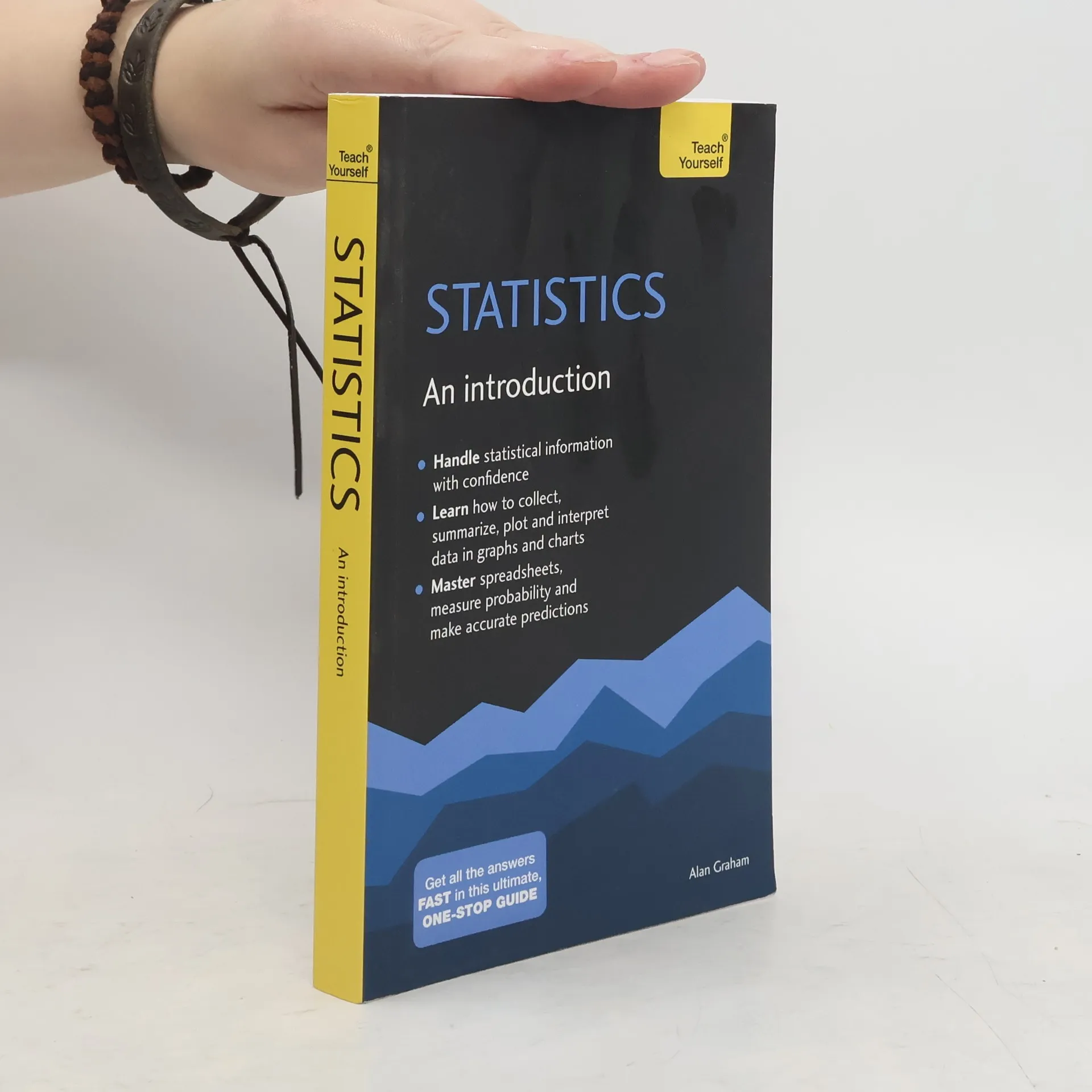
      Statistics: An Introduction: Teach Yourself

      • 320 páginas
      • 12 horas de lectura

      A bestselling introductory course that covers all the key areas of Statistics including graphs, data interpretation, spreadsheets, regression, correlation and probability.

      Statistics: An Introduction: Teach Yourself
    • 2013

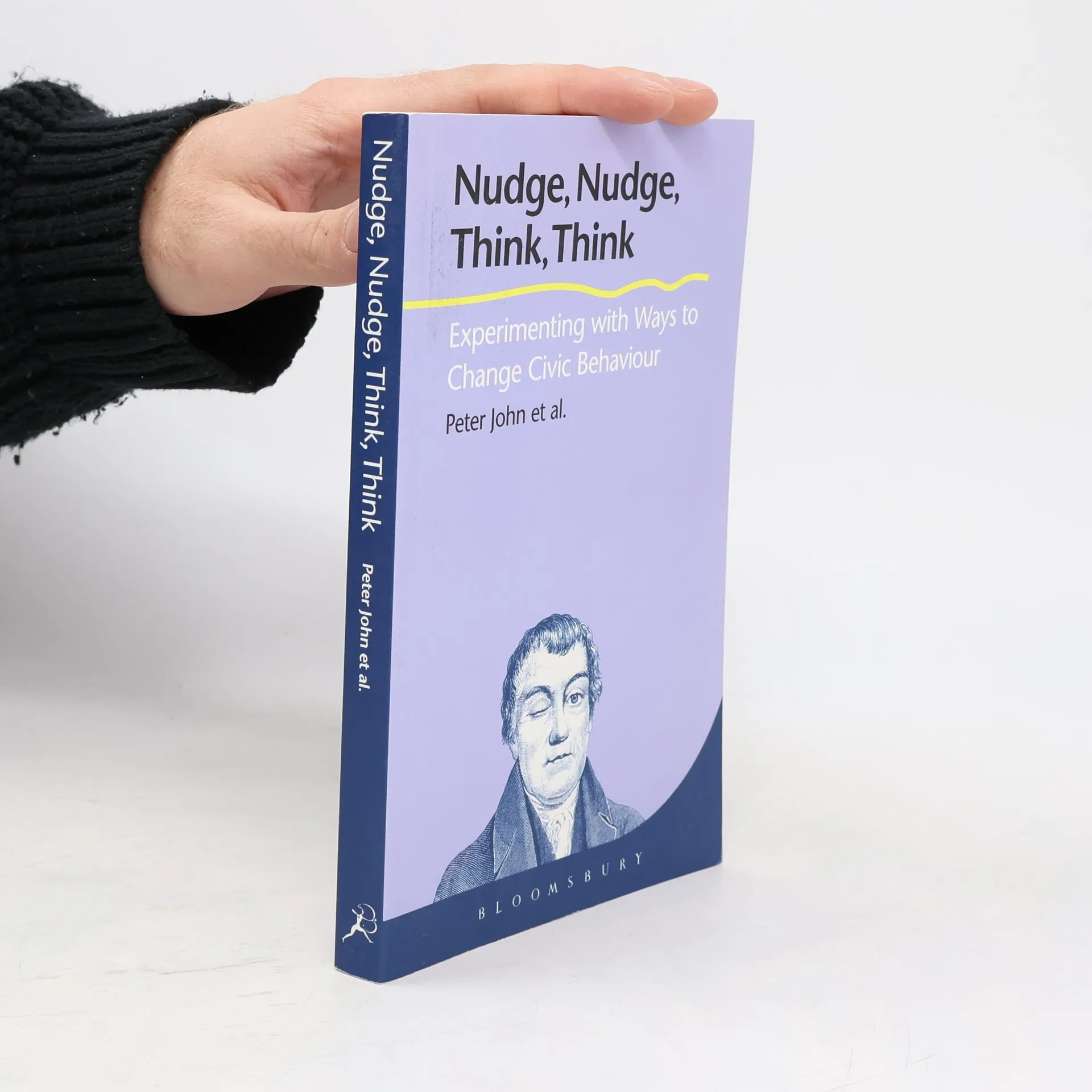
      Nudge, Nudge, Think, Think

      Experimenting with Ways to Change Civic Behaviour

      • 208 páginas
      • 8 horas de lectura

      'A pathbreaking book that for the first time brings smart policy insights into contact with creative, rigorous testing.This book sets the standard for all future scientific evaluations of "what works".' Donald P. Green , Columbia University, USA How can governments persuade citizens to act in socially beneficial ways? Thaler and Sunstein's book Nudge drew on work from behavioural economics to claim that citizens might be encouraged through 'light touch interventions' (i.e.nudges) to take action.This ground-breaking successor to Nudge is now available in paperback, with a new preface.In it, Peter John and his colleagues argue that an alternative approach to nudge also needs to be considered, based on what they call a 'think' strategy. Their core idea is that citizens should themselves deliberate and decide their own priorities as part of a process of civic and democratic renewal.The authors not only set out these divergent approaches in theory but they offer evidence from a series of experiments to show how using techniques from 'nudge' or 'think' repertoires work in practice and how that practice is made effective.

      Nudge, Nudge, Think, Think