

Set against the backdrop of Renaissance Florence, this exploration delves into the impact of Giovanni Boccaccio's Decameron during a tumultuous era marked by the Black Death and significant political upheaval. The narrative reflects themes of love, sex, loyalty, and betrayal, highlighting how the work redefined concepts of truth and virtue amidst desperation and potential for change. Ruggiero captures the essence of how the Decameron was perceived in the fourteenth century, offering a vivid portrayal of its cultural significance.
Guido Ruggiero Orden de los libros (cronológico)
Guido Ruggiero es un historiador centrado principalmente en la historia social y cultural de la Italia renacentista y de la temprana modernidad. Su obra profundiza en temas como el género, el sexo, el crimen y la vida cotidiana, empleando enfoques interdisciplinarios que fusionan la microhistoria, la historia narrativa y la crítica literaria. Ruggiero promueve el uso de fuentes de archivo para contar historias cautivadoras, integrando la literatura y la investigación histórica. Su investigación se centra a menudo en Venecia, buscando ofrecer nuevos paradigmas para comprender el Renacimiento italiano a través de su tejido social.

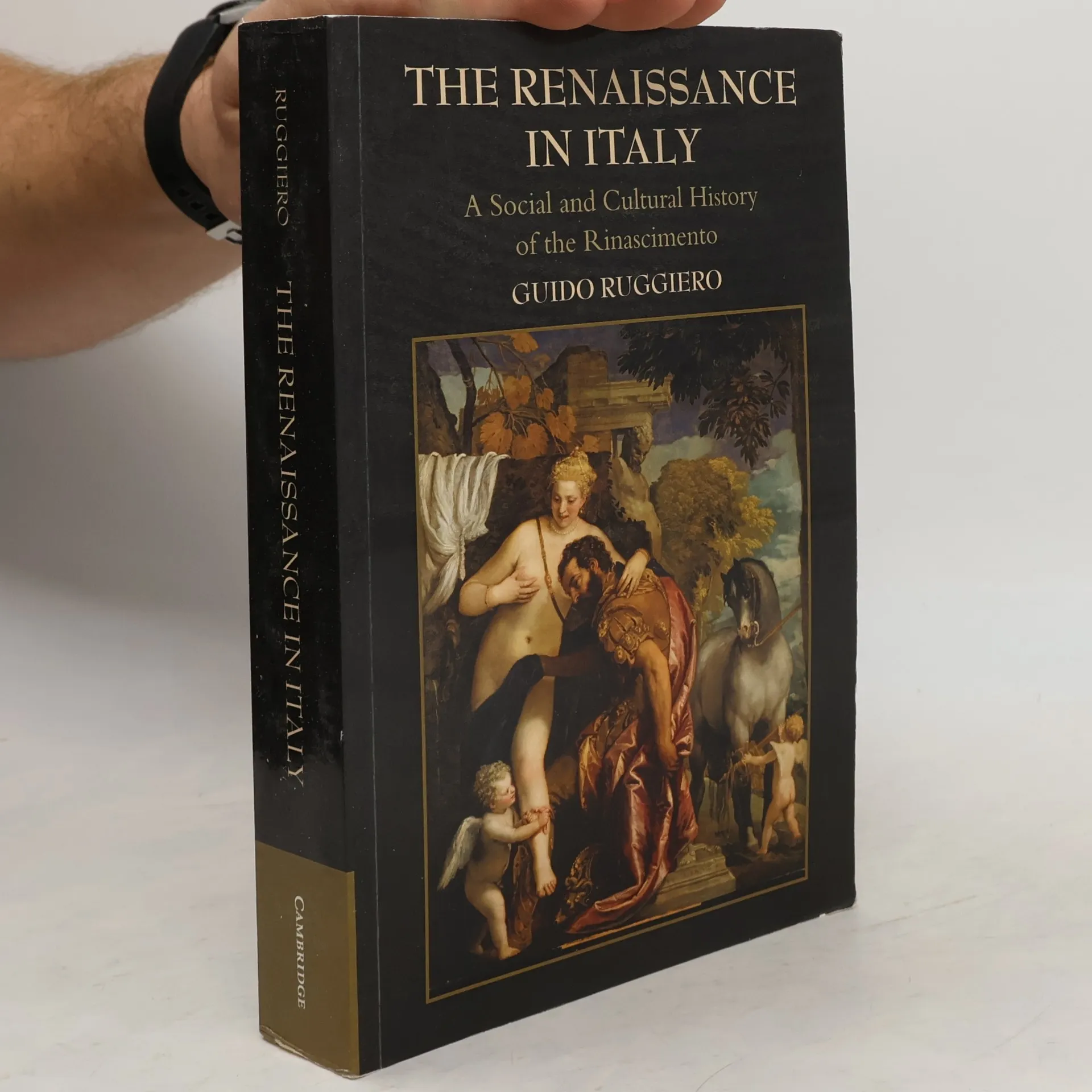


The Renaissance in Italy
- 654 páginas
- 23 horas de lectura
This book offers a rich and exciting new way of thinking about the Italian Renaissance as both a historical period and a historical movement. Guido Ruggiero's work is based on archival research and new insights of social and cultural history and literary criticism, with a special emphasis on everyday culture, gender, violence, and sexuality. The book offers a vibrant and relevant critical study of a period too long burdened by anachronistic and outdated ways of thinking about the past. Familiar, yet alien; pre-modern, but suggestively post-modern; attractive and troubling, this book returns the Italian Renaissance to center stage in our past and in our historical analysis.
The Boundaries of Eros
- 240 páginas
- 9 horas de lectura
Utilizing the records of several Venetian courts that dealt with sex crimes, Ruggiero traces the evolution of both licit and illicit sexuality during the 14th and 15th centuries. He argues that the use of such records reveals not only the nature of sexual behaviour that was considered criminal, but also what society established as the norm. Through this examination of illicit sexuality, Ruggiero sheds light on the institutions, languages, social life and values not only of this shadow-culture, but also of Venetian society and, ultimately, the Renaissance itself.