A founder of contemporary Moroccan art. This publication highlights a crucial period in the career of Farid his return to Morocco in 1962 and his appointment as director of the School of Fine Arts of Casablanca, a position he held until his resignation in 1974.Farid Belkahia advocated the re-appropriation of traditional arts. He surrounded himself with a team that shared his vision including the artists Mohamed Melehi and Mohamed Chabâa, and the art historians Toni Maraini and Bert Flint. These historical figures had evolved in places of modern artistic practice in Europe and North America, and had been exposed to the Bauhaus philosophy.Together, they initiated an innovative pedagogy at the Casablanca School of Fine Arts, which they transformed into an incubator of a modern artistic creation, rooted in local culture, emancipated from academic artistic practices and open to the world. Other renowned artists joined the teaching staff, such as Mohamed Ataallah, André Elbaz, Mohamed Hamidi and Mustapha Hafid, inspiring pupils such as the artists Malika Agueznay, Abdellah El Hariri, Houssein Miloudi, Abdelkrim Ghattas, Abderrahman Rahoule among others.
Editions Skira Paris Libros


Ba's densely textured paintings intertwine African and European histories to explore the corrupting effects of wealth and power and their impacts on communities This is the first monograph on Dakar- and New York-based mixed-media painter Omar Ba (born 1977), whose surreal scenes of violence and fantasy draw from a wide and often dark portfolio of themes: despotic warlords of the present, traditional folklore, colonial oppression and the pharaohs of ancient Egypt. His most abiding theme is the experiences of Black communities, both within America and across the globe. Ba articulates all these narrative threads through a densely textured visual language, applying oil, gouache, crayon and India ink onto rough, readymade surfaces such as corrugated cardboard. After preparing uniform backgrounds rendered in black paint, Ba populates the scenes with an abundance of fantastical beings--part human, part animal or plant.
L'Atlas is a Parisian artist born in 1978. Fascinated by handwriting from an early age, he moves to different Arabic countries in the 1990s to study calligraphy. In France, he starts by graffiti art, which he combines with his great passion for writing. A balance between form and letter is since then at the heart of his practice. He uses spray paint, scotch tape or gaffer on various supports: canvas, pavement, buildings' facades, etc. and is also well-known for his performances. L'Atlas creates his own labirynthical alphabet which, inked in the city, invites us to question the universality of the language and the limits of illegibility. This monograph presents many variations of artist's codified language. Between Optical Art, abstraction, street art, Pop Art and Minimalism, L'Atlas' art is multifaceted.
The decade that forged the Sottsass look: on the legendary designer's '60s collaboration with the Poltronova company The decade of collaboration between the Italian designer and architect Ettore Sottsass (1917-2007) and Tuscan furniture company Poltronova from 1960 to 1970 marked a phase of almost total freedom for the designer. The breadth of this era, both rich in creations and decisive in establishing the designer's style, is now accessible in this analysis of Sottsass' work, augmented with advertising photos from the period, annotated sketches and his personal photographs. In 1956, at the request of the painter and sculptor Sergio Camilli, Sottsass became the artistic director of Poltronova, Camilli's new furniture company. Sottsass then created Poltronova's logo and produced its first catalogs. The vibrant, playful Poltronova catalogs express his experimentation with geometric shapes, mixes of materials and vibrant colors. The brand became a true standard bearer of Italian creation, collaborating with renowned artists such as Max Ernst. This beautiful catalog, designed in a characteristic Sottsass style, serves as both a guide to all the pieces that he designed with Poltronova and also a celebration of the master's playful spirit in wood, steel, marble and every material he could implement to construct his iconic chairs, cabinets, mirrors and more.
Originally from Brittany, Renk-whose real name is Walig Nicolet-grew up in Rennes in a family of artists. He left school at a very young age and began painting in the street. A few years later, working in studios in Paris and Los Angeles, he started painting on large canvases. His practice at the time was based on the accumulation and repetition of his tag-RENK-and soon evolved into the creation of vast colored areas whose variations evoke Color Field painting. Perched on the roofs of Parisian buildings or canoeing along the coast of his native Brittany, Renk travels in search of "climatic moments" that allow him to express his passion for limitless space and pure color. This book, the artist's first monograph, traces Renk's journey from the 2010s to today.
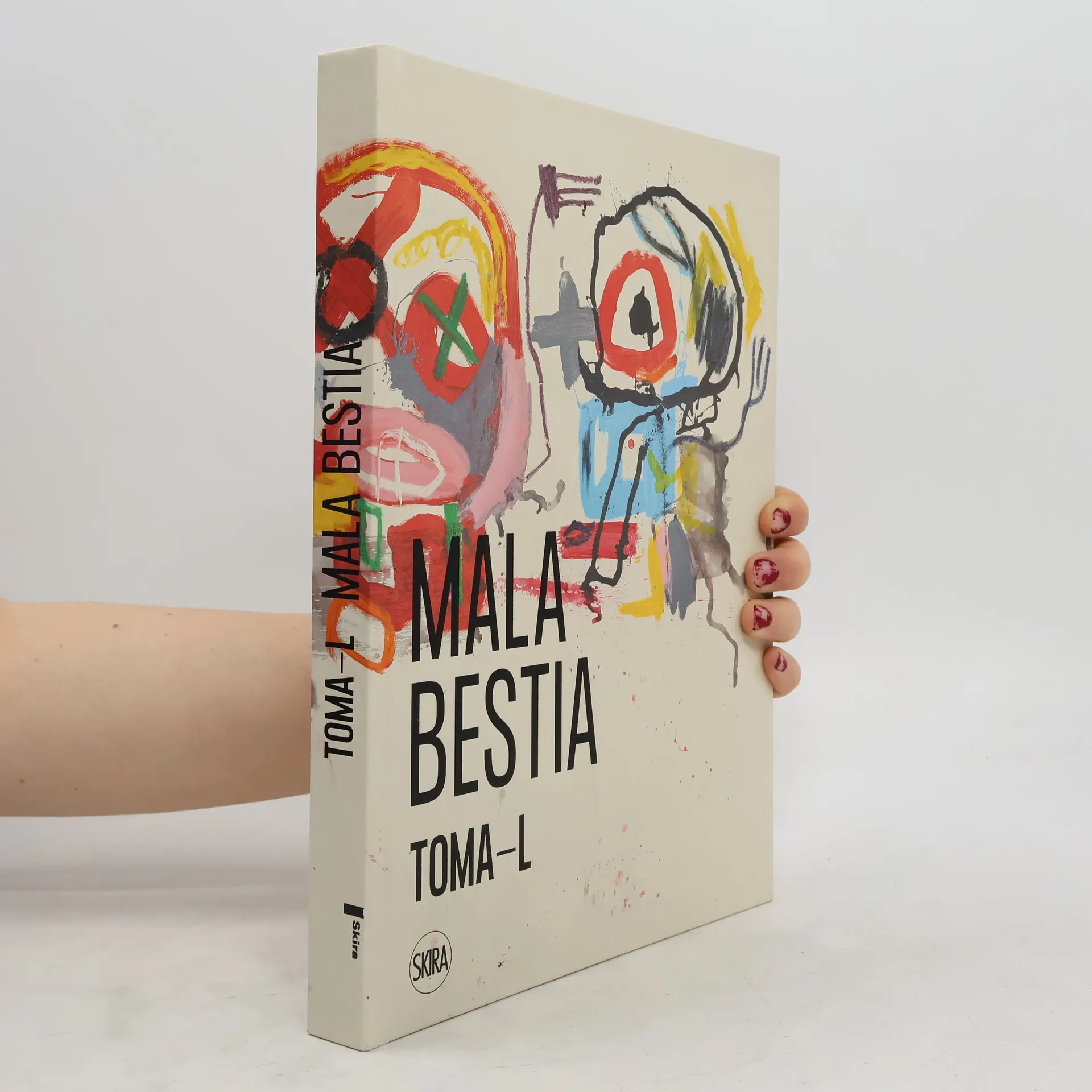
“At the dawn of the new millenium, Thomas Labarthe discovered Jean Dubuffet at the Pompidou Centre. This posthumous encounter, through a retrospective, was ‘like an electric shock, but also a revelation’. Three months later, the young Labarthe painted Mala Bestia, his first canvas. ... Since then, Toma-L has been painting intuitively, freely, on the fringes of the conventions, concentrating on his gut and his technique. With dissolute figures and tense lines and shapes, the painter has created a world of small, restless, turbulent people, drawn in charcoal on paper or canvas. From installations in Tunisia and frenetic book projects in Marseille to self-taught charcoal lithographs and his impulsive exhibitions: in this first monograph, the artist Toma-L and author Théophile Pillault review two decades of unbridled creativity.”--Page 4 of cover