
Compra 10 libros por 10 € aquí!
Bookbot

Sugata Bose

    Sugata Bose es el Profesor Gardiner de Historia y Asuntos Oceánicos en la Universidad de Harvard. Es autor de varios libros sobre la historia económica, social y política del sur de Asia moderno, y ha sido pionero en estudios históricos que enfatizan la centralidad del Océano Índico. Su obra profundiza en las figuras y procesos cruciales que dieron forma a las historias del sur de Asia y el mundo del Océano Índico. Las profundas ideas de Bose sobre el pasado ofrecen una exploración cautivadora de las intrincadas relaciones y las fuerzas transformadoras que han moldeado esta región vital.
    An Indian Pilgrim:
    Azad Hind:
    In Burmese Prisons: Correspondence May 1923-July 1926
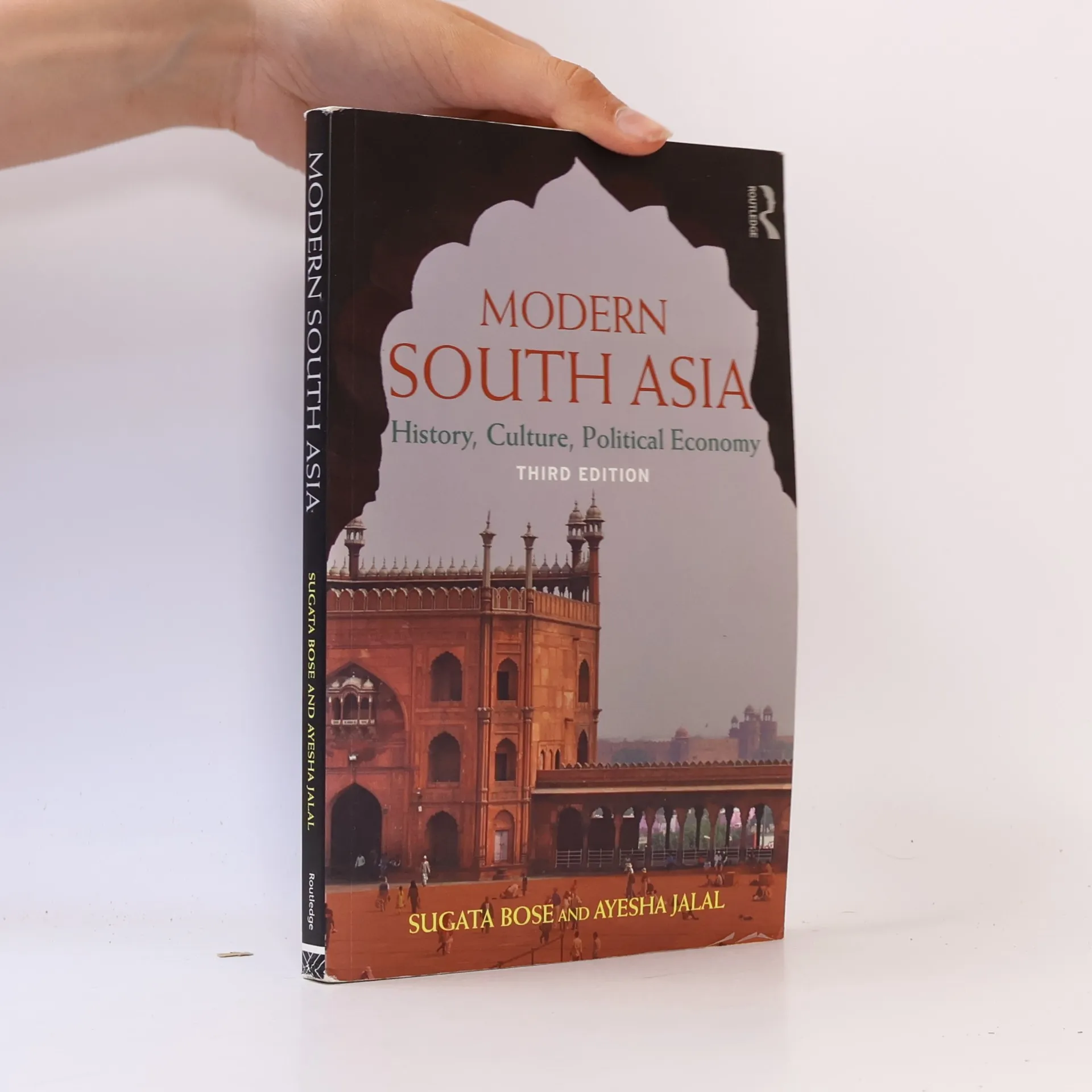
    Modern South Asia
    Modern South Asia
    The Nation as Mother: And Other Visions of Nationhood
    • Exploring the complex interplay of nationhood, reason, and religion, this collection of essays and speeches by Sugata Bose presents a nuanced view of India's identity as a federal union. The author challenges the binary of secular nationalism and religious communalism, analyzing the political thoughts of influential figures like Tagore, Gandhi, and Nehru. Advocating for layered sovereignty, Bose emphasizes the importance of cultural intimacy and shared identities, proposing an inclusive vision for India's future amidst its diverse populace.

      The Nation as Mother: And Other Visions of Nationhood
    • Jointly written by two leading Indian and Pakistani historians, Modern South Asia offers a rare depth of historical understanding of the politics, cultures and economies that shape the lives of more than a fifth of humanity. After sketching the pre-modern history of the sub-continent, the book concentrates on the last three centuries.This new second edition has been updated throughout to take account of recent historical research. It includes an expanded section on post-independence with a completely new chapter on the period from 1991 to the present and a chapter on the last millennium in subcontinental history. There is a new chronology of key events.

      Modern South Asia
    • Modern South Asia

      History, Culture, Political Economy

      • 298 páginas
      • 11 horas de lectura

      This fifth edition offers a comprehensive analysis of modern South Asian history, incorporating the latest research and scholarship. It explores significant developments across the subcontinent's diverse social, economic, and political landscape, providing critical interpretations and debates that reflect the complexities of the region's past.

      Modern South Asia
    • Prison letters, despite being subjected to the scrutiny of government censors, often supply some of the deepest insights into the mind of a revolutionary. Subhas Chandra Bose’s letters from Mandalay certainly underscore the truth of the poetic ‘Some walls do not a prison make, nor iron bars a cage’. They make this volume one of the most moving in the 12-volume set of Netaji’s Collected Works. Subhas Chandra Bose’s exile in Burmese prisons from 1924 to 1927 witnessed the transformation of a lieutenant into a leader. During the non-cooperation movement and its aftermath he had wholeheartedly accepted Deshbandhu Chitta Ranjan Das as his political mentor. The apprenticeship was cut short by Deshbandhu’s death in June 1925. When Subhas received this terrible news as a prisoner in Mandalay, he felt, ‘desolate with a sense of bereavement’, as he wrote to his friend Dilip Kumar Roy. Netaji’s letters cover a very wide array of topics―art, music, literature, nature, education, folk culture, civic affairs, criminology, spirituality, and, of course, politics. He bore the rigours of prison life with a combination of stoicism and humour. This volume is indispensable to an understanding of India’s greatest revolutionary leader and will interest all historians of modern India.

      In Burmese Prisons: Correspondence May 1923-July 1926
    • Subhas Chandra Bose’s ‘discovery of India’, unlike Jawaharlal Nehru’s, occurred very early in life, when he was barely in his teens. ‘How many selfless sons of the Mother are prepared, in this selfish age,’ the fifteen-year-old Subhas asked his mother in 1912, ‘to completely give up their personal interests and take the plunge for the Mother? Mother, is this son of yours yet ready?’ As he stood on the verge of taking the plunge by resigning from the Indian Civil Service in 1921, he wrote to his elder brother ‘Only on the soil of sacrifice and suffering can we raise our national edifice.’In December 1937 Bose wrote ten chapters of his autobiography, providing a narrative of his life until 1921 and a reflective chapter entitled ‘My Faith-Philosophical’. The autobiography is complemented with a fascinating collection of seventy letters of Bose’s childhood, adolescence and youth. It is not often that remembrances written later in life can be read together with primary source materials of the earlier, formative phases.This volume thus supplies the material with which to study the influences – religious, cultural, moral, intellectual and political – that moulded the character and personality of the revolutionary leader of India’s freedom struggle

      An Indian Pilgrim:
    • Across the twentieth century, Asians imagined universalist ideals centered on the idea of Asia itself, rivaling European colonial thought, liberalism, and race-based nationalisms. Sugata Bose explores the history of Asian universalisms and reflects on their potential amid ongoing nationalist rivalries tied to religious majoritarianism and violence.

      Asia after Europe