
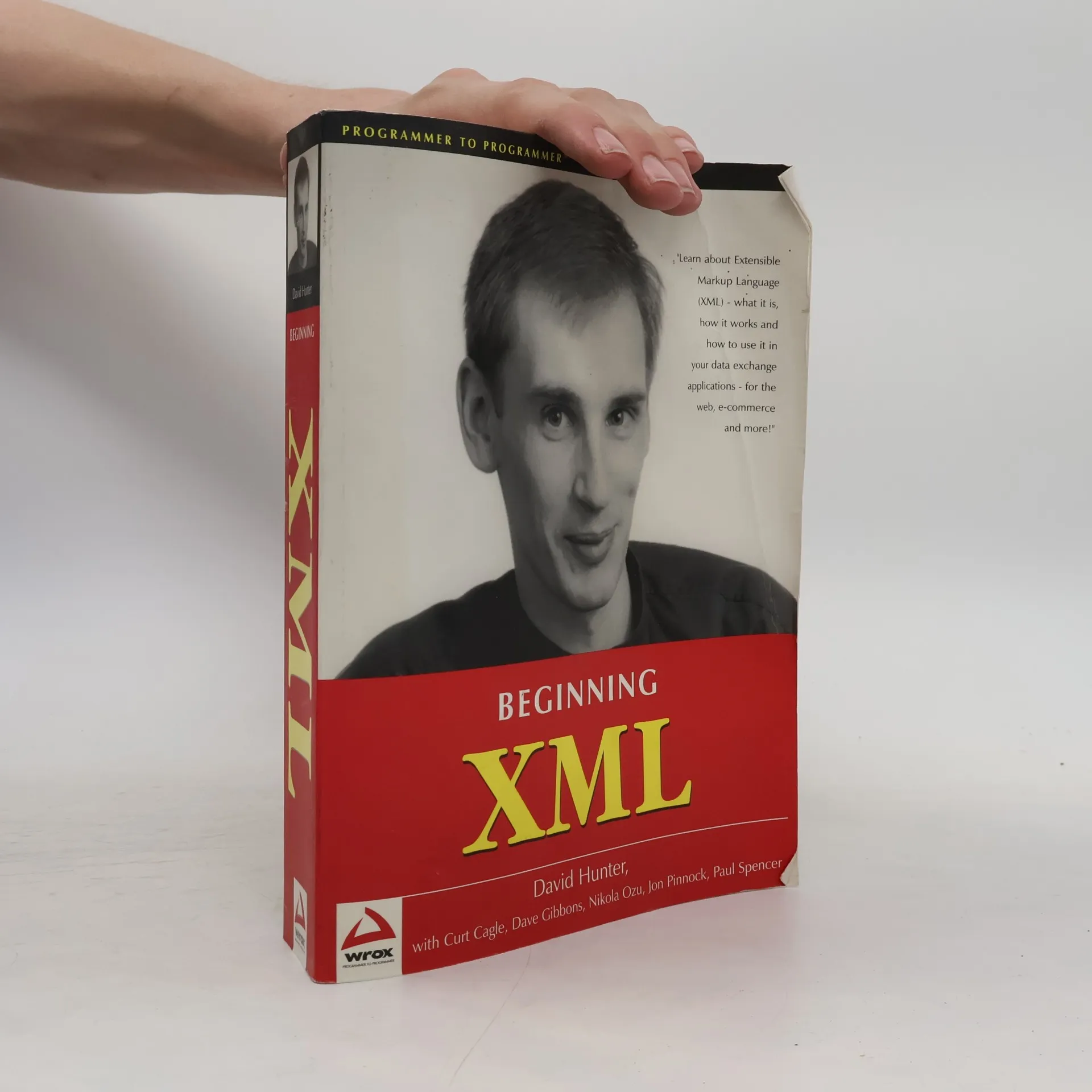
This book focuses on Extensible Markup Language (XML), a technology with significant real-world applications for data management, display, and organization. It serves as a comprehensive guide for understanding XML, its functionalities, surrounding technologies, and practical uses, ranging from simple data transfers to web page integration. The updated edition includes new material reflecting recent developments in the XML landscape, such as SOAP, Web Services, and the W3C's XML Schemas Recommendation. Key topics covered include XML syntax and well-formed XML writing, XML Namespaces, transforming XML with XSLT, and using XPath and XPointer for data location. It also addresses XML validation through DTDs and XML Schemas, document manipulation with DOM and SAX 2.0, and displaying XML with CSS and XSL. Additionally, the book explores incorporating XML into traditional databases and n-tier architectures, as well as linking resources with XLink and XPointer. This resource is ideal for developers eager to learn XML for web, e-commerce, or data-storage applications. While prior knowledge of markup, scripting, or object-oriented programming is beneficial, the book explains foundational techniques as needed.
Jonathan Pinnock Libros
N/A


Programmer To Programmer: Beginning XML
Learn About Extensible Markup Language (XML) - What It Is, How It Works And How To Use It In Your Data Exchange Applications - For The Web, E-Commerce And More!
- 823 páginas
- 29 horas de lectura
XML is the latest buzzword on the Internet. It's a rapidly maturing technology with powerful real-world applications, particularly for the management, display and organization of data. Together with its display language (XSL) and the standardized Document Object Model, it is essential technology for anyone looking for more efficient and cost effective ways of both managing and transfering data. Perhaps the most well known applications are web related (especially with the latest developments in handheld web access - for which the technology is XML-based). But there are many other non-web based applications where XML is useful - for example as a replacement for (or to complement) traditional databases or for the transfer of financial information between businesses.