The Titan mother, Rhea, has lost something and wants it back. Bad. Zeus wants
the prince of Troy, Ganumede, who wants the same thing as Rhea the most
powerful phallus in creation, currently owned by the golden god, Attis. How it
got there and why it can never be touched is a conundrum that holds all of
creation in its grasp. Ganumede falls under its spell cursed with an
unquenchable infatuation for Attis, an Adonis that rides a gold motorcycle in
a leather jacket the color of a jet. The prince, likewise, becomes targeted by
men and gods who want to bask in the affections of the most beautiful boy ever
made. Ganumede clings to his
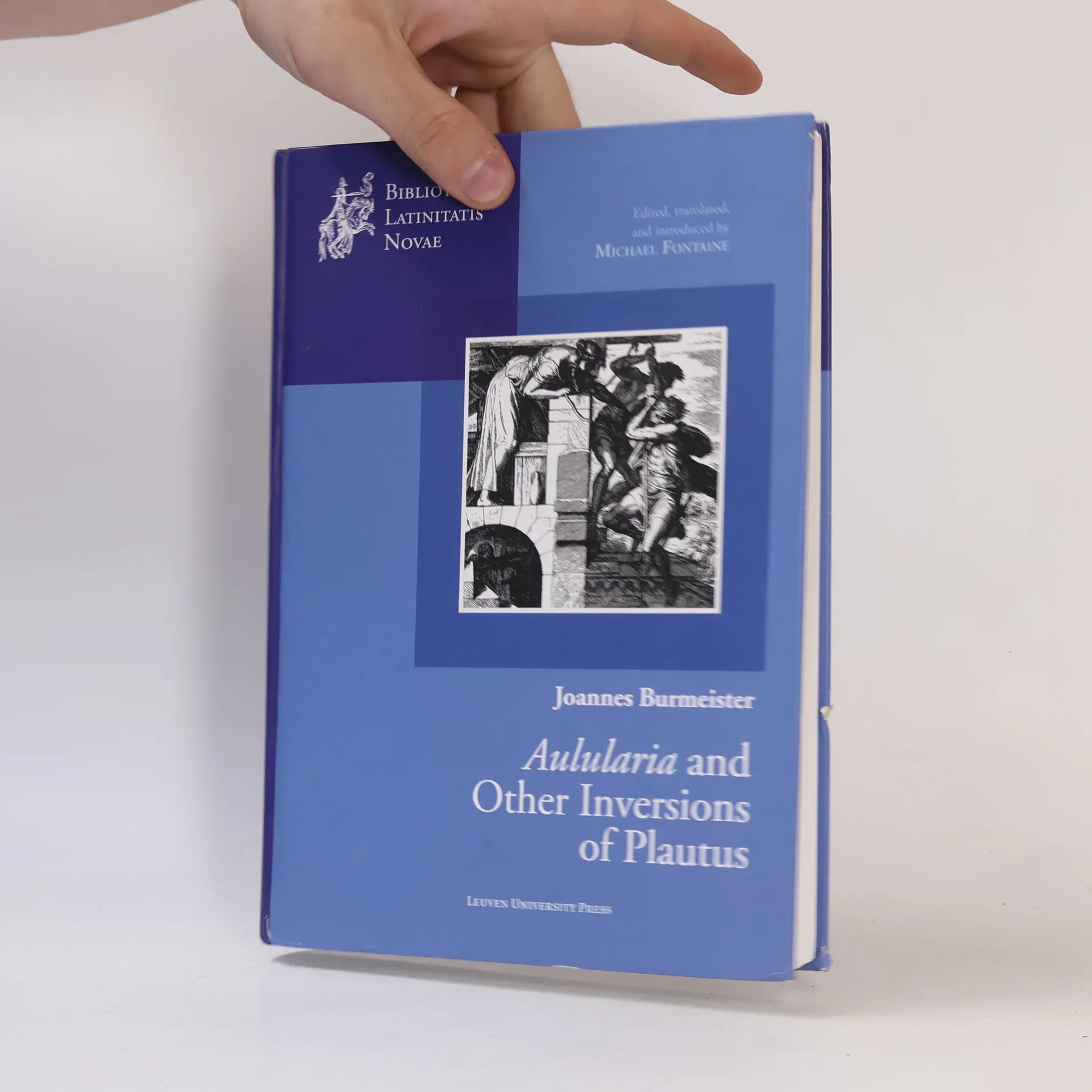
Joannes Burmeister of Luneburg (1576-1638) was among the greatest Neo-Latin poets of the German Baroque. His masterpieces, now mostly lost, are Christian "inversions" of the classical Roman comedies of Plautus. With only minimal changes in language and none in meter, each transforms Plautus' pagan plays into comedies based on biblical themes. Fascinating in their own right, they also bring back to attention forgotten genres of Renaissance literature. This volume offers the first critical edition of the newly discovered Aulularia (1629), which exists in a sole copy, and the fragments of Mater-Virgo (1621), which adapts Plautus' Amphitryo to show the Nativity of Jesus.The introduction offers reconstructions of Susanna (based on Casina) and Asinaria (1625), his two lost or unpublished inversions of Plautus. Fontaine also provides the only biography of Burmeister based on archival sources, along with discussions of his inimitable Latinity and the perilous context of war and witch burning in which Burmeister wrote. Burmeister's inversions bear witness to the special talent of his age for the creative reworking of classical literature, such as Monteverdi's Poppea or Purcell's Dido and Aeneas, as well as to his tumultuous times, with his views on military abuses in the Thirty Years War prefiguring those of Grimmelshausen's Simplicius Simplicissimus.
Alte Weisheiten zur Kultur des gepflegten Rausches
Gibt es eine Kunst des Alkoholgenusses, kann Trinken eine Tugend sein? Ja, so dachte der Renaissance-Dichter Obsopoeus (ca. 1498–1539), wenn es in Maßen und unter Wahrung bestimmter Regeln geschieht. Also Mäßigung – nicht Enthaltsamkeit! In seinem berühmtesten Werk De arte bibendi libri tres (Über die Kunst des genussvollen Trinkens) beschreibt er, wie man statt ungezügelter Saufgelage in den Genuss eines gepflegten Rausches kommen kann – mit speziellen Tipps zu den besten Trinksprüchen und Trinkspielen sowie zum Umgang mit Trinkgefährten. Michael Fontaine hat Obsopoeus‘ geistreiche Abhandlung zum ersten Mal übersetzt und sie dem Leser damit für unsere heutige Zeit zugänglich gemacht. Inklusive des lateinischen Originaltextes in einer zweisprachigen Ausgabe