

In 1970, at the age of forty-five, Kimitake Hiranka – better known by his pen name, Yukio Mishima – was unrivaled as the outstanding Japanese writer of his generation. He had produced forty novels, eighteen plays, twenty volumes of short stories and essays, and had been nominated for the Nobel Prize three times. In November of that year, he performed the most spectacular feat of his career, a ritual suicide which he had painstakingly plotted for several months. Horrifying as his death was, it represented the almost inevitable climax for Mishima, a tortured, nearly superhuman being, whose life had been relentless search for convulsive beauty. John Nathan’s fascinating biography examines Mishima’s troubled childhood spent under the domination of a sickly grandmother, who infected him with a poetic longing for irrecoverable past; his mother’s passive but equally ferocious jealousy; his father’s tyrannical opposition to his son’s ambitions; his early fixation on purity and beauty, which paved the way for his later erotic nihilism; the conflict between his orderly and conventional life ( he married an aristocrat’s daughter and was the loving father of two children) and his homosexuality and sadomasochistic impulses; and his increasing obsession with death as both the coup de theatre and his supreme beauty.
John Nathan Libros



Soseki
- 344 páginas
- 13 horas de lectura
John Nathan provides a lucid and vivid account of Natsume Soseki, the father of the modern novel in Japan. This biography elevates Soseki to his rightful place as a great synthesizer of literary traditions and a brilliant chronicler of universal experience who, no less than his Western contemporaries, anticipated twentieth-century modernism.
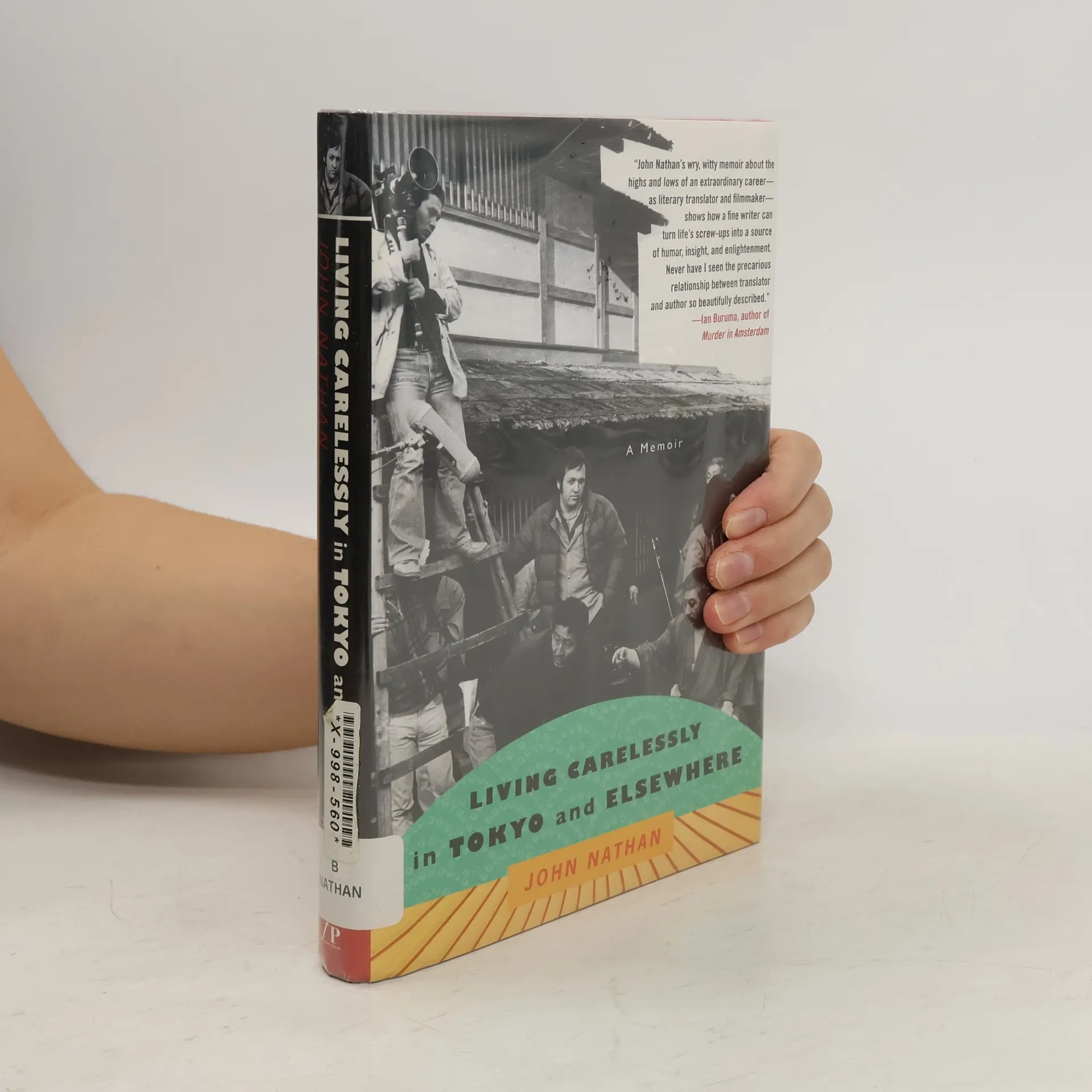
In 1961, John Nathan arrived in Tokyo, armed only with determination and minimal connections. At that time, Japan was still influenced by the Occupation, and few foreigners were studying the country in depth. Within two years, Nathan became the first American to pass the entrance exams for the prestigious University of Tokyo. He went on to translate works by renowned authors Yukio Mishima and Kenzaburō Ōe, direct films in collaboration with notable directors, and earn advanced degrees at Harvard and Princeton. His book, The Private Life, provided unprecedented access to Sony's inner workings, while Japan Unbound examined the psyche of post-bubble Japan. Throughout his journey, Nathan formed close friendships with influential figures across various fields, gaining insights into aspects of Japanese life typically closed to outsiders. In his memoir, Living Carelessly in Tokyo and Elsewhere, he recounts his adventures—both sublime and chaotic—during a transformative era in Japan. With humor and insight, Nathan shares his unique experiences, highlighting the richness of understanding Japan and the importance of exploring both external and internal landscapes. His narrative stands as a deeply personal and extraordinary account of a life engaged with Japan.
A Personal Matter
- 165 páginas
- 6 horas de lectura
Kenzaburō Ōe, the winner of the 1994 Nobel Prize for Literature, is internationally acclaimed as one of the most important and influential post-World War II writers, known for his powerful accounts of the atomic bombing of Hiroshima and his own struggle to come to terms with a mentally handicapped son. The Swedish Academy lauded Ōe for his "poetic force [that] creates an imagined world where life and myth condense to form a disconcerting picture of the human predicament today." His most personal book, A Personal Matter, is the story of Bird, a frustrated intellectual in a failing marriage whose utopian dream is shattered when his wife gives birth to a brain-damaged child.