Compra 10 libros por 10 € aquí!
Bookbot

Katy Börner

    Atlas of Science
    Atlas of Forecasts
    • 2021

      Atlas of Forecasts

      • 228 páginas
      • 8 horas de lectura

      Forecasting the future with advanced data models and visualizations.To envision and create the futures we want, society needs an appropriate understanding of the likely impact of alternative actions. Data models and visualizations offer a way to understand and intelligently manage complex, interlinked systems in science and technology, education, and policymaking. Atlas of Forecasts, from the creator of Atlas of Science and Atlas of Knowledge, shows how we can use data to predict, communicate, and ultimately attain desirable futures.Using advanced data visualizations to introduce different types of computational models, Atlas of Forecasts demonstrates how models can inform effective decision-making in education, science, technology, and policymaking. The models and maps presented aim to help anyone understand key processes and outcomes of complex systems dynamics, including which human skills are needed in an artificial intelligence-empowered economy; what progress in science and technology is likely to be made; and how policymakers can future-proof regions or nations. This Atlas offers a driver's seat-perspective for a test-drive of the future.

      Atlas of Forecasts
    • 2010

      Atlas of Science

      Visualizing What We Know

      • 272 páginas
      • 10 horas de lectura

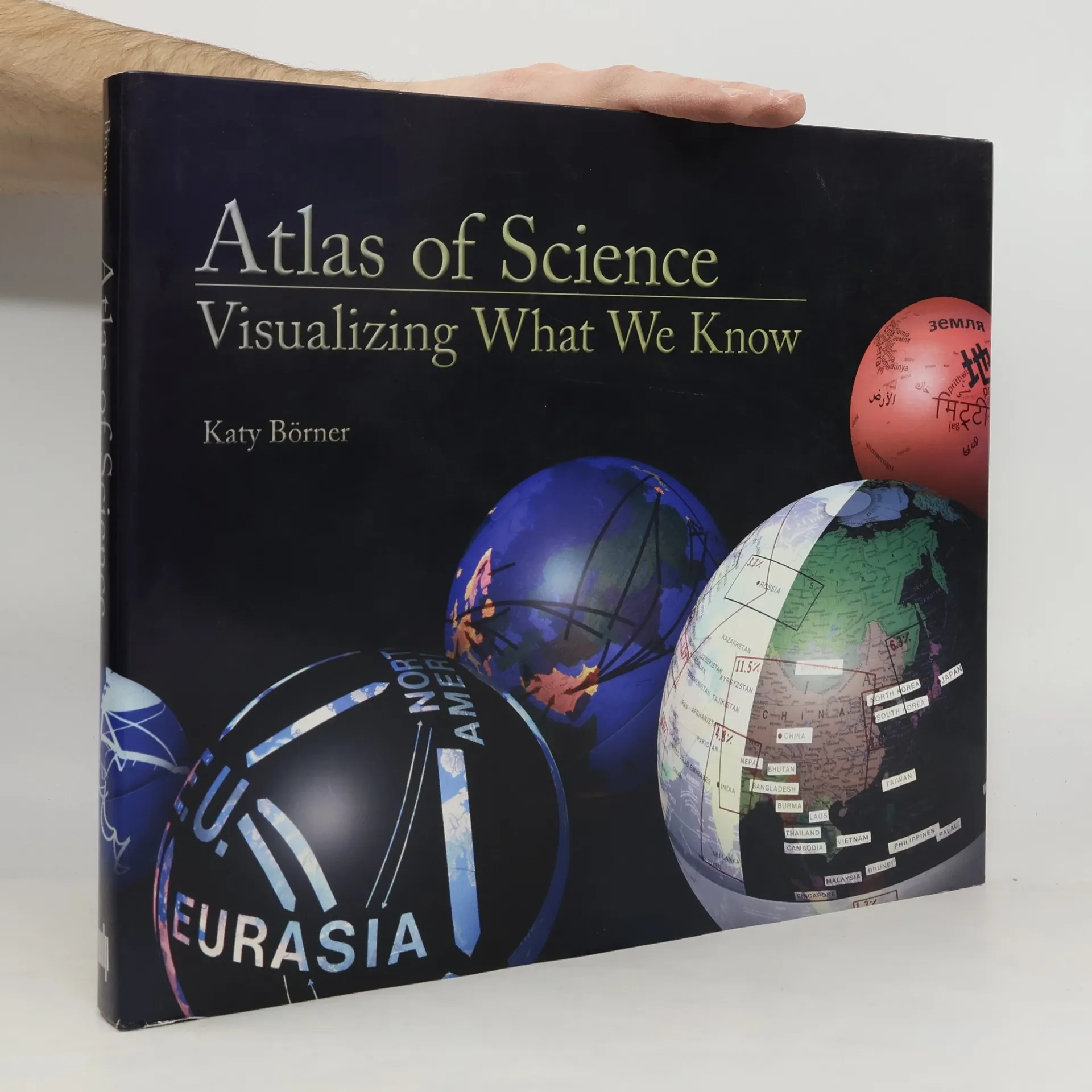
      Cartographic maps have guided our explorations for centuries, allowing us to navigate the world. Science maps have the potential to guide our search for knowledge in the same way, helping us navigate, understand, and communicate the dynamic and changing structure of science and technology. Allowing us to visualize scientific results, science maps help us make sense of the avalanche of data generated by scientific research today. Atlas of Science, features more than thirty full-page science maps, fifty data charts, a timeline of science-mapping milestones, and 500 color images; it serves as a sumptuous visual index to the evolution of modern science and as an introduction to "the science of science"—charting the trajectory from scientific concept to published results. Atlas of Science, based on the popular exhibit "Places & Spaces: Mapping Science," describes and displays successful mapping techniques. The heart of the book is a visual feast: Claudius Ptolemy's Cosmographia World Map from 1482; a guide to a PhD thesis that resembles a subway map; "the structure of science" as revealed in a map of citation relationships in papers published in 2002; a periodic table; a history flow visualization of the Wikipedia article on abortion; a globe showing the worldwide distribution of patents; a forecast of earthquake risk; hands-on science maps for kids; and many more. Each entry includes the story behind the map and biographies of its makers. Not even the most brilliant minds can keep up with today's deluge of scientific results. Science maps show us the landscape of what we know. Exhibition Ongoing National Science Foundation, Washington, D.C.The Institute for Research Information and Quality Assurance, Bonn, GermanyStorm Hall, San Diego State College

      Atlas of Science