

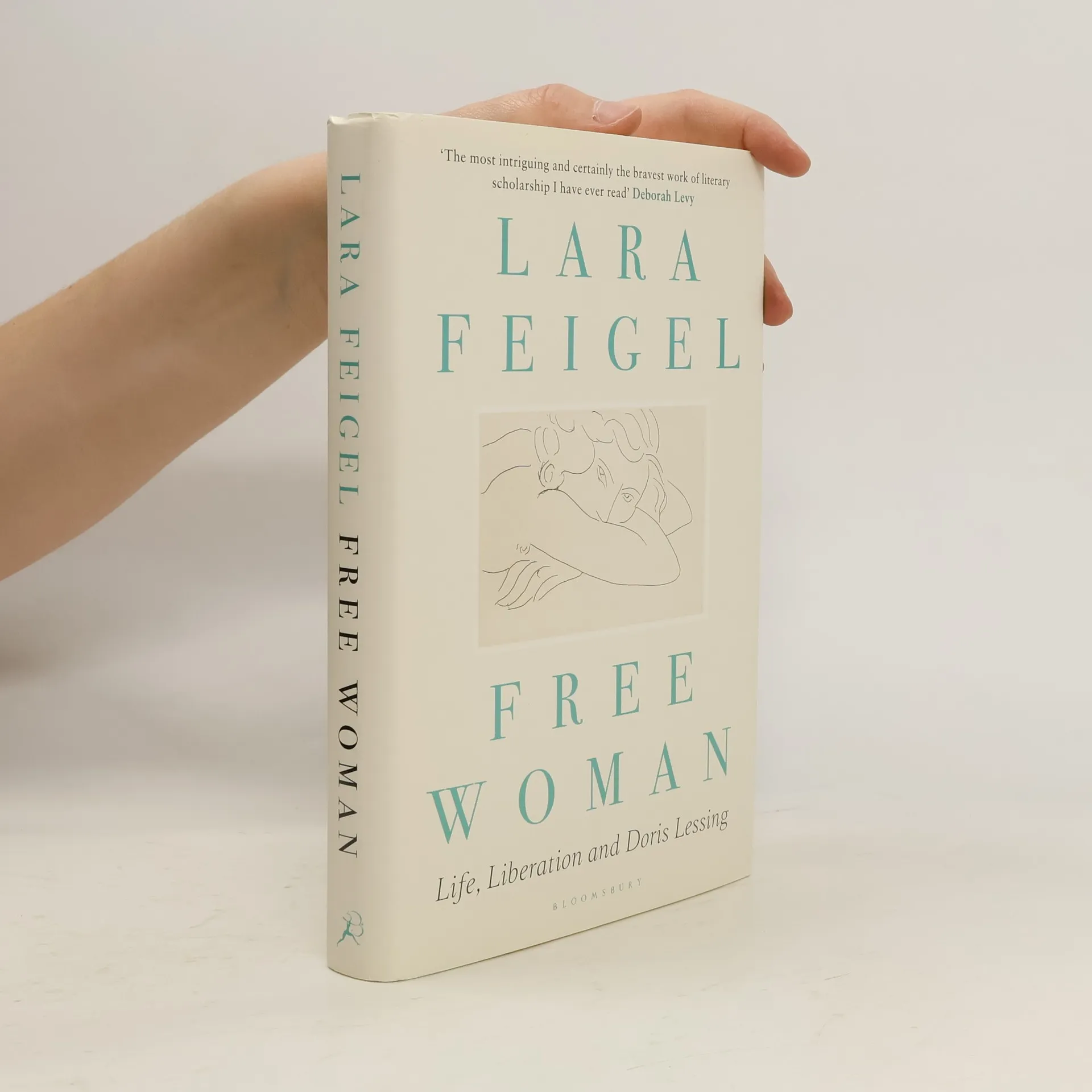
A genre-defying memoir in which Lara Feigel experiments with sexual, intellectual and political freedom while reading and pursuing Doris LessingHow might we live more freely, and will we be happier or lonelier if we do? Re-reading The Golden Notebook in her thirties, shortly after Doris Lessing's death, Lara Feigel discovered that Lessing spoke directly to her as a woman, a writer, and a mother in a way that no other novelist had done. At a time when she was dissatisfied with the conventions of her own life, Feigel was enticed by Lessing's vision of freedom. Free Woman is essential reading for anyone whose life has been changed by books or has questioned the structures by which they live. Feigel tells Lessing's own story, veering between admiration and fury at the choices Lessing made. At the same time, she scrutinises motherhood, marriage and sexual relationships with an unusually acute gaze. And in the process she conducts a dazzling investigation into the joys and costs of sexual, psychological, intellectual and political freedom. This is a genre-defying book: at once a meditation on life and literature and a daring act of self-exposure.
Lara Feigel Libros


The love-charm of Bombs
- 528 páginas
- 19 horas de lectura
When the first bombs fell on London in August 1940, the city was transformed overnight into a battlefront. For most Londoners, the sirens, guns, planes and bombs heralded grueling nights of sleeplessness, fear and loss. But for Graham Greene and some of his contemporaries, this was a bizarrely euphoric time when London became the setting for intense love affairs and surreal beauty. At the height of the Blitz, Greene described the bomb-bursts as holding one 'like a love-charm.' As the sky whistled and the ground shook, nerves were tested, loyalties examined and infidelities begun. The Love-charm of Bombs is a powerful wartime chronicle told through the eyes of five prominent writers: Elizabeth Bowen, Graham Greene, Rose Macaulay, Hilde Spiel and Henry Yorke (writing as Henry Green). Volunteering as ambulance drivers, fire-fighters and ARP wardens, these were the successors to the soldier poets of the First World War and their story has never been told. Now, opening with a meticulous evocation of a single night in September 1940, Lara Feigel brilliantly and beautifully interweaves letters, diaries and fiction with official civil defense records to chart the history of a burning world in wartime London and post-war Vienna and Berlin. She reveals the haunting, ecstatic, often wrenching stories that triumphed amid the mess of a war-torn world.
'A lovely, urgent, serious book' Tessa Hadley'Refreshing and unexpected' Daisy Hay, Financial TimesLara Feigel listens to birds outside her window - their circling, strident calls - and thinks of D. H. Lawrence. It is the spring of 2020 and, as the pandemic takes hold, she locks down in rural Oxfordshire with her partner, her two children, and that most explosive of writers.Proceeding month by month through the year, she sets out to start again with Lawrence: to find vital literary companionship; to use him as a guide to rural living and even, unexpectedly, to child-rearing; to find a way through his writing to excavate the modern world she feels he helped bring into being. Tracing the arc of Lawrence's life and delving deep into his writings, she confronts his anger, his passion, his tumultuous vitality. In the process, she faces some of today's most urgent dilemmas, from secular religion to the climate crisis, from sex and sexuality to feminism's ideas about motherhood. And, as she watches the seasons change alongside Lawrence, Feigel finds the rhythms of her own life shifting in unexpected ways.Brilliantly interweaving literary criticism, biography and memoir, Look! We Have Come Through! is a captivating exhumation of an author and a compelling manifesto for exposing ourselves to difficult and dangerous views.
The Group
- 336 páginas
- 12 horas de lectura
An engrossing portrait of contemporary female life and friendship