

Celebrate 70 years of the classic! "For God, for country, and for Yale... in that order," William F. Buckley Jr. wrote as the dedication of his monumental work—a compendium of knowledge that still resonates within the halls of the Ivy League university that tried to cover up its political and religious bias. In 1951, a twenty-five-year-old Yale graduate published his first book, which exposed the "extraordinarily irresponsible educational attitude" that prevailed at his alma mater. The book, God and Man at Yale, rocked the academic world and catapulted its young author, William F. Buckley Jr. into the public spotlight. Now, half a century later, read the extraordinary work that began the modern conservative movement. Buckley's harsh assessment of his alma mater divulged the reality behind the institution's wholly secular education, even within the religion department and divinity school. Unabashed, one former Yale student details the importance of Christianity and heralds the modern conservative movement in his preeminent tell-all, God and Man at Yale: The Superstitions of "Academic Freedom."
James Rosen Libros
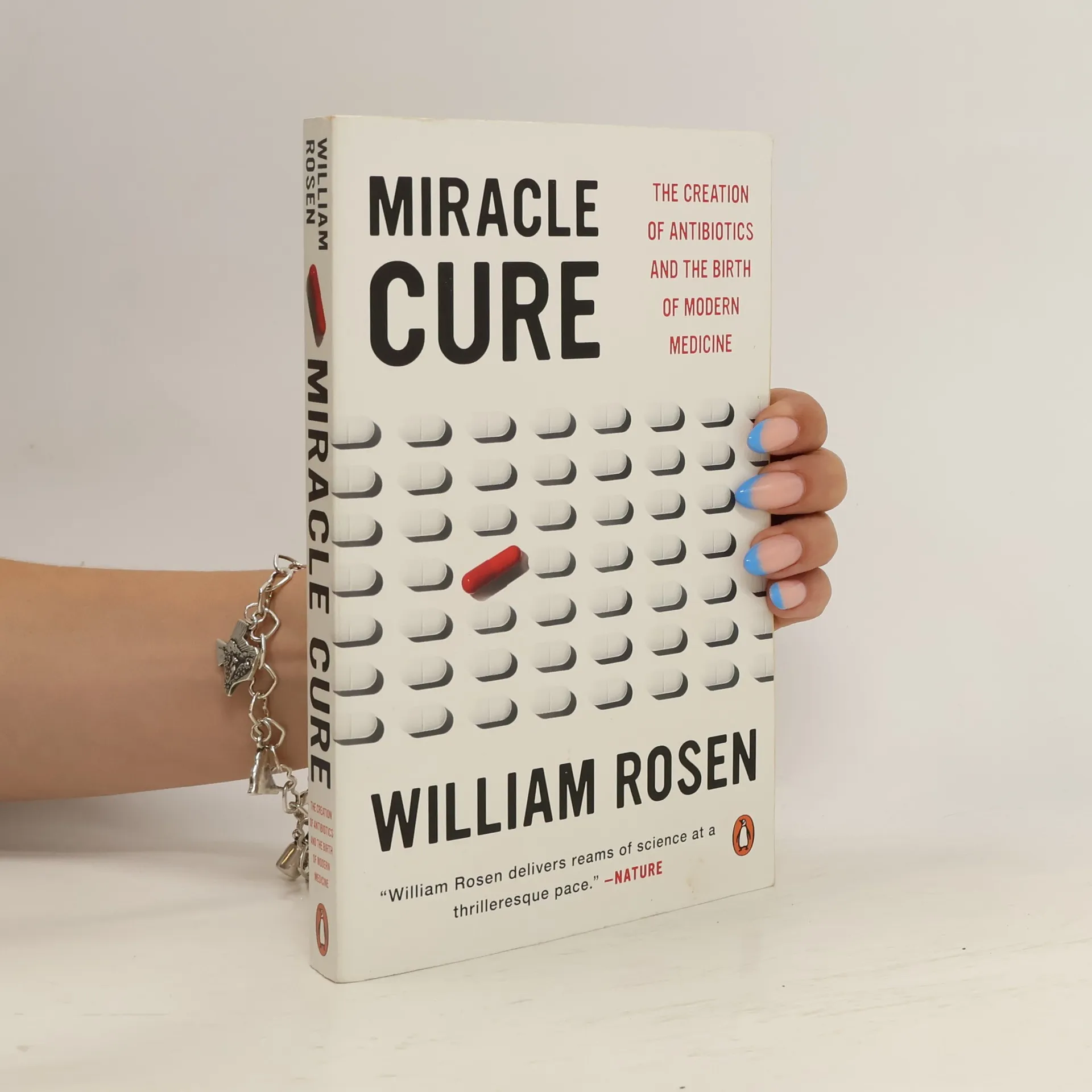

Miracle Cure: The Creation of Antibiotics and the Birth of Modern Medicine
- 368 páginas
- 13 horas de lectura
The epic history of how antibiotics were born, saving millions of lives and creating a vast new industry known as Big Pharma. As late as the 1930s, virtually no drug intended for sickness did any good; doctors could set bones, deliver babies, and offer palliative care. That all changed in less than a generation with the discovery and development of a new category of medicine known as antibiotics. By 1955, the age-old evolutionary relationship between humans and microbes had been transformed, trivializing once-deadly infections. William Rosen captures this revolution with all its false starts, lucky surprises, and eccentric characters. He explains why, given the complex nature of bacteria—and their ability to rapidly evolve into new forms—the only way to locate and test potential antibiotic strains is by large-scale, systematic, trial-and-error experimentation. Organizing that research needs large, well-funded organizations and businesses, and so our entire scientific-industrial complex, built around the pharmaceutical company, was born. Timely, engrossing, and eye-opening, Miracle Cure is a must-read science narrative—a drama of enormous range, combining science, technology, politics, and economics to illuminate the reasons behind one of the most dramatic changes in humanity’s relationship with nature since the invention of agriculture ten thousand years ago.