Good to Great
- 416 páginas
- 15 horas de lectura
Un magnifico estudio sobre las cualidades que deben desarrollar las empresas para sobresalir en tiempos dificiles.






Un magnifico estudio sobre las cualidades que deben desarrollar las empresas para sobresalir en tiempos dificiles.
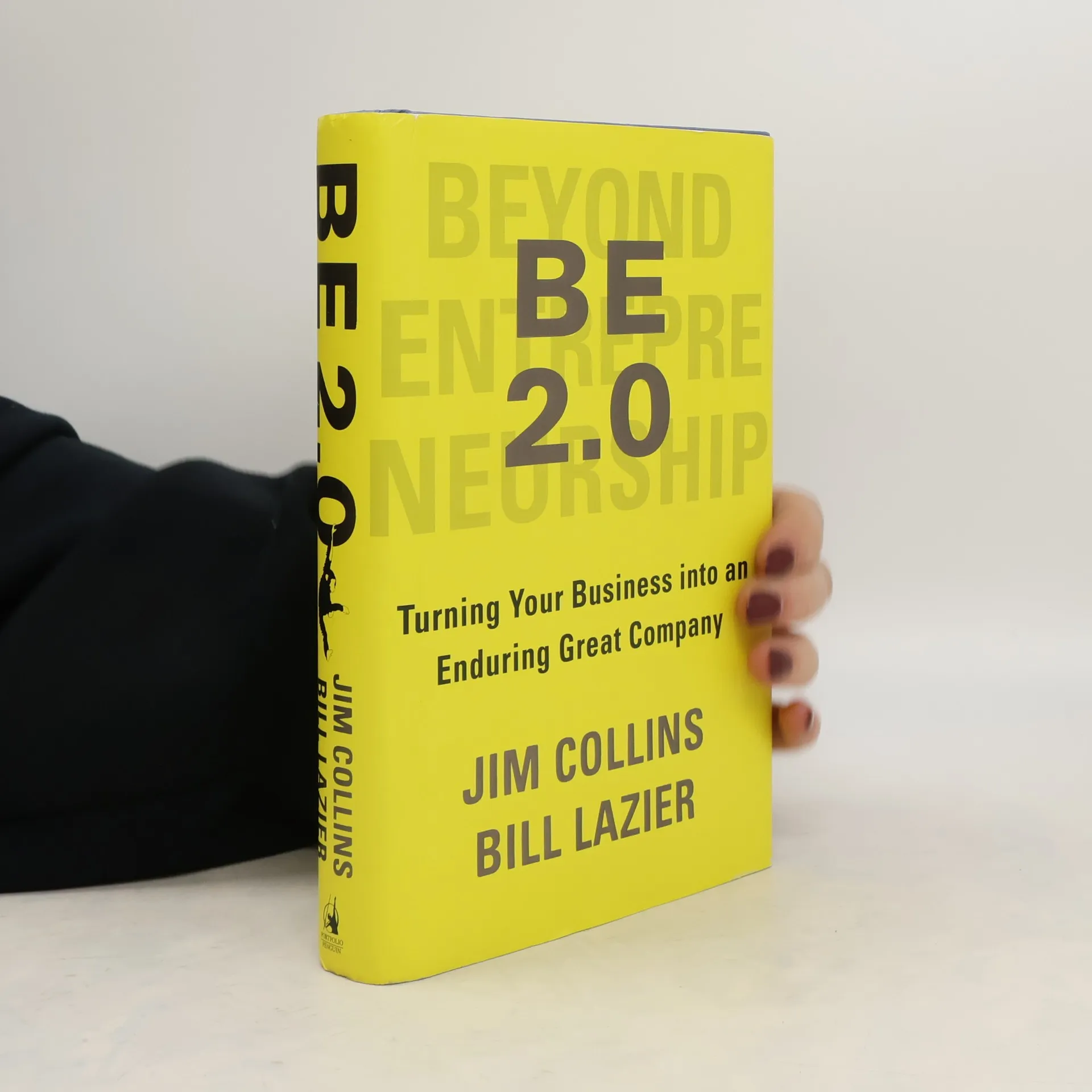
"What's the roadmap to create a company that not only survives its infancy but thrives, changing the world for decades to come? Nine years before the publication of his epochal bestseller Good to Great, Jim Collins and his mentor, Bill Lazier, answered this question in their bestselling book, Beyond Entrepreneurship. Beyond Entrepreneurship left a definitive mark on the business community, influencing the young pioneers who were, at that time, creating the technology revolution that was birthing in Silicon Valley. Decades later, successive generations of entrepreneurs still turn to the strategies outlined in Beyond Entrepreneurship to answer the most pressing business questions. BE 2.0 is a new and improved version of the book that Jim Collins and Bill Lazier wrote years ago. In BE 2.0, Jim Collins honors his mentor, Bill Lazier, who passed away in 2005, and reexamines the original text of Beyond Entrepreneurship with his 2020 perspective. The book includes the original text of Beyond Entrepreneurship, as well as four new chapters and fifteen new essays. BE 2.0 pulls together the key concepts across Collins' thirty years of research into one integrated framework called The Map. The result is a singular reading experience, which presents a unified vision of company creation that will fascinate not only Jim's millions of dedicated readers worldwide, but also introduce a new generation to his remarkable work" --Amazon
From Jim Collins, the most influential business thinker of our era, comes an upgrade of his classic, Beyond Entrepreneurship, that includes all-new findings and world-changing insights. What's the roadmap to create a company that not only survives its infancy but thrives, changing the world for decades to come? Jim Collins and his mentor, Bill Lazier, answered this question in their book, Beyond Entrepreneurship. Beyond Entrepreneurship 2.0 is a new and improved version of that book. In this upgraded edition, Jim Collins reexamines the original text of Beyond Entrepreneurship with his 2020 perspective. The book includes the original text of Beyond Entrepreneurship, as well as four new chapters and fifteen new essays. Beyond Entrepreneurship 2.0 pulls together the key concepts across Collins' thirty years of research into one integrated framework called The Map. The result is a singular reading experience, which presents a unified vision of company creation that will fascinate not only Jim's millions of dedicated readers worldwide, but also introduce a new generation to his remarkable work.
The essential book on management from the man who invented the discipline Now completely revised and updated for the first time
A companion guidebook to the number-one bestselling Good to Great, focused on implementation of the flywheel concept, one of Jim Collins’ most memorable ideas that has been used across industries and the social sectors, and with startups.The key to business success is not a single innovation or one plan. It is the act of turning the flywheel, slowly gaining momentum and eventually reaching a breakthrough. Building upon the flywheel concept introduced in his groundbreaking classic Good to Great, Jim Collins teaches readers how to create their own flywheel, how to accelerate the flywheel’s momentum, and how to stay on the flywheel in shifting markets and during times of turbulence.Combining research from his Good to Great labs and case studies from organizations like Amazon, Vanguard, and the Cleveland Clinic which have turned their flywheels with outstanding results, Collins demonstrates that successful organizations can disrupt the world around them—and reach unprecedented success—by employing the flywheel concept.
Enumerates the principles for building a truly great enterprise in unpredictable, tumultuous and fast-moving times
Most executives aim for ambitious goals, crafting vision statements and complex procedures, often leading to cumbersome bureaucracy. However, it doesn't have to be this way. Jim Collins introduces the catalytic mechanism, a straightforward yet impactful managerial tool that bridges lofty aspirations and tangible outcomes. These mechanisms serve as a dynamic, non-bureaucratic link between objectives and performance. Unlike traditional managerial controls, catalytic mechanisms possess five key traits: they yield desired results in unexpected ways; they redistribute power for the system's overall benefit, often unsettling traditional power holders; they have real consequences; they eliminate "viruses," or individuals who don't align with core values; and they create lasting effects. Collins illustrates the effectiveness of catalytic mechanisms through various examples from individuals and organizations that have successfully implemented them. Importantly, a mechanism that works for one organization may not suit another; they must be customized to fit specific goals and contexts. To assist readers in developing their own catalytic mechanisms, Collins provides general principles for effective implementation.
James Collins and Jerry Porras have examined eighteen exceptional and long-lasting companies, including General Electric, Boeing, Disney, Hewlett-Packard and Proctor and Gamble, and compared each with one of its closest but less successful competitors, in order to discover just what has given it the edge over its rivals. What they found out about success and management styles can be learnt and applied by the vast majority of managers at all levels. The new final chapter looks at the implications of the internet - Built to Flip.
The compelling story of a single season in the world's finest amateur baseball league
Discusses signs pointing toward the decline of a business, how far the decline can proceed before failure becomes inevitable, and crucial steps companies can take to reverse course.
First Published in 1993. Routledge is an imprint of Taylor & Francis, an informa company.
True leadership is about character - this is the key to winning 'the right way'. In a world where we're bombarded by messages of 'winning at any cost', dishonest politicians, CEOs committing fraud, disgraced military commanders and cheating athletes, integrity matters more than ever. The Character Edge explains the powerful role character plays in trust, culture and leadership, and offers readers tools to exercise and strengthen their own. Reaching from the battlefield to the classroom and beyond, former superintendent of West Point Robert Caslen and professor of psychology Dr Michael Matthews explore the vital link between strong character and strong leadership, and explain why the latter cannot exist without the former.
Deset let po celosvětově úspěšném bestselleru „Jak z dobré firmy udělat skvělou“ přichází Jim Collins s dalším průkopnickým dílem, ve které si klade otázku, proč některé firmy v nejistých časech nebo dokonce v chaosu prosperují, zatímco jiné strádají? Na základě devítiletého výzkumu podpořeného důkladnou analýzou a naplněného poutavými příběhy Collins a jeho kolega Morten Hansen představují principy budování skvělé firmy v nepředvídatelném, bouřlivém a rychle se měnícím prostředí. Tato kniha je klasický Collins: polemizující, empirický a povznášející. Spolu s Hansenem přesvědčivě ukazují, že i v nejistém a chaotickém světě je dosažení úspěchu otázkou volby, nikoliv náhody.
Netflix cofounder Reed Hastings unveils the unconventional culture that has propelled one of the most innovative companies in the world. Netflix is unique not only for revolutionizing the entertainment industry and generating billions in revenue but also for its radical management principles that defy tradition. Hastings established a set of counterintuitive guidelines that prioritize people over processes, innovation over efficiency, and context over control. At Netflix, mediocre performance results in generous severance, and hard work is not the primary measure of success. Employees are encouraged to provide candid feedback rather than simply trying to please their bosses, and they operate without needing approval, with salaries that are always competitive. When these principles were first introduced, their implications were largely untested, yet they have fostered remarkable flexibility, speed, and boldness within the company. The culture of freedom and responsibility has enabled Netflix to adapt and evolve alongside changing global demands. Hastings, alongside Erin Meyer, a prominent business thinker, explores the philosophies that underpin Netflix's success through interviews with employees and personal anecdotes, revealing the untold story of a company that continues to make a significant impact worldwide.
UNGEWISSHEIT, CHAOS - NA UND? Trotz der anhaltenden wirtschaftlichen Unsicherheit florieren einige Unternehmen, während andere scheitern. Was machen die Manager erfolgreicher Unternehmen anders? Wie bereiten sie sich vor, um Turbulenzen zu überstehen und sogar für ihren Aufstieg zu nutzen? Dieses bahnbrechende Buch verrät es Ihnen. Damit Ihr Unternehmen auch in schwierigen Zeiten ein Spitzenunternehmen ist. Und bleibt! „Ein Buch, dessen Erscheinen CEOs kaum erwarten können.“ USA Today „Collins und Hansen ziehen interessante und unerwartete Schlüsse aus ihren Studien - weit entfernt von trockener Forschung.“ Wall Street Journal
Der Management-Vordenker Jim Collins macht anschaulich, wie aus guten Unternehmen Spitzen-Unternehmen werden. Die Schwungrad-Methode aus seinem Management-Klassiker »Der Weg zu den Besten« hilft dabei. In diesem Add-on untersucht Jim Collins, wie verschiedene Unternehmen aus unterschiedlichsten Sektoren ihr Schwungrad konstruiert haben, um mehr als nur erfolgreich zu werden. Mit diesen Praxistipps können Unternehmer und Führungskräfte ihr eigenes Schwungrad konstruieren und es zu Höchstleistung antreiben.
die sieben Management-Prinzipien für dauerhaften Unternehmenserfolg
To find the keys to greatness, Collins's 21-person research team read and coded 6,000 articles, generated more than 2,000 pages of interview transcripts and created 384 megabytes of computer data in a five-year project. The findings will surprise many readers and, quite frankly, upset others. The Challenge Built to Last, the defining management study of the nineties, showed how great companies triumph over time and how long-term sustained performance can be engineered into the DNA of an enterprise from the very beginning. But what about the company that is not born with great DNA? How can good companies, mediocre companies, even bad companies achieve enduring greatness? The Study For years, this question preyed on the mind of Jim Collins. Are there companies that defy gravity and convert long-term mediocrity or worse into long-term superiority? And if so, what are the universal distinguishing characteristics that cause a company to go from good to great? The Standards Using tough benchmarks, Collins and his research team identified a set of elite companies that made the leap to great results and sustained those results for at least fifteen years. How great? After the leap, the good-to-great companies generated cumulative stock returns that beat the general stock market by an average of seven times in fifteen years, better than twice the results delivered by a composite index of the world's greatest companies, including Coca-Cola, Intel, General Electric, and Merck. The Comparisons The research team contrasted the good-to-great companies with a carefully selected set of comparison companies that failed to make the leap from good to great. What was different? Why did one set of companies become truly great performers while the other set remained only good? The Findings The findings of the Good to Great study will surprise many readers and shed light on virtually every area of management strategy and practice. The findings include: Level 5 Leaders: The research team was shocked to discover the type of leadership required to achieve greatness. The Hedgehog Concept (Simplicity within the Three Circles): To go from good to great requires transcending the curse of competence. A Culture of Discipline: When you combine a culture of discipline with an ethic of entrepreneurship, you get the magical alchemy of great results. Technology Accelerators: Good-to-great companies think differently about the role of technology. The Flywheel and the Doom Loop: Those who launch radical change programs and wrenching restructurings will almost certainly fail to make the leap.
Почему одни компании совершают прорыв, а другие нет
Как превратить среднюю (читай - хорошую) компанию в великую? На этот вопрос отвечает бестселлер "От хорошего к великому". В нем Джим Коллинз пишет о результатах своего шестилетнего исследования, в котором компании, совершившие прорыв, сравнивались с теми, кому это не удалось. У всех великих компаний обнаружились схожие элементы успеха, а именно: дисциплинированные люди, дисциплинированное мышление, дисциплинированные действия и эффект маховика. Благодаря этому компании добивались феноменальных результатов, превосходящих средние результаты по отрасли в несколько раз. Книга будет интересна собственникам бизнеса, директорам компаний, директорам по развитию, консультантам и студентам, обучающимся по специальности "менеджмент".
So zamysleniami: Staré a nové poklady pravdy pre 21. storočie
Množstvo spoločenstiev a kresťanských organizácií v súčasnosti uverejňuje akési vyznania viery, ktoré sú náčrtom ich presvedčení. V minulosti však dokumenty podobného rázu podliehali iným očakávaniam. Mali byť tak biblicky bohaté a tak dôkladne vyskladané, aby sa mohli memorovať a využívať na rast i výchovu kresťanov. Boli písané formou otázok a odpovedí a volali sa katechizmy (z gréckeho katechein, teda vyučovať slovom či ústnym podaním). Najznámejšie z nich sú Heidelberský katechizmus z roku 1563 a krátky a dlhý Westminsterský katechizmus z roku 1648 a pre mnohé cirkevné zbory po celom svete sa stali dôležitými piliermi doktrinálnych zásad. New City Katechizmus so zamysleniami bol vytvorený tak, aby bol moderným zdrojom, ktorý v päťdesiatich dvoch otázkach a odpovediach nielen zosumarizuje dôležité kresťanské pravdy, ale veriacim tiež pomôže naučiť sa a uvažovať o doktrínach, ktoré ležia v jadre kresťanskej viery. Každá otázka obsahuje súvisiaci biblický text, krátku modlitbu a zamyslenie od niektorých súčasných vplyvných kresťanov (napr. John Piper či Timothy Keller) a historických osobností (napr. Augustín, Ján Kalvín, Martin Luther).
Interviews met een tiental topmanagers.