
Bookbot

Platón

    No hay información disponible sobre este autor.

    Apologia De Socrates / Criton / Carta Vi
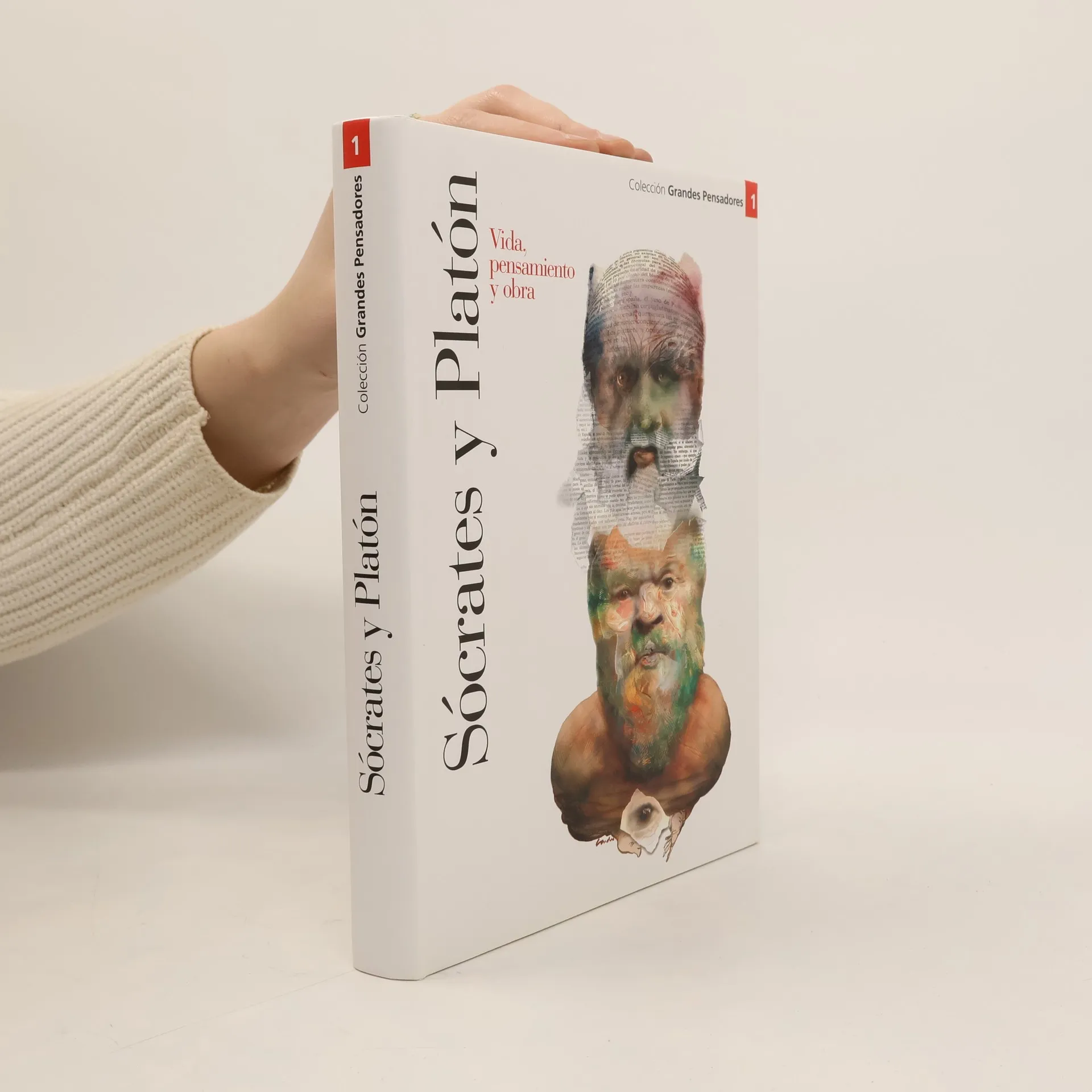
    Sócrates y Platón
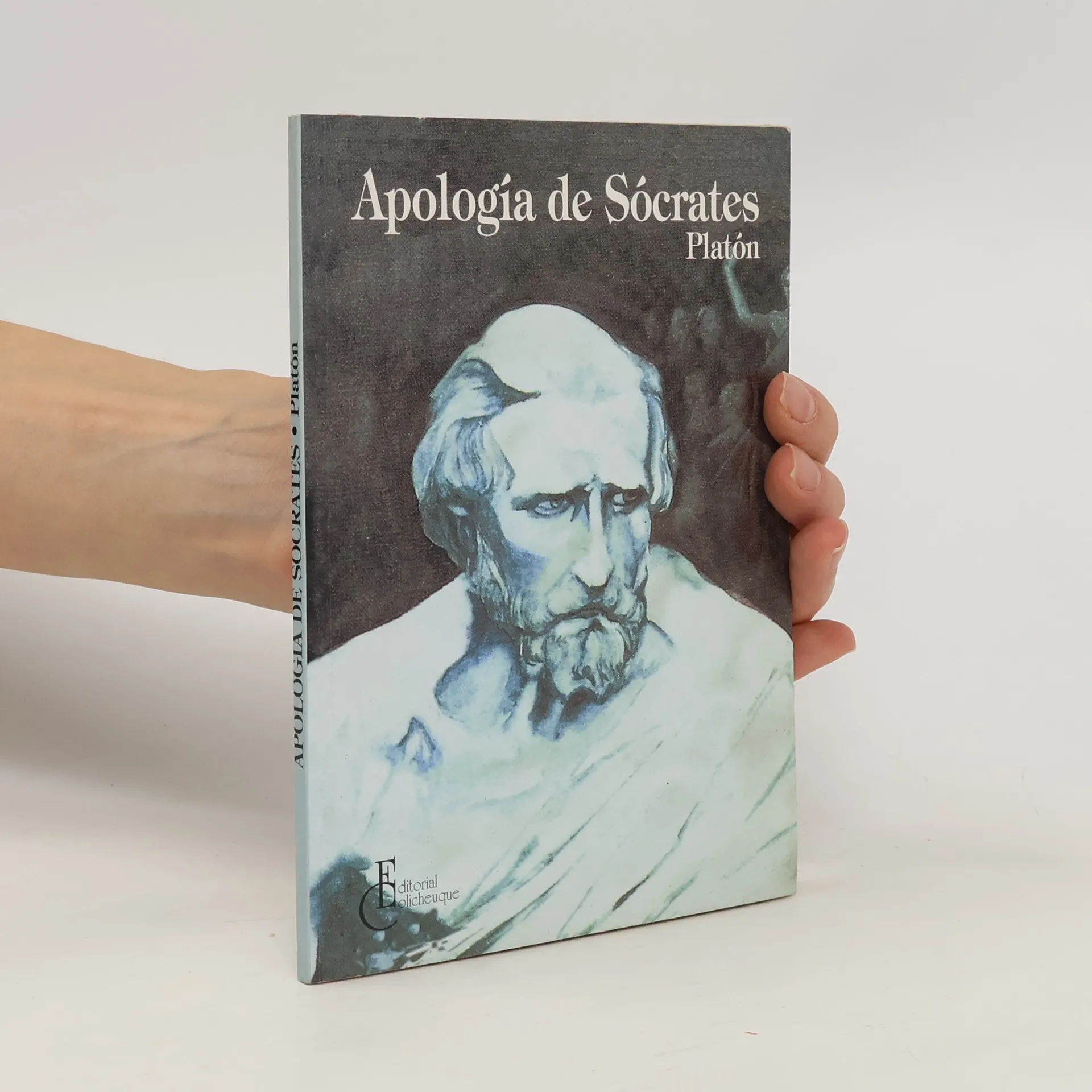
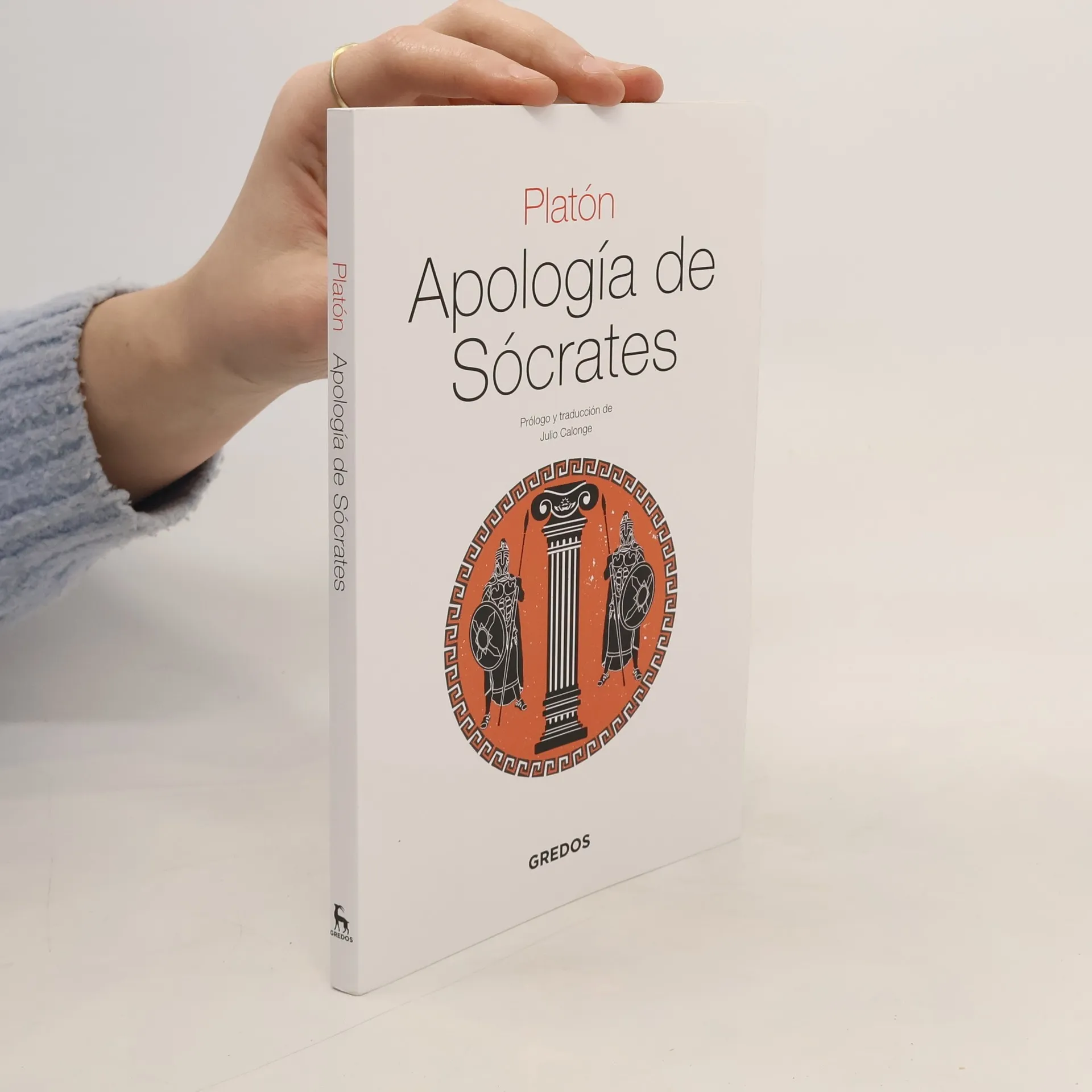
    Textos clásicos - 9: Apología de Sócrates
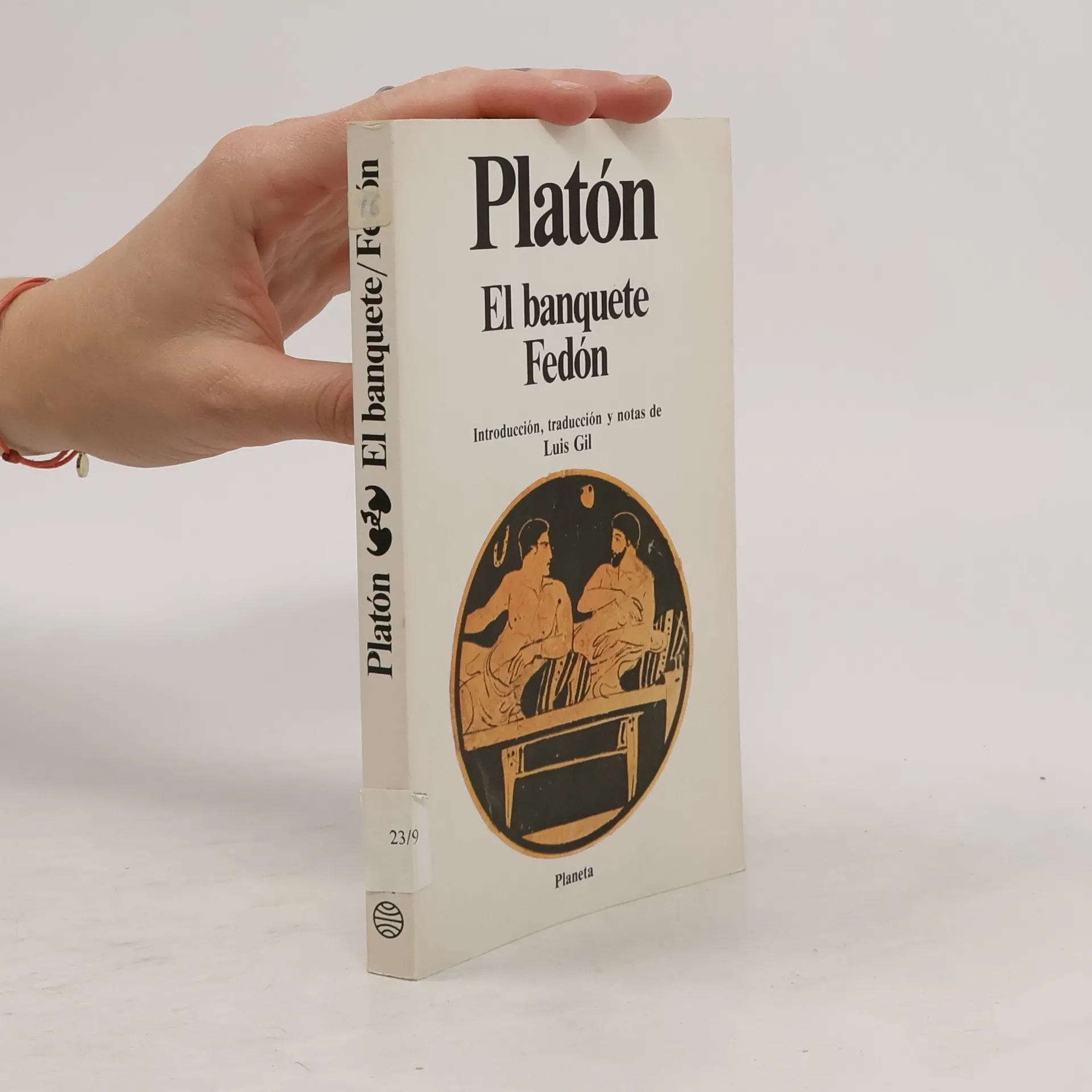
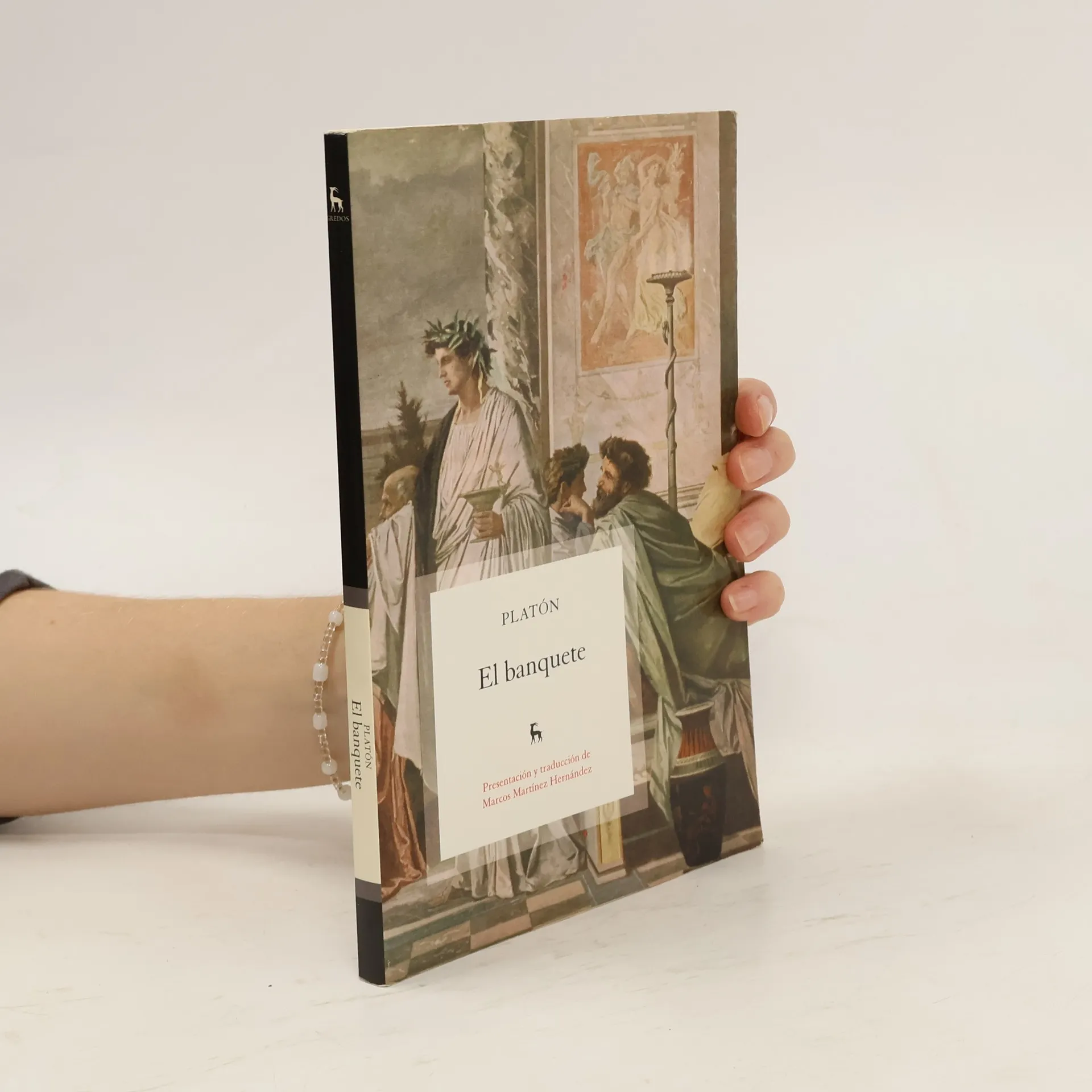
    El banquete
    Diálogos
    Diálogos
    • Diálogos

      • 272 páginas
      • 10 horas de lectura

      Gorgias, Fedón y El Banquete ocupan un lugar central en la larga serie de Diálogos de Platón. Compuestos en su etapa de madurez son textos de gran hondura filosófica y de una atractiva composición formal. Gorgias trata de la retórica y la política, y en él se contrapone la figura de Sócrates a la de los sofistas Gorgias y Polo, y al joven Calicles, prototipo de político inmoralista; Fedón analiza, en la última conversación de Sócrates con sus discípulos antes de morir, los argumentos sobre la inmortalidad del alma; El Banquete ofrece las diversas perspectivas de los comensales sobre el eros, superadas todas en trascendencia y belleza por el exaltado parlamento de Sócrates. Tres diálogos en los que Platón recrea las conversaciones de su maestro sobre unos temas de permanente actualidad. La vida auténtica, el más allá o la ambigüedad del amor son tratados con un equilibrio incomparable entre lo poético y lo ideológico, y con palabras tan claras que, incluso a tantos siglos de distancia, es imposible no sucumbir a su perenne interés.
      Diálogos
      4,4
    • Diálogos

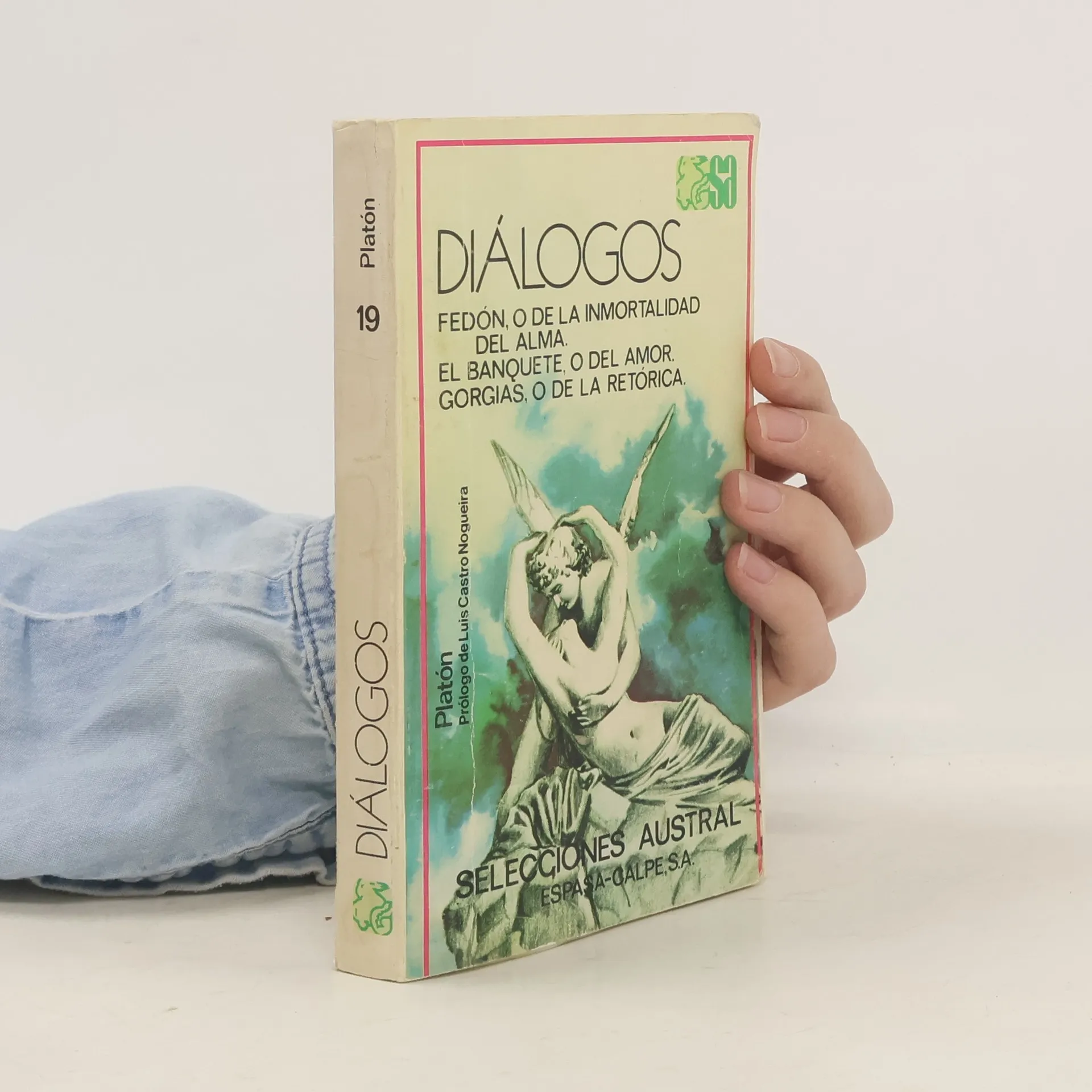
      Fedón, o de la inmortalidad del alma; El banquete, o del amor; Gorgias, o de la retórica

      • 295 páginas
      • 11 horas de lectura
      Diálogos
      4,0
    • El banquete

      • 144 páginas
      • 6 horas de lectura

      Entre la reflexión filosófica y la teoría psicológica, Platón (c. 427 – 347 a. C.) nos ofrece con el Banquete una brillante y elaborada exposición de su teoría de los afectos. El diálogo, perteneciente al período de madurez, en el que el filósofo ateniense se interesa por la esencia ontológica de diversas ideas, presenta una estructura sencilla. A través de seis discursos que encuentran su eje en este sentimiento, el autor desmenuza sus múltiples facetas: la naturaleza divina de Eros, sus diversas formas y manifestaciones, sus designios y anhelos, o su incidencia en la vida humana. Por estas páginas desfila, en suma, la consistente doctrina del amor platónica que constituye en sí misma su exaltación. La extensa producción de Platón alcanza con El banquete una de sus cumbres y, con ella, lo hace también el conjunto del pensamiento occidental.

      El banquete
      4,2
    • Sócrates y Platón

      Vida, pensamiento y obra

      • 384 páginas
      • 14 horas de lectura

      O presente volume revela o contributo de dois filósofos fundamentais do pensamento ocidental, Sócrates e Platão, que assimilaram saberes das correntes orientais e da Grécia arcaica. Eles mantiveram um diálogo que aborda questões centrais da cultura, como o destino humano, o tempo e o cosmos. A valorização da realidade, apresentada como um estágio moral, é um tema central, onde a sociedade encontra seus fundamentos. A pequena comunidade, a cidade e o Estado são objetos de especulação nos escritos platónicos, assim como a argumentação sobre a alma e o corpo, conceitos que, ao longo dos séculos, geraram uma cisão marcante no pensamento ocidental. A atualidade do pensamento de Sócrates e Platão é evidenciada pela influência de pensadores como Leo Strauss, cuja releitura dos clássicos impactou os neoconservadores norte-americanos que inspiraram a administração de George Bush. Este volume da coleção "Grandes Pensadores" apresenta a vida, obra e pensamento de Sócrates e Platão separadamente. Na parte "Escritos", são reproduzidos excertos dos diálogos de Platão, incluindo "O Banquete", "República" e "Leis", que ilustram aspectos fundamentais do pensamento deste filósofo ateniense imprescindível.

      Sócrates y Platón
      3,9
    • Las tres obras que agrupamos en este volumen responden a un doble propósito: ofrecer el apasionado retrato que el filósofo pintó de su maestro y comprobar la evolución del pensamiento político del autor de La República. La APOLOGIA DE SOCRATES recoge el discurso que, supuestamente, pronunció éste ante sus jueces. Critón, a su vez, es la transcripción del diálogo que mantuvo con uno de sus más viejos amigos, mientras esperaba la hora de la muerte. Ambos escritos pertenecen a la juventud de Platón y parecen responder con bastante fidelidad a la psicología y al modo de razonar de uno de los personajes más discutidos y atrayentes del mundo antiguo. La CARTA VII, por el contrario, fue redactada por Platón a una edad avanzada y constituye un imponente testimonio de los avatares que determinaron su desencanto político y la consiguiente revisión de sus ideas sobre la justicia, las leyes, las virtudes morales y el fundamento del poder. Enrique López Castellón es catedrático de Filosofía del Derecho, Moral y Política en la Universidad Autónoma de Madrid. Se doctoró precisamente, con una investigación sobre la personalidad de Sócrates en las obras primeras de Platón. Ha realizado la traducción y edición de este volumen.

      Apologia De Socrates / Criton / Carta Vi
      3,9
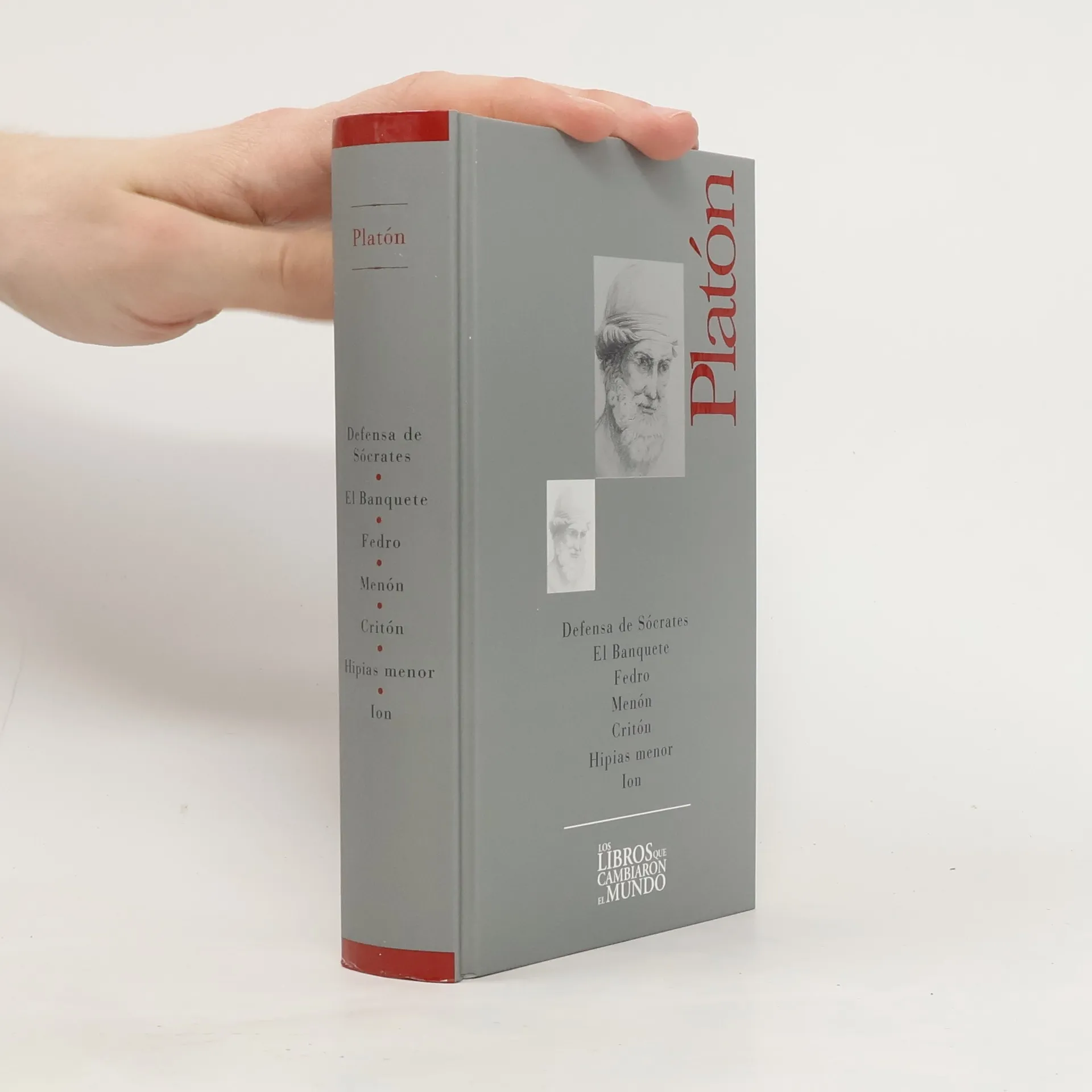
    • Defensa de Sócrates

      • 498 páginas
      • 18 horas de lectura

      ¿Qué es el bien? ¿Y la justicia? ¿Cómo se puede vivir de manera digna? ¿Cuál es la mejor manera de enfrentarse a la muerte? Hombres y mujeres de todas las épocas y lugares se han hecho las mismas preguntas. Las respuestas, en contra de lo que pudiera suponerse, no varían demasiado. La filosofía, pese a su fama de centrarse en especulaciones abstrusas, también se ocupa de aquellos asuntos que atañen a nuestras experiencias más directas.Los diálogos de Platón, lejos de estar pensados para un público académico o especializado, se dirigen al ciudadano de a pie, a la persona que desea afrontar su vida y sus responsabilidades co- tidianas de una manera más consciente y reflexiva. El pensamiento deviene un quehacer, una tarea práctica en la que el lector, de la mano de Sócrates se ve obligado a revisar sus creencias para darse cuenta de que conceptos como la verdad, la libertad, la felicidad, la belleza o el amor son mucho más complejos de lo que cabría esperar y atañen a lo más profundo de nuestra existencia.

      Defensa de Sócrates
      3,4
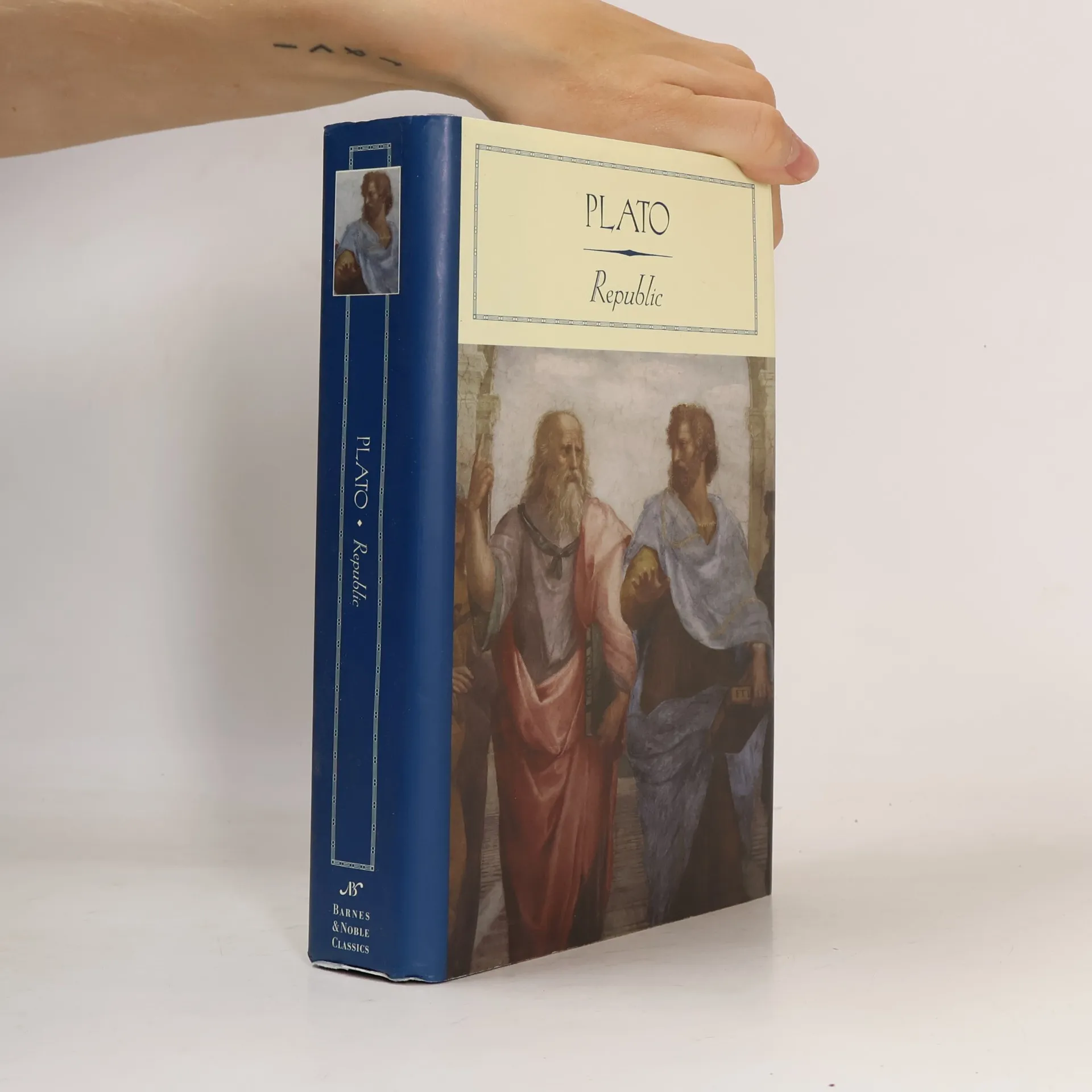
    • La república

      • 552 páginas
      • 20 horas de lectura

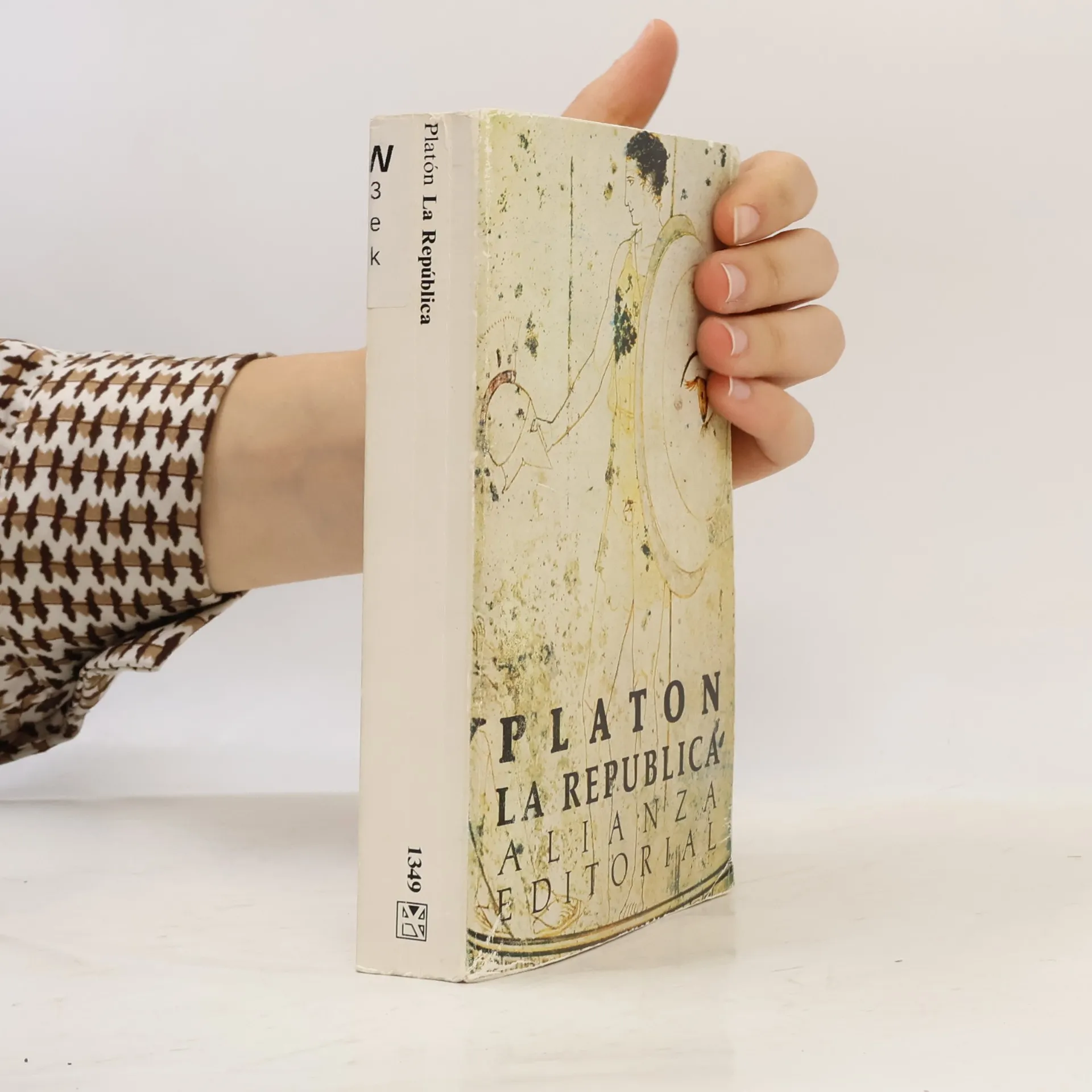
      La Republica presenta el modelo de ciudad donde domina la justicia frente al desorden, la confusion y la perversion. No se trata, sin embargo, de la construccion ideal de una sociedad perfecta de hombres perfectos, sino un tratado de ciencia politica con aplicacion a los regimenes existentes en su tiempo.

      La república
    • Republic, Volume I

      • 490 páginas
      • 18 horas de lectura

      Plato's Republic concerns righteousness both in individuals and in communities, and proposes an ideal state organized and governed on philosophical principles. This edition, which replaces Shorey's, offers text, translation, and annotation that are fully current with modern scholarship. The Loeb Classical Library edition of Plato is in 12 volumes.

      Republic, Volume I
      4,6
    • Plato VI.

      Republic I

      • 325 páginas
      • 12 horas de lectura
      Plato VI.
      4,3
    • Plato

      Five Dialogues: Euthyphro, Apology, Crito, Meno, Phaedo (Royal Collector's Edition) (Case Laminate Hardcover with Jacket)

      • 232 páginas
      • 9 horas de lectura

      The dialogues feature Socratic conversations that explore profound philosophical themes such as morality, justice, and the nature of knowledge. Through the lens of Socrates, Plato addresses critical questions about ethics and the soul, showcasing the influence of Socratic thought on his own philosophical development. Each dialogue serves as a platform for Socratic questioning, revealing insights into human behavior and the pursuit of truth.

      Plato
      5,0
    • Five Dialogues

      Euthyphro, Apology, Crito, Meno, Phaedo (Deluxe Library Edition)

      • 232 páginas
      • 9 horas de lectura

      Set in the weeks leading up to Socrates' trial, this dialogue features a conversation between Socrates and Euthyphro that delves into profound philosophical themes. The discussion explores the nature of piety and justice, challenging the characters to examine their beliefs and the implications of their definitions. Through their exchange, readers are invited to reflect on the complexities of moral concepts and the essence of virtue.

      Five Dialogues
      4,5
    • "The safest general characterization of the European philosophical tradition is that it consists of a series of footnotes to Plato." - Alfred North WhiteheadPlato's ideas on reason, justice, and religion have had profound impact on Western philosophy and politics. This beautiful jacketed hardback collects some of his most celebrated writings, including his iconic work The Republic . These Ancient Greek dialogues are written as conversations between Plato's mentor Socrates and various Athenian citizens, covering vast range of topics including the construction of communities, immortality of the soul, temperance, rhetoric and virtue. His writings have been studied for hundreds of years and yet remain strikingly pertinent in the modern world.• The Republic• Charmides• Meno• Gorgias• Parmenides• Symposium• Euthyphro• Apology• Crito• PhaedoABOUT THE The World Classics Library series gathers together the work of authors and philosophers whose ideas have stood the test of time. Perfect for bibliophiles, these gorgeous jacketed hardbacks are a wonderful addition to any bookshelf.

      World Classics Library: Plato
      4,5
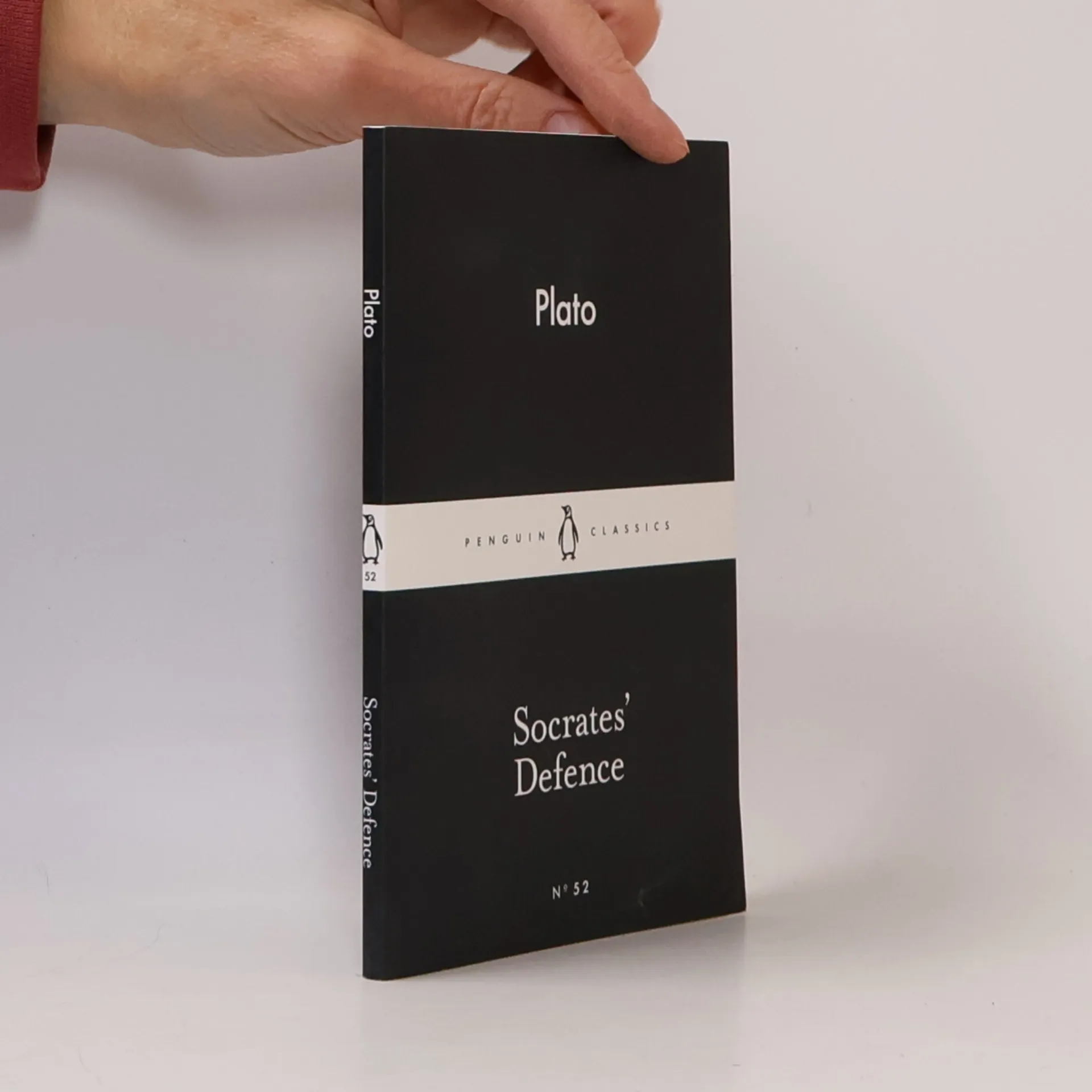
    • Socrates' defence

      • 64 páginas
      • 3 horas de lectura

      'I'll stop doing it as soon as I understand what I'm doing.' Somewhere between a historical account and work of philosophy, Socrates' Defence details the final plea of Plato's beloved mentor. Introducing Little Black Classics: 80 books for Penguin's 80th birthday. Little Black Classics celebrate the huge range and diversity of Penguin Classics, with books from around the world and across many centuries. They take us from a balloon ride over Victorian London to a garden of blossom in Japan, from Tierra del Fuego to 16th-century California and the Russian steppe. Here are stories lyrical and savage; poems epic and intimate; essays satirical and inspirational; and ideas that have shaped the lives of millions. Plato (474 BC-347 BC). Plato's works available in Penguin Classics are Republic, The Last Days of Socrates, The Laws, Phaedrus, Protagoras and Meno, Timaeus and Critias, Theaetetus, Early Socratic Dialogues, The Symposium and Gorgias.

      Socrates' defence
      5,0
    • Alcibiades I

      • 60 páginas
      • 3 horas de lectura

      The dialogue features Socrates engaging with Alcibiades, an ambitious Athenian, to explore the essence of politics, virtue, and wisdom. Socrates challenges Alcibiades' arrogance and ignorance, emphasizing that true wisdom stems from self-knowledge rather than external achievements. Through probing questions, Socrates reveals Alcibiades' inconsistencies regarding morality and politics. This work not only highlights the philosophical underpinnings of ancient Athenian society but also reflects Plato's enduring influence on Western thought.

      Alcibiades I
      4,0
    • Works in this volume explore the relationship between two people known as love (eros) or friendship (philia). In Lysis, Socrates meets two young men at a wrestling school; in Symposium, he joins a company of accomplished men at a drinking party; and in Phaedrus, experimental speeches about love lead to a discussion of rhetoric.

      Lysis. Symposium. Phaedrus
      4,4
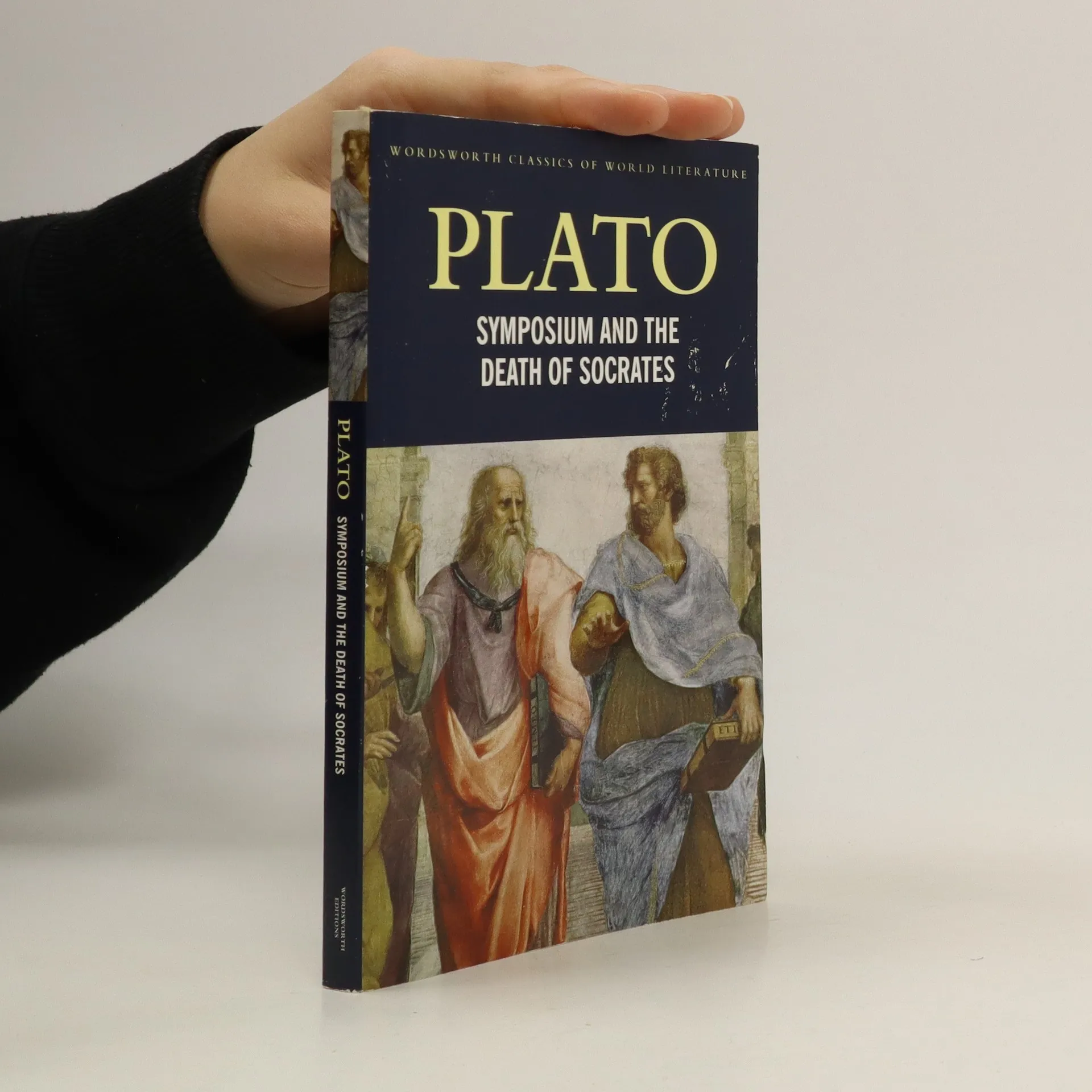
    • "Symposium" gives an account of the sparkling society that was Athens at the height of her empire. The other dialogues collected here under the title "The Death of Socrates" tell the tale of how Socrates was put on trial for impiety, found guilty and sentenced to death.

      Symposium And The Death Of Socrates
      4,3
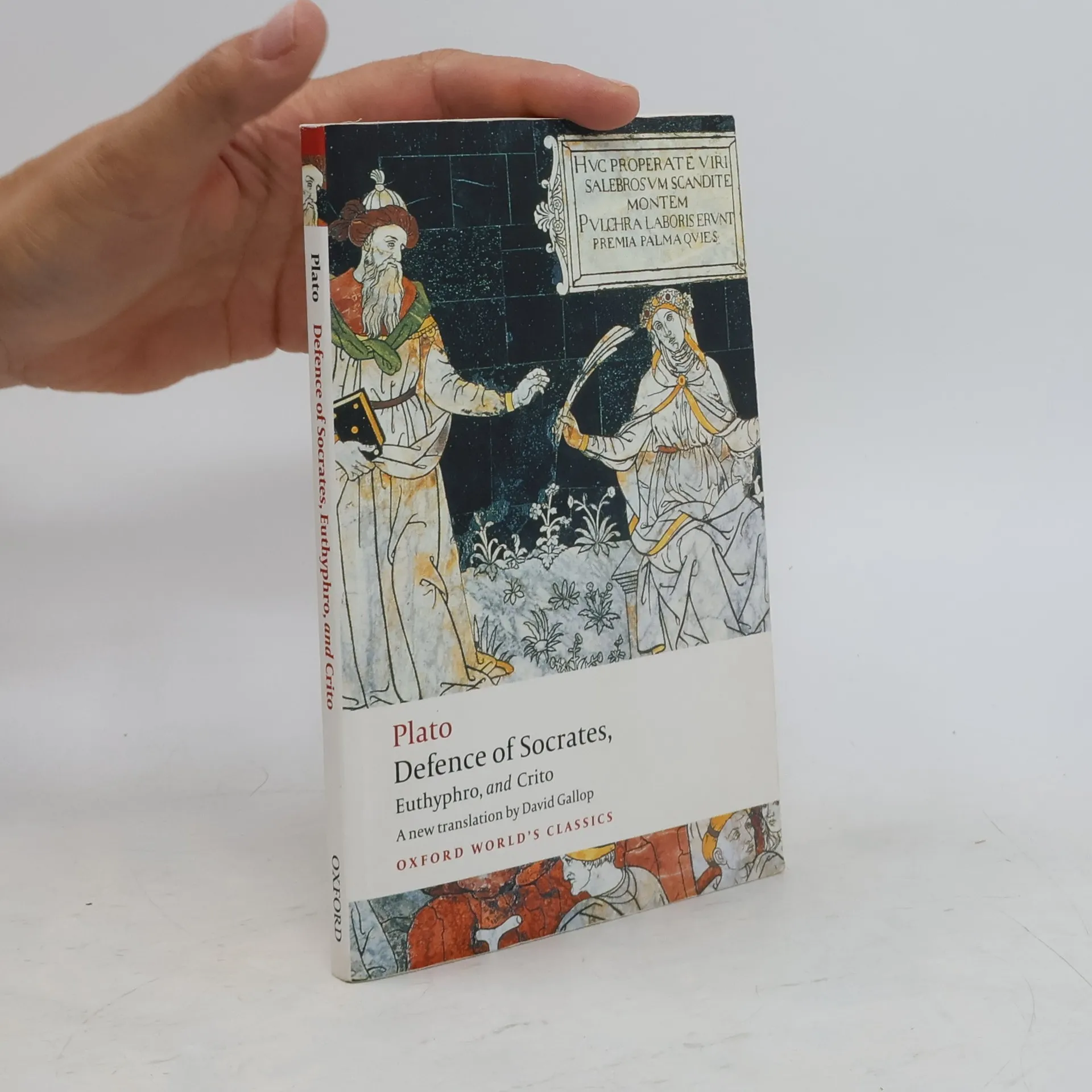
    • Defence of Socrates, Euthyphro, Crito

      • 119 páginas
      • 5 horas de lectura

      These new translations present Plato's remarkable dramatizations of the momentous events surrounding the trial of Socrates on charges of irreligion and corrupting the young.

      Defence of Socrates, Euthyphro, Crito
      4,2
    • Apology, Crito, and Phaedo of Socrates

      • 100 páginas
      • 4 horas de lectura

      The writings of Plato are numerous, and most are in the form of dialogues. This edition contains translations of three of his works: "The Apologia," "The Crito" and "The Phaedo," all of which have reference to the trial, imprisonment and death of Socrates."

      Apology, Crito, and Phaedo of Socrates
      4,1
    • Meno and Other Dialogues

      • 190 páginas
      • 7 horas de lectura

      In these four dialogues Plato considers virtue and its definition. Charmides, Laches, and Lysis investigate the specific virtues of self-control, courage, and friendship; the laterMeno discusses the concept of virtue as a whole, and whether it is something that can be taught.

      Meno and Other Dialogues
      4,2
    • Sophist

      • 122 páginas
      • 5 horas de lectura

      Engaging in a compelling dialectic, Socrates meets the mysterious Stranger from Elea to explore the complex relationship between being and appearance. This philosophical dialogue delves into profound questions surrounding truth, reality, and deception, making it a significant contribution to the study of ontology. Through their conversation, readers are invited to reflect on the nature of existence and the nuances of perception, highlighting timeless philosophical inquiries that resonate through the ages.

      Sophist
      4,1
    • Symposium attempts to find the ultimate manifestation of the love that controls the world, leading to mystic union with eternal & supercosmic beauty. Phaedrus discusses the psychology of love, resulting in the concept of the familiar Platonic "forms" as objects of transcendental emotion.

      Plato's Symposium and Phaedrus
      3,7
    • "This is a superb new translation that is remarkably accurate to Plato's very difficult Greek, yet clear and highly readable. The notes are more helpful than those in any other available translation of the Laws since they contain both the information needed by the beginning student as well as analytical notes that include references to the secondary literature for the more advanced reader. For either the beginner or the scholar, this should be the preferred translation." --Christopher Bobonich, Clarence Irving Lewis Professor of Philosophy, Stanford University

      Laws
      4,1
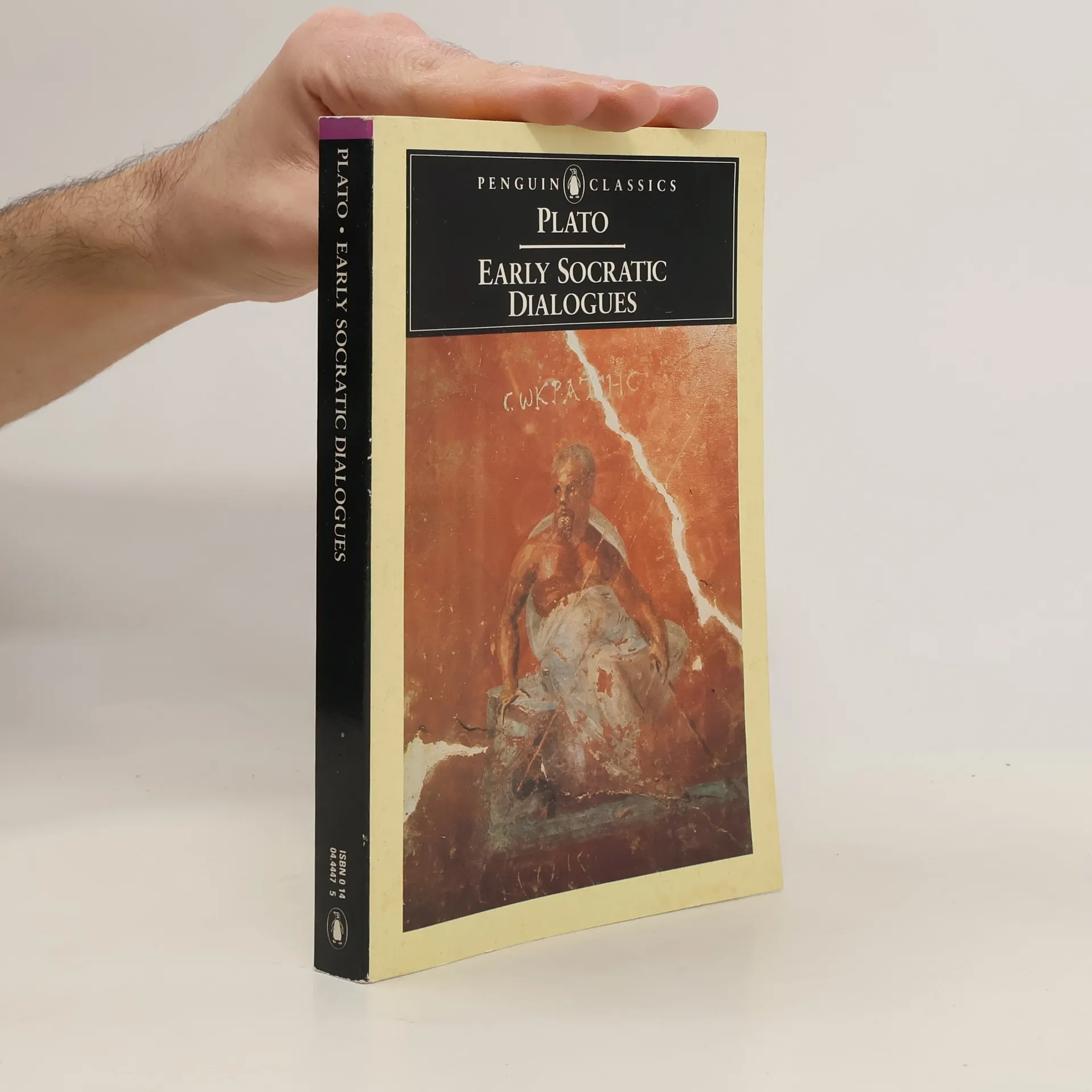
    • Ion/Laches/Lysis/Charmides/Hippias Major/Hippias Minor/EuthydemusRich in drama and humor, these dialogues provide the definitive portrait of Socrates (469-399 B.C.) and his times.Socrates, with his unique ability to tie his opponents in knots and spell out the contradictions in their ideas about friendship, courage, and other familiar topics, was the father of Western philosophy, ann inspiration - and a major irritant - to the Athenians of his day. After his trial and execution, Plato (c. 427-347 B.C.), his greatest pupil, wrote the early dialogues as an act of homage. Shorter and more accessible than the Republic and the other later masterpieces, they also give a much truer picture of the real Socrates and raise issues still keenly debated by philosophers; as such, they form an ideal introduction to Plato, to Greek thought and to philosophy.

      Early Socratic Dialogues
      4,1
    • The Dialogues of Socrates

      • 304 páginas
      • 11 horas de lectura

      Plato's dialogues provide a profound exploration of Socratic philosophy, emphasizing personal responsibility through engaging conversations with Athenians. This collection features six key dialogues: "Charmides" on restraint, "Symposium" on love, "Euthyphro" on piety, "Apology" presenting Socrates' defense, "Crito" on justice, and "Phaedo," which recounts Socrates' final moments. The elegant collector's edition is beautifully designed with gold embossing, gilded edges, and ivory pages, making it an ideal gift for both novice and seasoned philosophy enthusiasts.

      The Dialogues of Socrates
      4,1
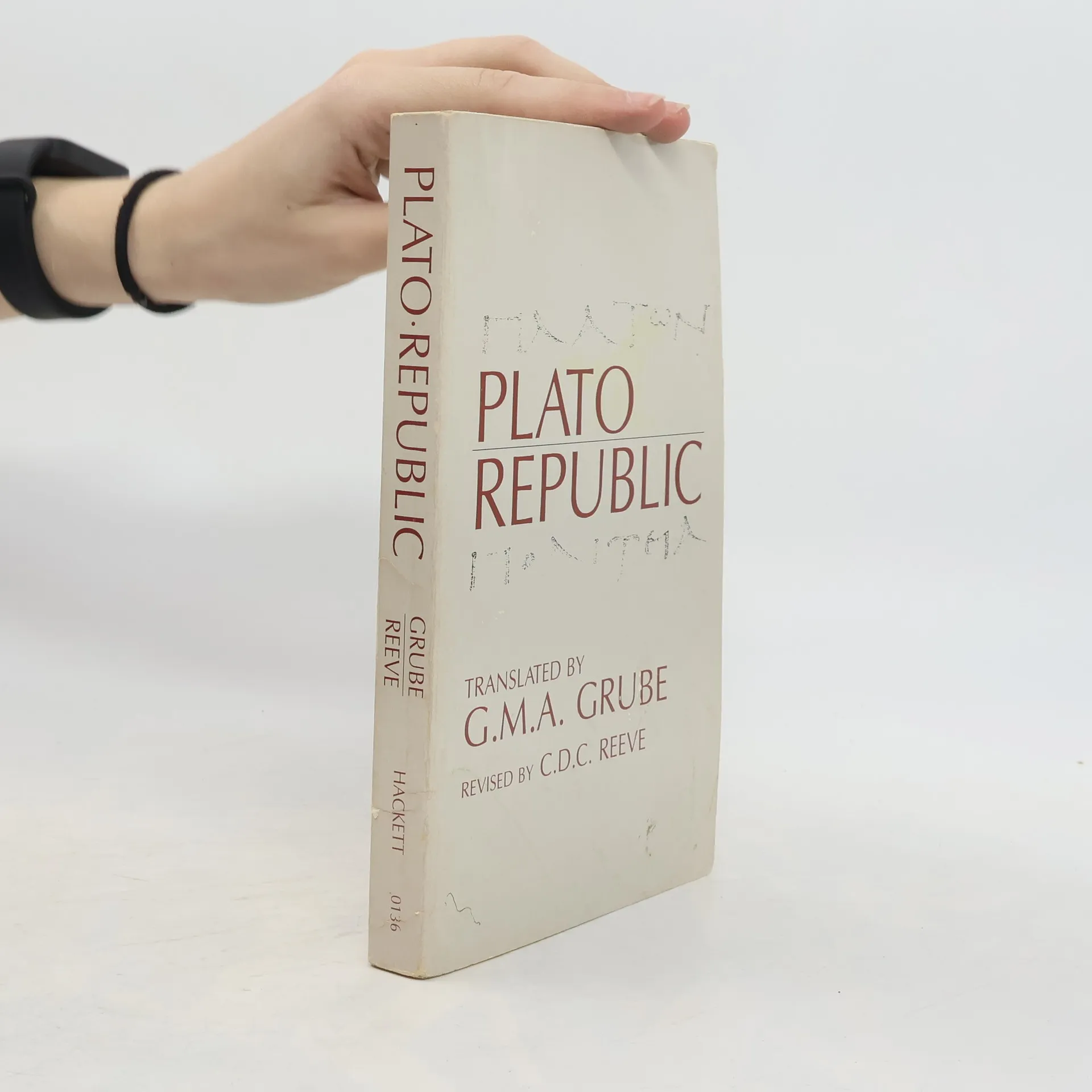
    • Since its publication in 1974, scholars throughout the humanities have adopted G M A Grube's masterful translation of the Republic as the edition of choice for their study and teaching of Plato's most influential work. In this brilliant revision, C D C Reeve furthers Grube's success both in preserving the subtlety of Plato's philosophical argument and in rendering the dialogue in lively, fluent English, that remains faithful to the original Greek. This revision includes a new introduction, index, and bibliography by Reeve.

      Republic
      4,1
    • Parmenides

      • 122 páginas
      • 5 horas de lectura

      Plato, an influential Athenian philosopher, established the Platonist school and the Academy, the first higher learning institution in the West. Renowned for his contributions to philosophy, he is a key figure alongside Socrates and Aristotle. His work laid the groundwork for Western thought and religion, with neoplatonism significantly impacting early Christian theology through figures like Augustine. His legacy continues to shape philosophical and spiritual discourse today.

      Parmenides
      4,1
    • Philebus

      • 132 páginas
      • 5 horas de lectura

      The dialogue explores the philosophical debate between hedonism and the pursuit of higher pleasures. Socrates engages with Protarchus, who defends the hedonistic viewpoint of Philebus, yet Socrates argues for a balanced life that harmonizes both physical and intellectual pleasures. Through this discussion, the text delves into the nature of happiness and the complexities of human fulfillment, ultimately questioning what constitutes the best life.

      Philebus
      4,0
    • Oxford World's Classics: Symposium

      A New Translation by Robin Waterfield

      • 160 páginas
      • 6 horas de lectura

      In his celebrated masterpiece, Symposium, Plato imagines a high-society dinner-party in Athens in 416 BC. The guests--including the comic poet Aristophanes and Plato's mentor Socrates--each deliver a short speech in praise of love. The sequence of dazzling speeches culminates in Socrates' famous account of the views of Diotima, a prophetess who taught him that love is our means of trying to attain goodness, and a brilliant sketch of Socrates himself by a drunken Alcibiades, the most popular and notorious Athenian of the time. Engaging the reader on every page, this new translation conveys the power, humor, and pathos of Plato's creation and is complemented by full explanatory notes and an illuminating introduction.

      Oxford World's Classics: Symposium
      4,0
    • How to Talk about Love

      An Ancient Guide for Modern Lovers

      • 208 páginas
      • 8 horas de lectura

      Delve into the exploration of love through a lively translation of Plato's Symposium, where prominent Athenians engage in a contest of speeches praising Eros, the Greek god of love. Key figures like Phaedrus, Pausanias, and Socrates present varied perspectives on love's nature, including its connection to physical attraction and divinity. The dialogue culminates in Alcibiades' tribute to Socrates as the embodiment of love. This edition enhances accessibility by featuring the original Greek alongside the translation, making Plato's profound insights more enjoyable for contemporary readers.

      How to Talk about Love
      3,9
    • Euthyphro

      • 36 páginas
      • 2 horas de lectura

      Set in the weeks leading up to Socrates' trial, this Socratic dialogue features a conversation between Socrates and Euthyphro that explores profound themes of piety and justice. Through their exchange, Plato delves into philosophical inquiries that ultimately lead to uncertainty and unresolved questions, characteristic of his early works. The dialogue invites readers to reflect on moral concepts while showcasing the complexities of ethical discourse.

      Euthyphro
      4,0
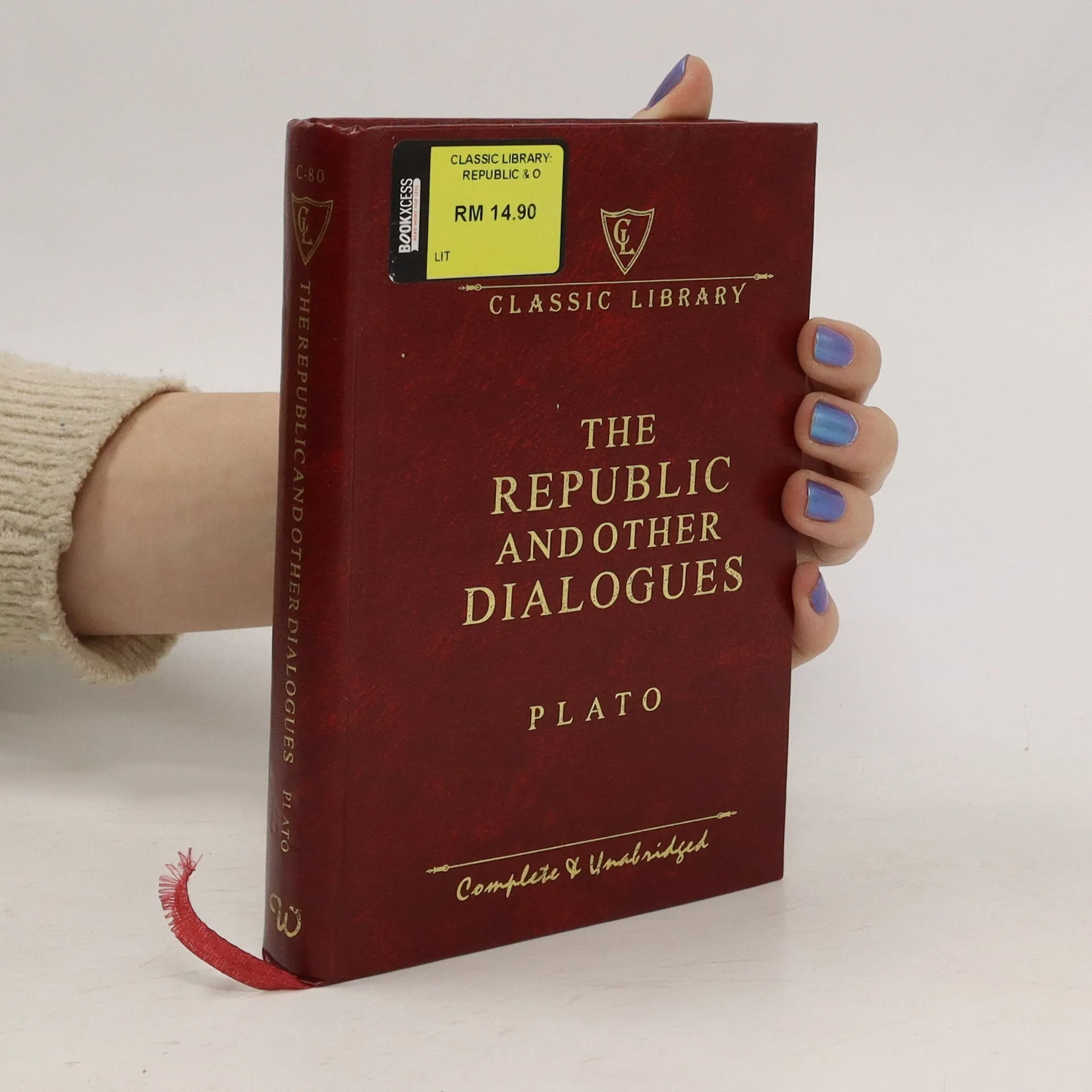
    • The Republic and Other Dialogues

      • 405 páginas
      • 15 horas de lectura

      These portable, handy sized classics are a great addition to your collection or they make a great gift item. All are hardcover editions in imitation red leather with golden foil stamping. Includes a red ribbon marker.

      The Republic and Other Dialogues
      3,7
    • Symposium

      • 104 páginas
      • 4 horas de lectura

      In his celebrated masterpiece, Symposium, Plato imagines a high-society dinner-party in Athens in 416 BC at which the guests - including the comic poet Aristophanes and, of course, Plato's mentor Socrates - each deliver a short speech in praise of love. The sequence of dazzling speeches culminates in Socrates' famous account of the views of Diotima, a prophetess who taught him that love is our means of trying to attain goodness. And then into the party bursts the drunken Alcibiades, the most popular and notorious Athenian of the time, who insists on praising Socrates himself rather than love, and gives us a brilliant sketch of this enigmatic character. The power, humour, and pathos of Plato's creation engages the reader on every page. This new translation is complemented by full explanatory notes and an illuminating introduction.

      Symposium
      4,0
    • Phaedo

      • 110 páginas
      • 4 horas de lectura

      The narrative is presented through Phaedo, a disciple of Socrates, recounting the philosopher's final moments and discussions on the immortality of the soul. Central to the text are the Cyclical and Affinity Arguments, which assert that the soul is imperishable, contrasting with the mortal body. Plato introduces the Theory of Recollection, suggesting that the soul possesses innate knowledge from a pre-birth existence. This dialogue not only explores profound philosophical concepts but also highlights the enduring nature of the soul as part of the eternal Forms.

      Phaedo
      4,0
    • "This is an excellent translation. It achieves a very high standard of accuracy and readability, two goals very difficult to attain in combination when it comes to such a master of prose and philosophical argument as Plato. Because of this the book is suitable for courses at all levels in philosophy, from introductory courses on Plato, or problems in Philosophy, to graduate seminars." -- Gerasimos Santas, Teaching Philosophy

      Gorgias
      4,0
    • Protagoras and Meno

      • 160 páginas
      • 6 horas de lectura

      This volume contains new translations of two dialogues of Plato, the Protagoras and the Meno, together with explanatory notes and substantial interpretive essays. Robert C. Bartlett's translations are as literal as is compatible with sound English style and take into account important textual variations. Because the interpretive essays both sketch the general outlines of the dialogues and take up specific theoretical or philosophic difficulties, they will be of interest not only to those reading the dialogues for the first time but also to those already familiar with them. The Protagoras and the Meno are linked by the attention each pays to the idea of virtue: the latter dialogue focuses on the fundamental Socratic question "What is virtue?," the former on the specific virtue of courage, especially in its relation to wisdom. An appendix contains a short extract from Xenophon's Anabasis of Cyrus that vividly portrays the figure of Meno.

      Protagoras and Meno
      4,0
    • This translation of Plato's classic work is published along with an extensive introductory essay, which situates the work in the context of the development of Greek science and discusses points of contemporary interest. schovat popis

      Timaeus
      3,9
    • ION

      • 30 páginas
      • 2 horas de lectura

      The book invites readers into a captivating narrative that promises to engage and intrigue. It offers a blend of compelling themes and rich character development, making it a noteworthy addition to your reading list. The exploration of its central ideas is designed to resonate with a wide audience, ensuring that it leaves a lasting impact. Prepare for an immersive experience that challenges perspectives and ignites curiosity.

      ION
      3,4
    • Taking the form of dialogues between Socrates, Timaeus, Critias and Hermocrates, these two works are among Plato's final writings. In Timaeus, he gives a thorough account of the world in which we live, describing a cosmos composed of four elements - earth, air, fire and water - which combine to give existence to all things. An exploration of the origins of the universe, life and humanity, which outlines not just physical laws but also metaphysical and religious principles, it remained a paradigm of science for two thousand years. The mysterious preamble to Timaeus contains the first account in literature of Atlantis, while the fragmentary Critias, unfinished by its author, provides a spellbinding description of the lost continent's ideal society, which Critias asserts was created by the god-like children of Poseidon himself.

      Timaeus and Critias
      3,9
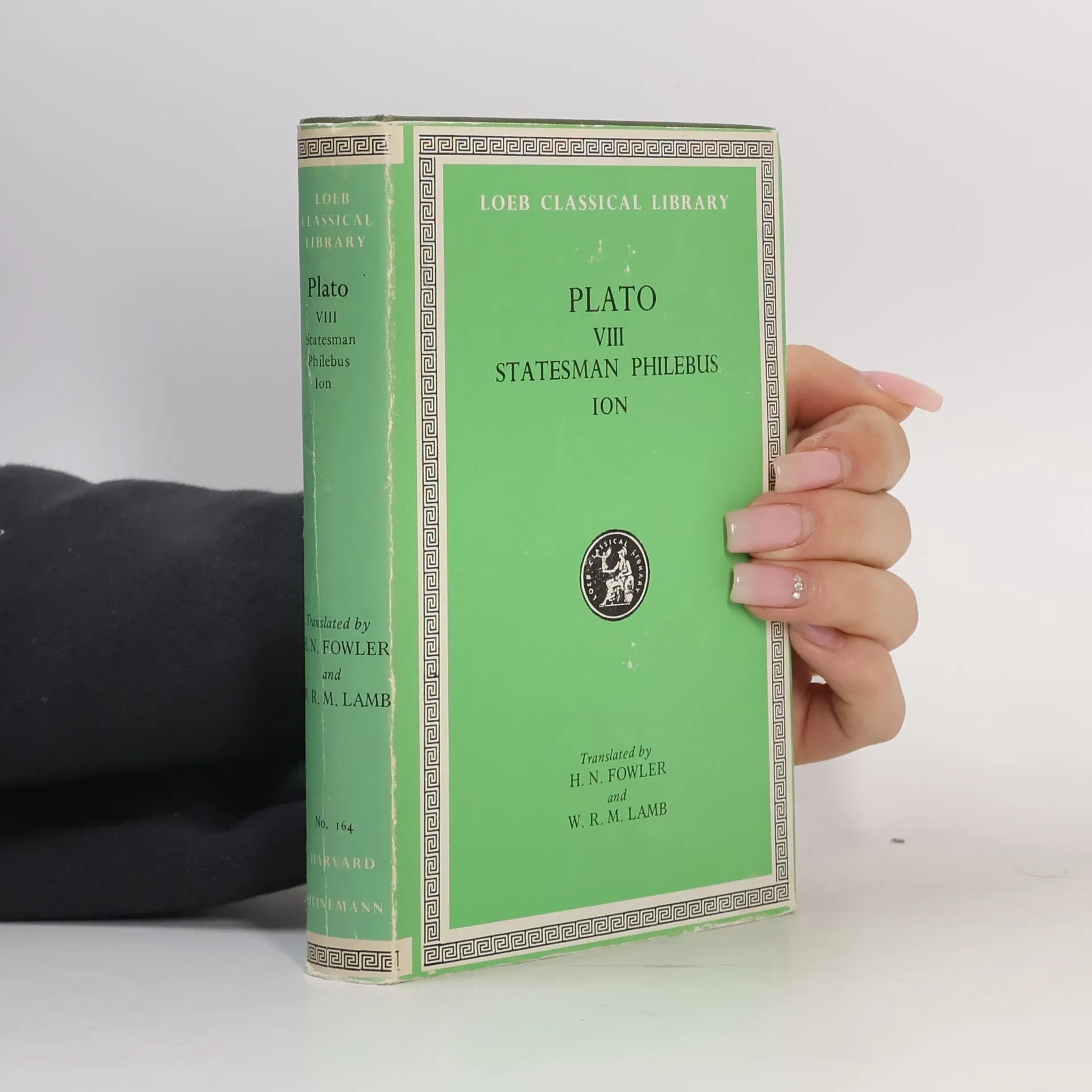
    • Plato

      The Statesman

      • 124 páginas
      • 5 horas de lectura

      The new translation offers a clear and contemporary rendition of Plato's dialogue, tailored for students of political thought. It includes an introduction that contextualizes the argument within the evolution of Plato's ideas, providing essential philosophical and historical background. This approach enhances understanding for readers interested in political theory, making the text more accessible and relevant to modern discussions.

      Plato
      3,8
    • Phaedrus

      • 90 páginas
      • 4 horas de lectura

      "Set in the idyllic countryside outside Athens, the Phaedrus is a dialogue between the philosopher Socrates and his young friend Phaedrus, inspired by their reading of a clumsy speech by the writer Lysias about love. After first considering the virtues of romantic love, their conversation develops into a wide-ranging discussion on such subjects as the pursuit of beauty, the nature of humanity, the immortality of the soul and the attainment of truth, and ends with an in-depth consideration of the principles of rhetoric. Probably a work of Plato's maturity, the Phaedrus represents a high point in his achievement as a writer. It remains a fascinating exploration of love, mortality, destiny and what it means to be human."

      Phaedrus
      3,8
    • Statesman

      • 176 páginas
      • 7 horas de lectura

      Plato's Statesman is the second of a projected trilogy of dialogues, in which an unnamed stranger sets out to satisfy Socrates' desire for an account of sophist, statesman, and philosopher. (The third was never written.) It includes a clear English translation along with notes and supplementary materials.

      Statesman
      3,6
    • Cratylus

      Translated by Benjamin Jowett

      • 140 páginas
      • 5 horas de lectura

      Plato, an Athenian philosopher from Ancient Greece, is renowned for founding the Platonist school and the Academy, the first higher learning institution in the Western world. His contributions significantly shaped Western philosophy, alongside his teacher Socrates and student Aristotle. Often regarded as a pivotal figure in human history, he also played a crucial role in the development of Western religion and spirituality, influencing later thinkers like Plotinus and Augustine through the movement of neoplatonism.

      Cratylus
      3,6
    • Plato: Meno

      • 80 páginas
      • 3 horas de lectura

      "As one would expect from the team of Brann, Kalkavage and Salem, their edition of Plato's Meno is a fine one. The translation meets their stated goal of remaining 'as faithful as possible to the Greek, while using lively, colloquial English.' Their notes are consistently helpful and will be particularly useful to those readers willing to explore the nuances of Plato's extraordinary prose. Their introduction is clear and compact, and it highlights the most philosophically important themes of the dialogue. One particularly useful feature of this edition is the manner in which it displays the diagrams Socrates draws in order to illustrate his famous 'square within a square.' Instead of relegating them to the notes, it integrates them into the text of the dialogue itself. Readers are able to follow along, and 'watch' Socrates actually construct them." --David Roochnik, Boston University

      Plato: Meno
      3,6
    • Theaetetus

      • 150 páginas
      • 6 horas de lectura

      Focusing on the nature of knowledge, this dialogue features Socrates questioning the young mathematician Theaetetus about perception, belief, and true knowledge. Through their conversation, Plato articulates his philosophical views, emphasizing that true understanding is achieved through inquiry and contemplation. The text also addresses the philosopher's role in the pursuit of wisdom. "Theaetetus" stands as a pivotal work in Western philosophy, showcasing the depth of philosophical exploration in ancient Greece.

      Theaetetus
      3,4
    • Charmides

      or, Temperance

      • 68 páginas
      • 3 horas de lectura

      Plato, an Athenian philosopher of the Classical period, established the Academy, marking the beginning of higher education in the Western world. Renowned for his profound influence on philosophy, he is often regarded alongside Socrates and Aristotle as a cornerstone of Ancient Greek thought. His contributions extend beyond philosophy, impacting Western religion and spirituality, particularly through the neoplatonism of later thinkers like Plotinus and Porphyry, which significantly shaped Christian theology as seen in the works of Church Fathers such as Augustine.

      Charmides
      3,6
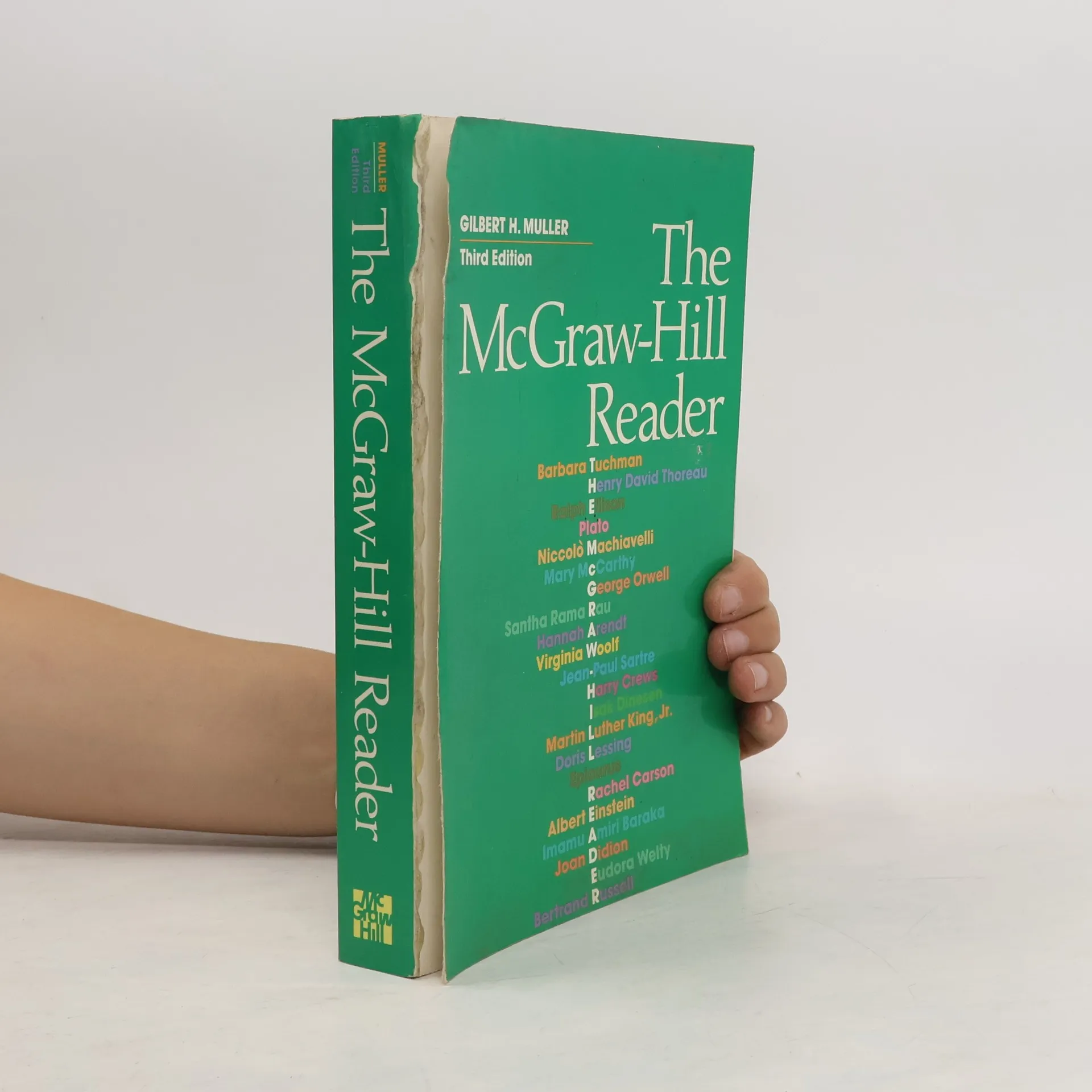
    • The McGraw-Hill Reader: Third Edition

      • 725 páginas
      • 26 horas de lectura

      Approaching a liberal arts tradition in the classroom, across the curriculum, and beyond, The McGraw-Hill Reader offers rich and diverse readings in education, the social sciences, business and economics, the humanities, and the sciences. This new eleventh edition offers a new focus on reading and composing across various media; it includes over 100 selections from prominent thinkers and writers; each essay was chosen to provoke critical thought and encourage effective writing.

      The McGraw-Hill Reader: Third Edition
    • The Republic is a Socratic dialogue, written by Plato around 380 BC, concerning justice, the order and character of the just city-state, and the just man. It is Plato's best-known work, and has proven to be one of the world's most influential works of philosophy and political theory, both intellectually and historically. In the book's dialogue, Socrates discusses with various Athenians and foreigners about the meaning of justice and whether the just man is happier than the unjust man. They consider the natures of existing regimes and then propose a series of different, hypothetical cities in comparison, culminating in Kallipolis, a hypothetical city-state ruled by a philosopher king. They also discuss the theory of forms, the immortality of the soul, and the role of the philosopher and of poetry in society.

      The Republic: Dialogue on Justice & Political System
    • The Republic is a Socratic dialogue, written by Plato around 380 BC, concerning the definition of justice, the order and character of the just city-state and the just man-for this reason, ancient readers used the name On Justice as an alternative title (not to be confused with the spurious dialogue also titled On Justice). The dramatic date of the dialogue has been much debated and though it might have taken place some time during the Peloponnesian War, "there would be jarring anachronisms if any of the candidate specific dates between 432 and 404 were assigned". It is Plato's best-known work and has proven to be one of the most intellectually and historically influential works of philosophy and political theory. In it, Socrates along with various Athenians and foreigners discuss the meaning of justice and examine whether or not the just man is happier than the unjust man by considering a series of different cities coming into existence "in speech", culminating in a city called Kallipolis, which is ruled by philosopher-kings and by examining the nature of existing regimes. The participants also discuss the theory of forms, the immortality of the soul, and the roles of the philosopher and of poetry in society.

      The Republic: a Socratic dialogue, written by Plato around 375 BC, concerning justice, the order and character of the just city-stat
    • Experience the timeless wisdom and insight of one of ancient Greece's greatest thinkers with this essential collection. Plato's Apology, Crito, and Phaedo are masterpieces of philosophy, offering insights into morality, justice, and the nature of reality. More's introduction provides helpful context and analysis, making this a perfect resource for students, scholars, and anyone seeking to deepen their understanding of Plato's work.

      The Judgment of Socrates: Being a Translation of Plato's Apology, Crito, and the Closing Scene of Phaedo. With an Introduction by P.E. More
    • Timaeus is one of Plato's dialogues, written c. 360 BC. Timaeus begins with a distinction between the physical world and the eternal world. The physical one is the world which changes and therefore, it is the object of opinion and unreasoned sensation. The eternal one never therefore, it is apprehended by reason. Participants in the dialogue include Socrates, Timaeus, Hermocrates, and Critias.Critias is one of Plato's late dialogues. It recounts the story of the mighty island kingdom Atlantis and its attempt to conquer Athens, which failed due to the ordered society of the Athenians.This case laminate collector's edition includes a Victorian-inspired dust jacket.

      Timaeus and Critias (Royal Collector's Edition) (Case Laminate Hardcover with Jacket)
    • Plato

      Complete Works Vol 1 (The Republic, Symposium, Apology, Phaedrus & Laws) (Hardcover Library Edition)

      • 1042 páginas
      • 37 horas de lectura

      Charmides Lysis Laches Protagoras Euthydemus Cratylus Phaedrus Ion Symposium Meno Euthyphro Apology Crito Phaedo Gorgias The Republic Timaeus Critias Parmenides Theaetetus Sophist Statesman Philebus Laws The Seventh Letter

      Plato
    • Plato

      Complete Works Vol 2 (Crito, Timaeus, Meno, Euthyphro & Gorgias)

      • 354 páginas
      • 13 horas de lectura

      Plato was a philosopher in Ancient Greece. He was an essential figure in the development of philosophy, especially the Western tradition, and he founded the Academy in Athens, the first institution of higher learning in the Western world.Plato's dialogues have been used to teach a range of subjects, including philosophy, logic, ethics, rhetoric, religion and mathematics. His lasting themes include Platonic love, the theory of forms, the five regimes, innate knowledge, among others. His theory of forms launched a unique perspective on abstract objects, and led to a school of thought called Platonism.This collection contains the following works by Crito,Timaeus,Meno,Euthyphro & Gorgias.

      Plato
    • Plato

      Complete Works Vol 2 (Crito, Timaeus, Meno, Euthyphro & Gorgias) (Hardcover Library Edition)

      • 354 páginas
      • 13 horas de lectura
      Plato
    • The Complete Works of Plato

      Socratic, Platonist, Cosmological, and Apocryphal Dialogues

      • 1184 páginas
      • 42 horas de lectura

      Meticulously translated by Benjamin Jowett, this comprehensive collection presents Plato's philosophical journey, spanning from early Socratic Dialogues to complex Cosmological Dialogues and the insightful Apocryphal Dialogues. Jowett's translation captures Plato's unique style and profound ideas, making ancient philosophy accessible to contemporary readers.

      The Complete Works of Plato
    • Exploring themes of justice and the ideal state, this Socratic dialogue delves into the nature of the just city-state and the characteristics of the just individual. As Plato's most renowned work, it has significantly shaped political theory and continues to influence discussions on governance and morality.

      The Republic (Royal Collector's Edition) (Case Laminate Hardcover with Jacket)
    • Apologie De Socrates

      Texte Grec (1896)

      • 88 páginas
      • 4 horas de lectura

      The trial of Socrates serves as the backdrop for this significant philosophical text, where the philosopher articulates his beliefs about life, death, and the essence of philosophy while defending himself against charges of impiety and corrupting the youth. Recognized as a cornerstone of Western philosophy, it emphasizes themes of free speech and critical thinking. This 1896 edition presents the original Greek text, contributing to its cultural importance and accessibility for modern readers, despite potential imperfections from its antiquarian nature.

      Apologie De Socrates
    • Complete Works of Plato

      A Philosophy Masterclass (Grapevine edition): A Philosophy Masterclass (Grapevine edition)e

      • 1008 páginas
      • 36 horas de lectura

      Delve into the profound explorations of love, justice, ethics, and reality through the dialogues of one of history's greatest philosophers. This comprehensive anthology showcases Plato's intellectual brilliance and his Socratic method, featuring conversations with notable figures that challenge readers to reflect on their beliefs. It serves as an invaluable resource for those interested in the foundations of Western philosophy, highlighting Plato's lasting impact on the pursuit of truth and wisdom. Ideal for both philosophers and seekers alike, this collection is essential for any library.

      Complete Works of Plato
    • Menexenus, and Meno

      Translated by Benjamin Jowett

      • 96 páginas
      • 4 horas de lectura

      Plato was a pivotal figure in Ancient Greek philosophy, known for founding the Academy, the first institution of higher learning in the Western world. His philosophical contributions, alongside those of his teacher Socrates and student Aristotle, have profoundly shaped Western thought. Often regarded as a co-founder of Western religion and spirituality, his ideas influenced later thinkers, especially during the neoplatonism movement, impacting the development of Christian theology through figures like Augustine.

      Menexenus, and Meno
    • The Platonist Dialogues

      The Transitional Dialogues of Plato

      • 664 páginas
      • 24 horas de lectura

      Delve into the profound ideas of Plato through a four-volume collection that explores his philosophical evolution. From Socratic inquiries to Plato's idealistic concepts, the volumes cover key themes such as ethics, politics, and metaphysics, providing valuable insights into his influential thought. This comprehensive compilation serves as both an essential resource for scholars and an accessible introduction for those new to philosophy, highlighting the enduring impact of Platonic ideas on Western intellectual history.

      The Platonist Dialogues
    • The Feast of Eros

      A Modern Adaptation of Plato's Symposium

      • 100 páginas
      • 4 horas de lectura

      A gathering of distinguished Athenians serves as the backdrop for profound and playful speeches on love, beauty, and truth, drawing from Plato's original work. Each participant builds on the previous ideas, culminating in Socrates' speech, which highlights the soul's journey through Diotima's teachings. Alcibiades' entrance adds a personal touch, contrasting the philosophical discourse with real-life experiences. The blend of humor, philosophical insights, and lively antics creates a captivating exploration of love, enhanced by integrated Stephanus pagination for easy reference.

      The Feast of Eros
    • Critias

      Translated by Benjamin Jowett

      • 38 páginas
      • 2 horas de lectura

      The book explores the life and contributions of Plato, an Athenian philosopher who established the Academy, the first higher learning institution in the West. It highlights his pivotal role in shaping Ancient Greek and Western philosophy alongside Socrates and Aristotle. Additionally, the text delves into Plato's influence on Western religion and spirituality, particularly through the lens of neoplatonism and its impact on early Christian thought as seen in the works of Church Fathers like Augustine.

      Critias
    • The Socratic Dialogues

      The Early Dialogues of Plato

      • 386 páginas
      • 14 horas de lectura

      Delve into the profound ideas of Plato through a four-volume collection that explores his philosophical evolution. Each volume addresses key themes such as ethics, politics, and metaphysics, beginning with Socratic inquiries and culminating in Plato's idealistic visions. This comprehensive overview not only highlights the depth of Platonic thought but also serves as a crucial resource for both seasoned scholars and those new to philosophy, showcasing the enduring impact of these ideas on Western intellectual history.

      The Socratic Dialogues
    • Plato's Meno

      • 252 páginas
      • 9 horas de lectura

      Exploring a range of profound topics such as politics, education, virtue, and the immortality of the soul, Plato's Meno presents a thought-provoking dialogue filled with unresolved questions. This book uniquely examines the dialogue on its own merits, rather than solely in relation to Plato's other works. By doing so, it provides fresh insights that are both clear and aligned with Plato's philosophical perspectives, inviting readers to engage deeply with the text's complexities.

      Plato's Meno
    • Sophist

      in large print

      • 188 páginas
      • 7 horas de lectura

      The book is a reproduction of a historical work, produced by Megali, a publishing house dedicated to creating large print editions. This initiative aims to enhance accessibility for readers with impaired vision, ensuring that important historical texts are available to a wider audience.

      Sophist
    • Apology, Crito, and Phaedo of Socrates

      A dialogue depicting the trial, and is one of four Socratic dialogues, along with Euthyphro, Phaedo, and Crito, through which Plato details the final days of the philosopher Socrates

      • 122 páginas
      • 5 horas de lectura

      Exploring the themes of ethics, justice, and the soul, this collection presents Socratic dialogues that capture the philosopher's final days. In "Apology," Socrates defends his life and teachings during his trial. "Crito" delves into the moral implications of escaping prison, while "Phaedo" discusses the immortality of the soul and Socrates' reflections on death. Together, these works offer profound insights into Socratic philosophy and the pursuit of truth, highlighting the enduring relevance of Socrates' thoughts on life and morality.

      Apology, Crito, and Phaedo of Socrates
    • Philebus

      in large print

      • 188 páginas
      • 7 horas de lectura

      Focusing on accessibility, this book is a reproduction of a historical work presented in large print, catering specifically to individuals with impaired vision. Published by Megali, a house dedicated to enhancing readability, it aims to make classic literature more inclusive for all readers.

      Philebus
    • Meno

      in large print

      • 96 páginas
      • 4 horas de lectura

      The book is a reproduction of a historical work, presented in large print to enhance accessibility for readers with impaired vision. Published by Megali, a house dedicated to making historical texts more readable, it aims to preserve important literature while accommodating the needs of those who struggle with standard print sizes.

      Meno
    • Euthydemus, and Crito

      Translated by Benjamin Jowett

      • 86 páginas
      • 4 horas de lectura

      Plato, an Athenian philosopher from the Classical period, is recognized as a foundational figure in Western philosophy and education, having established the Academy, the first higher learning institution. His teachings significantly shaped philosophical thought, influencing not only his contemporaries like Socrates and Aristotle but also later religious movements, including neoplatonism, which impacted early Christian thinkers such as Augustine. His contributions extend beyond philosophy into the realms of religion and spirituality, marking him as a pivotal historical figure.

      Euthydemus, and Crito
    • The Republic

      A guide to an analogous concept of One's meaning of Justice

      • 316 páginas
      • 12 horas de lectura

      Exploring the nature of justice, the book delves into why men act fairly—whether out of fear of societal consequences, divine retribution, or personal gain. Plato seeks to define justice and argues for its intrinsic value, independent of external rewards or punishments. By focusing on human psychology rather than mere behavior, he aims to demonstrate that justice is beneficial in its own right, addressing fundamental questions about morality and societal structure within the framework of his philosophical discourse.

      The Republic