



Compra 10 libros por 10 € aquí!
Bookbot

Kevin Keasey

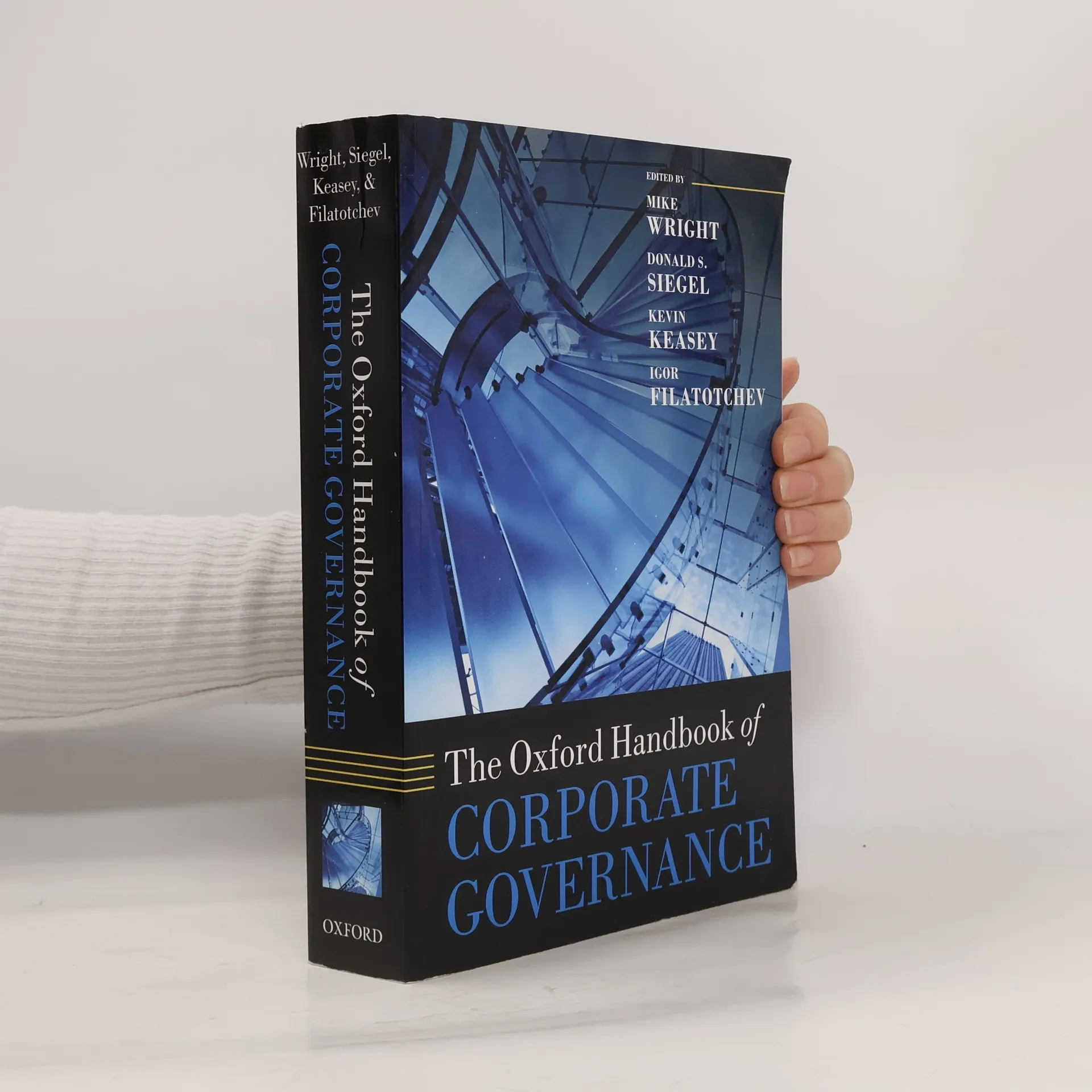
    Oxford Handbooks: The Oxford Handbook of Corporate Governance
    Corporate Governance
    The Intelligent Guide to Stock Market Investment
    George Washington's Final Battle
    Throne of Blood
    • Throne of Blood

      • 98 páginas
      • 4 horas de lectura

      Throne of Blood (1957), Akira Kurosawa's reworking of Macbeth, is widely considered the greatest film adaptation of Shakespeare ever made. In a detailed account of the film, Robert N. Watson explores how Kurosawa draws key philosophical and psychological arguments from Shakespeare, translates them into striking visual metaphors, and inflects them through the history of post-World War II Japan. Watson places particular emphasis on the contexts that underlie the film's central tension between individual aspiration and the stability of broader social and ecological collectives - and therefore between free will and determinism. In his foreword to this new edition, Robert Watson considers the central characters' Washizu and his wife Asaji's blunder in viewing life as a ruthless competition in which only the most brutal can thrive in the context of an era of neoliberal economics, resurgent 'strongman' political leaders, and myopic views of the environmenal crisis, with nothing valued that cannot be monetized.

      Throne of Blood
    • This book, written by financial professionals with extensive experience, provides a realistic and critical look at the theory and practice of stock market investing in the UK. It discusses, in a balanced way, the advantages and disadvantages of the many techniques used for profitable investments.

      The Intelligent Guide to Stock Market Investment
    • Corporate Governance

      • 320 páginas
      • 12 horas de lectura

      There is little doubt that corporate governance has become one of the key issues for students of business and management in the 1990s. This book is the first to draw together the various strands of the debate from the economics, finance, and accounting perspectives, and from an international angle that includes discussion of the issues as they relate to governance in the UK, USA, Germany, Japan, and Eastern Europe.

      Corporate Governance
    • The behavior of managers-such as the rewards they obtain for poor performance, the role of boards of directors in monitoring managers, and the regulatory framework covering the corporate governance mechanisms that are put in place to ensure managers' accountability to shareholder and other stakeholders-has been the subject of extensive media and policy scrutiny in light of the financial crisis of the early 2000s. However, corporate governance covers a much broader set of issues, which requires detailed assessment as a central issue of concern to business and society. Critiques of traditional governance research based on agency theory have noted its "under-contextualized" nature and its inability to compare accurately and explain the diversity of corporate governance arrangements across different institutional contexts. The Oxford Handbook of Corporate Governance aims at closing these theoretical and empirical gaps. It considers corporate governance issues at multiple levels of analysis-the individual manager, firms, institutions, industries, and nations-and presents international evidence to reflect the wide variety of perspectives. In analyzing the effects of corporate governance on performance, a variety of indicators are considered, such as accounting profit, economic profit, productivity growth, market share, proxies for environmental and social performance, such as diversity and other aspects of corporate social responsibility, and of course, share price effects. In addition to providing a high level review and analysis of the existing literature, each chapter develops an agenda for further research on a specific aspect of corporate governance. This Handbook constitutes the definitive source of academic research on corporate governance, synthesizing studies from economics, strategy, international business, organizational behavior, entrepreneurship, business ethics, accounting, finance, and law.

      Oxford Handbooks: The Oxford Handbook of Corporate Governance