Dukapatthana
- 382 páginas
- 14 horas de lectura


Thomas William Rhys Davids fue un distinguido erudito británico especializado en la lengua pālī. Desempeñó un papel fundamental en el establecimiento de la Pali Text Society, una organización dedicada a la preservación y difusión de textos budistas antiguos. Además, Rhys Davids ocupó el prestigioso cargo de Catedrático de Religión Comparada en la Universidad de Manchester. Sus contribuciones se extendieron a la fundación de importantes instituciones académicas, como la British Academy y la London School for Oriental Studies, lo que subraya su compromiso con el avance del estudio de las lenguas y culturas orientales.


An Inquiry into its Place in the History of Buddhism with a Theory as to its Author
The book, first published in 2000, is part of the Routledge imprint under Taylor & Francis, focusing on significant themes and insights relevant to its field. It offers a scholarly perspective, contributing to academic discourse and providing valuable information for researchers and students alike. Its publication under a reputable imprint underscores its credibility and importance in the subject area it addresses.
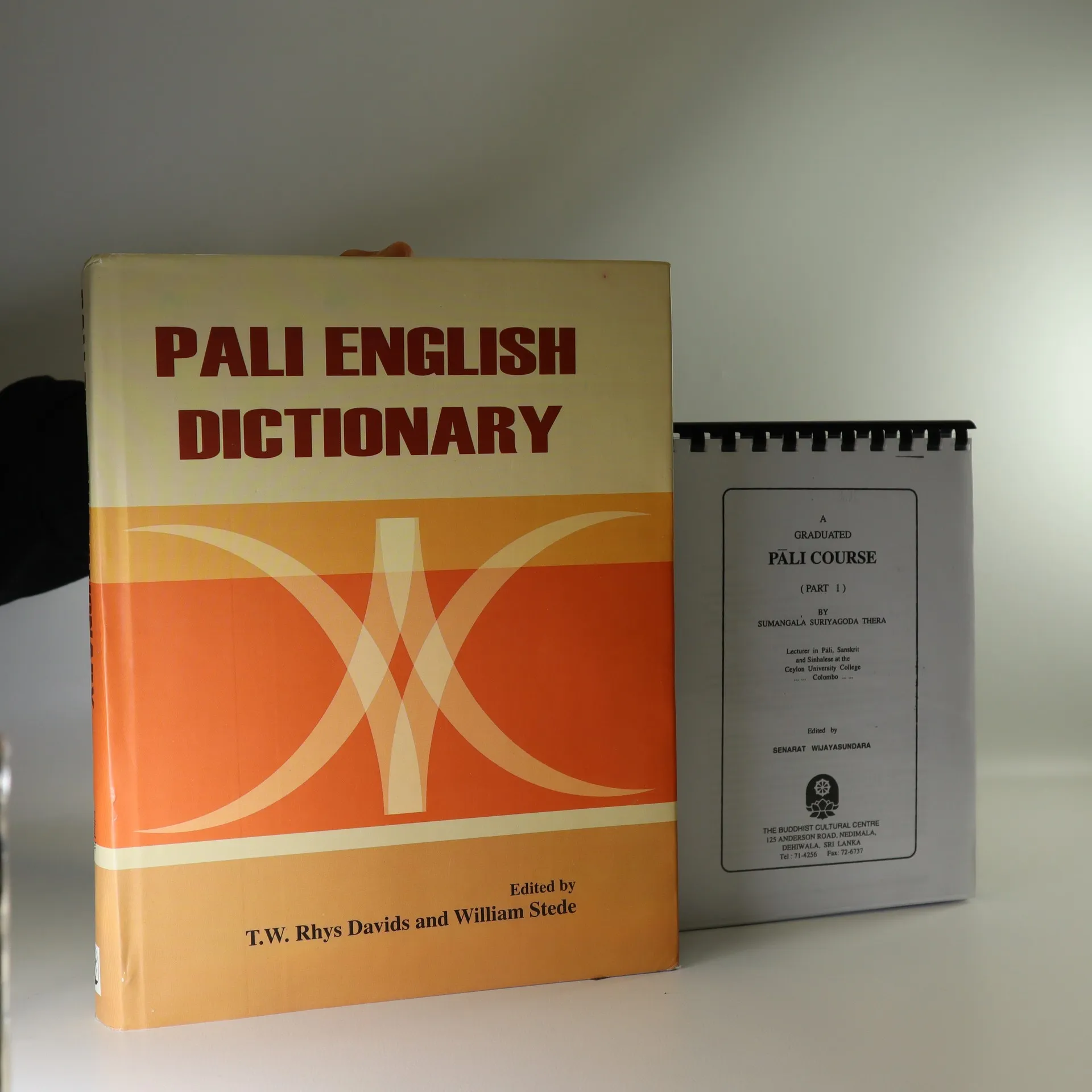
As the Pali Text Society began issuing editions and translations of the Pali Canon and Commentaries in quick succession, Rhys Davids conceived the idea of the compilation of an exhaustive dictionary of Pali, based on the voluminous basic material that was being brought to light. The Dictionary contains every Pali word, with its Sanskrit root identified and meanings given in English. Carrying over 150,000 textual references, the work holds the field as the best Pali-English Dictionary.
A paperback edition of two different translations of the Terigatha. Mrs. C.A.F. Rhys Davids' classic translation in verse, first published in 1909, is interspersed with notes from the Pali commentary which gives the verses a narrative context. K.R. Norman's more modern translation follows the longer work of Mrs. Rhys Davids and was based on an original Pali edition that was more accurately transcribed. His purpose was to produce a literal prose translation that could be read alongside the Pali text. Together the two versions give a very thorough and balanced perspective on this oldest extant report of women's experience of the Path of Dhamma. These poems of exquisite beauty are the utterances of enlightened nuns embodying their varied experiences. Literary critics rank them among the best lyrics in Indian literature. They remain unrivaled in the literary history of the world as creative writing issuing forth from the undefiled purity of the human heart and the nobility of human wisdom. They are ever-fresh fountains of inspiration to the truth-seeker and lasting monuments to the creative genius of liberated beings.