When Eugène Atget (1857–1927) roamed through Paris with a heavy plate camera, he was aware that he was documenting a vanishing world. He photographed small tradespeople, prostitutes, alleys, courtyards, and architectural details to create a comprehensive photographic documentation of his adopted home. While his images also served as souvenirs or templates for painters like Georges Braque and André Derain, Atget saw himself as an urban archaeologist. During his lifetime, he remained largely unknown, as his precise, documentary photography contrasted with the preferred painterly soft-focus style of his time. In the 1920s, the Dada and Surrealist movements, led by Man Ray, discovered his work. Four of his images were published in the Surrealist journal La Révolution surréaliste, and Man Ray and other artists acquired his photographs. Atget gained posthumous recognition through articles and a monograph by Berenice Abbott, who had met him shortly before his death through Man Ray. His influence is still felt today, and he is regarded as a pioneer of early photographic art. Approximately 500 of his photographs are gathered in this volume, with his plates preserved in institutions such as the Bibliothèque Nationale in Paris and the Museum of Modern Art in New York.
Andreas Krase Libros


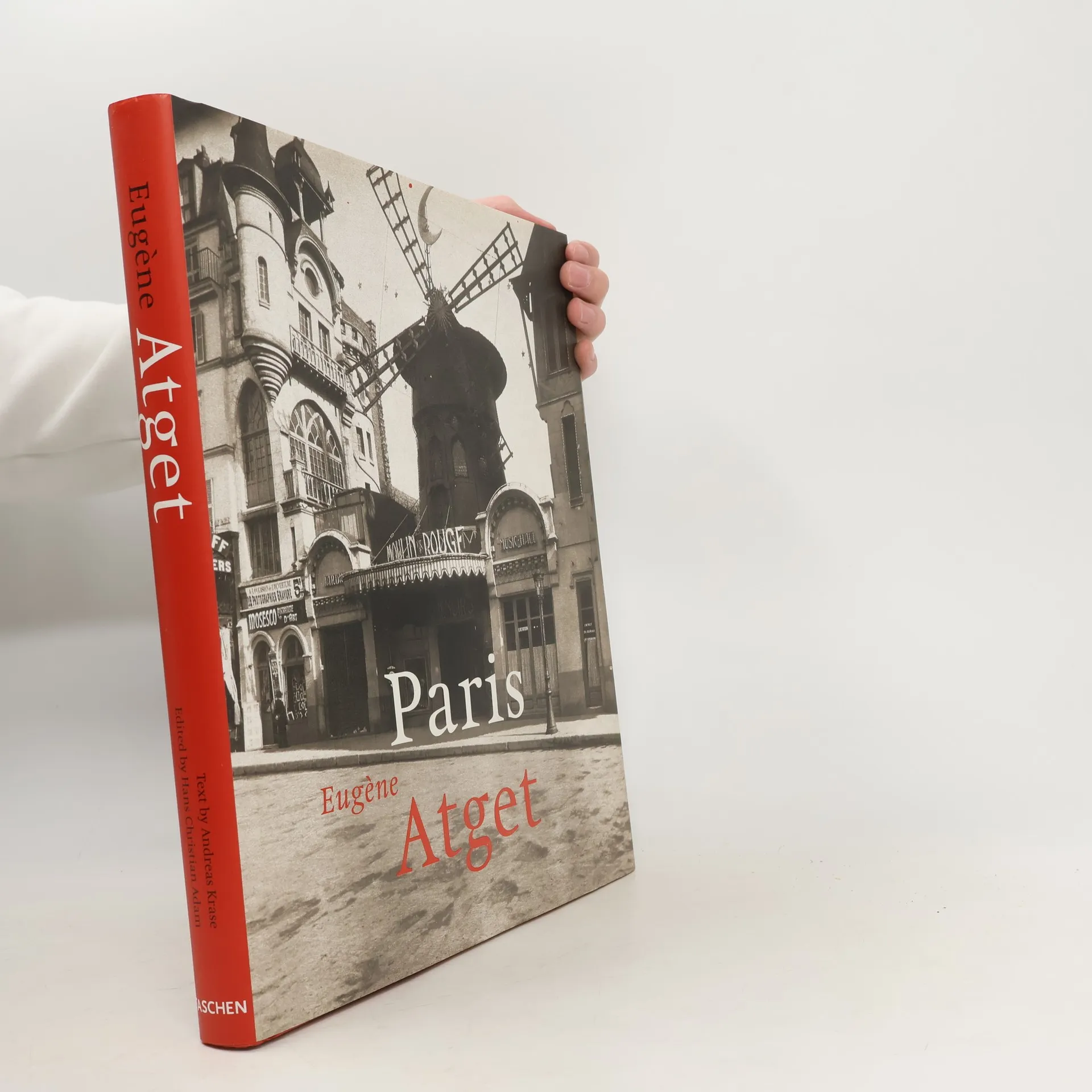
Paris : Eugène Atget, 1857-1927
- 256 páginas
- 9 horas de lectura
Unraveling the mystery of Eugene Atget's life and work (1857-1927) is easier said than done. Now considered to be one of history's most important photographers, Atget (1857-1927) was relatively unknown until well after his death. We know that he made his living selling his prints, mainly to architects, artists, and institutions, but his categorical, obsessive method of photographing Paris street by street (doorknob by doorknob in some cases) lacks clear explanation.Atget wrote in 1920, "I may say that I have in my possession all of Old Paris". Indeed, he knew the city like the back of his hand and had the pictures to prove it. He captured the historical, atmospheric Paris: churches, monuments, and buildings, as well as bars, shop windows, street-peddlers, and prostitutes. Traversing all of its layers, he immortalized the true spirit of Old Paris.Why did he choose to spend his life roaming the streets with his heavy camera equipment, systematically cataloguing everything Parisian? The answer, if it can be discovered, must be found in the pictures themselves. Whether he intended to or not, Atget has left us with an impeccable record of turn-of-the-century Paris, not to mention a huge collection of stunningly beautiful photographs. This new book features 200 of Atget's most impressive images, many of which have rarely been seen before. Take a trip back in time and immerse yourself in Atget's Paris.
Fritz Kühn. Das photographische Werk 1931 bis 1967.
- 237 páginas
- 9 horas de lectura
German
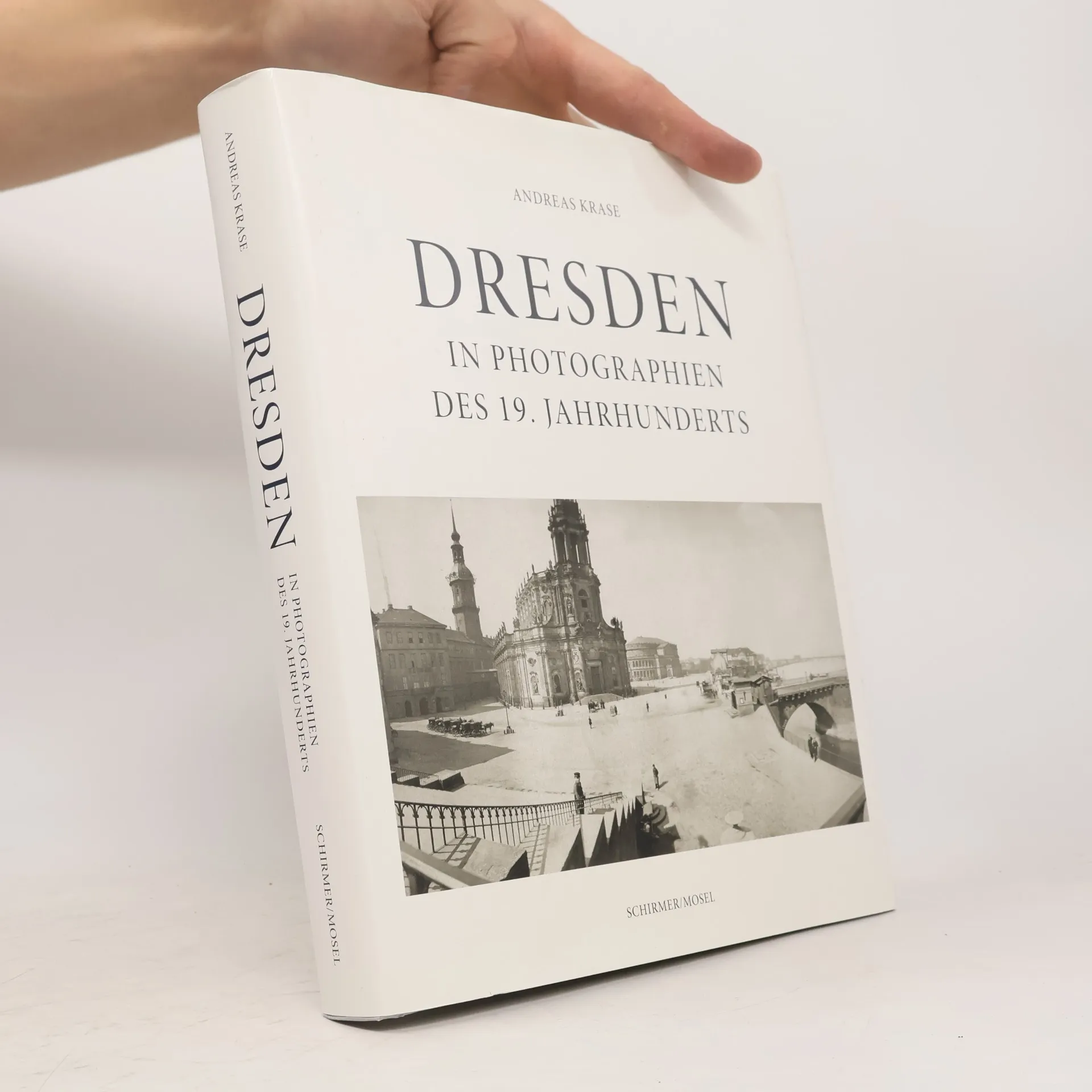
Dresden in Photographien des 19. Jahrhunderts
Erweiterte Neuausgabe mit Stadtplan, Straßenregister und Biographien aller Photographen
- 320 páginas
- 12 horas de lectura
Dresden
in Photographien des 19. Jahrhunderts - 2. überarbeitete und erweiterte Neuauflage; mit Stadtplan
- 240 páginas
- 9 horas de lectura
Das Stadtgebiet Dresdens war bereits im 5. Jahrtausend v. Chr. besiedelt, die Gründung der Stadt wird auf 1173 datiert. Dreihundert Jahre später wurde Dresden Residenzstadt der Albertiner, die bis 1918 in Sachsen herrschten. Der bekannteste Albertiner, August der Starke (1670–1733), verwandelte Dresden in eine prächtige Barockstadt, die als „Elb-Florenz“ bekannt wurde. Die Industrialisierung brachte auch für Dresden Veränderungen, die von Fotografen wie Hermann Krone (1827–1916) dokumentiert wurden. Ab 1817 wurden Festungswerke abgetragen, in den 1820er und 30er Jahren Gasbeleuchtung eingeführt, neue Stadtteile erschlossen und Elbbrücken wie das „Blaue Wunder“ gebaut. 1839 nahm die erste deutsche Fern-Eisenbahn von Dresden nach Leipzig ihren Betrieb auf. Die Einwohnerzahl wuchs von 62.000 um 1800 auf 517.000 Ende 1905. Die markante Silhouette am Elbufer mit Frauenkirche, Schloss, Hofkirche, Semperoper und Zwinger blieb im 19. Jahrhundert weitgehend unverändert und wurde häufig gemalt und fotografiert. Andreas Krase ist Kustos für Photographie der Technischen Sammlungen der Stadt Dresden und Vorsitzender der Sektion Geschichte und Archive der Deutschen Gesellschaft für Photographie.
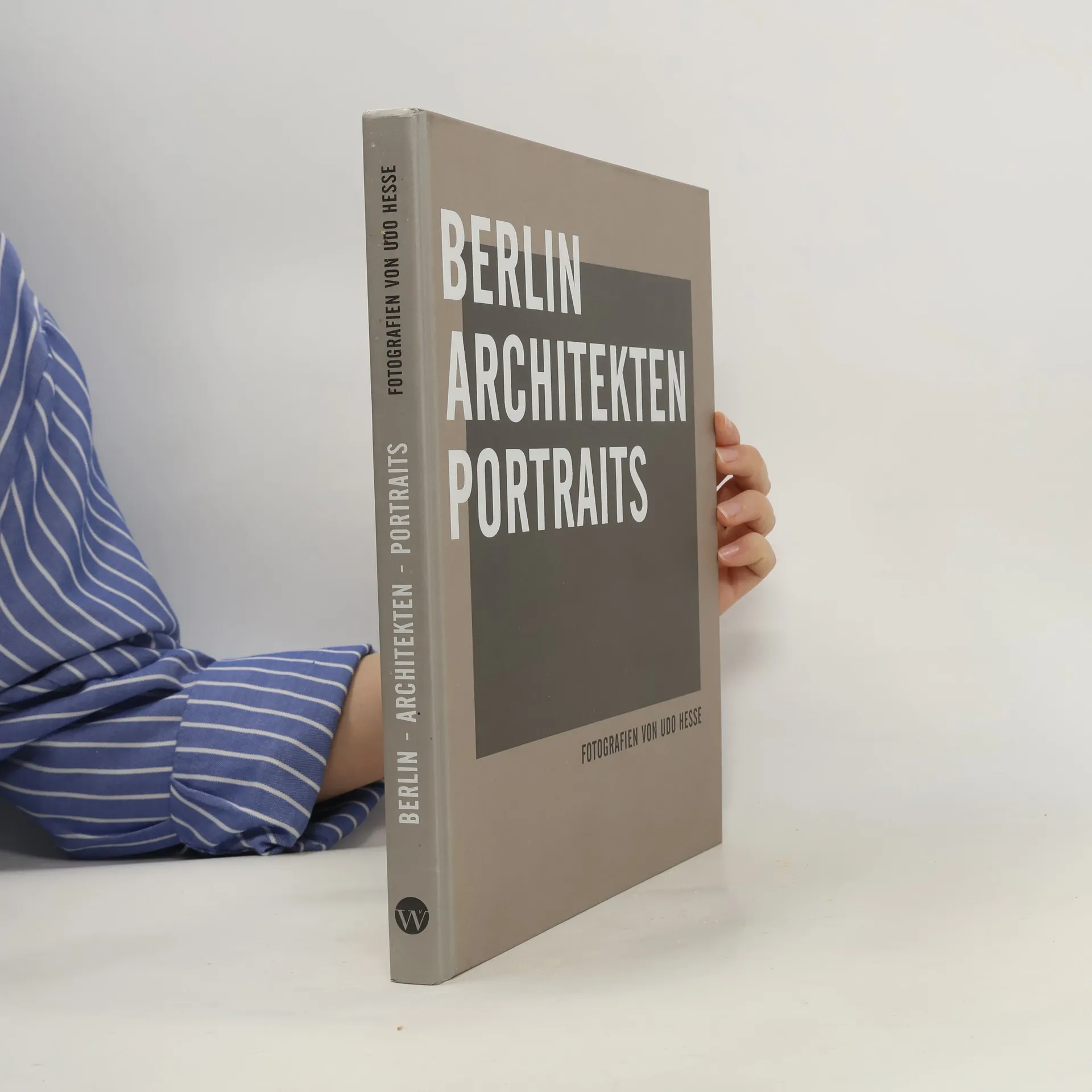
Berlin - Architekten - Portraits
- 160 páginas
- 6 horas de lectura
Dieser Band präsentiert 66 Portraits von Architekten, die das neue Gesicht Berlins maßgeblich geprägt haben. Zu den abgebildeten Persönlichkeiten gehören Günther Behnisch, Norman Foster, Zaha M. Hadid, Helmut Jahn, Josef Paul Kleihues, Daniel Libeskind und viele weitere. Die Fotoserie reflektiert die historische Ansammlung international bedeutender Architekten in der neuen Hauptstadt Deutschlands, die sich in einer bemerkenswerten Transformation der Stadt zeigt. Diese Veränderung weckt ein gesteigertes öffentliches Interesse am Bauen, inspiriert Visionen und Erwartungen und weckt Neugier auf die Architekten selbst. Die eindringlichen Fotografien von Udo Hesse zeigen die Menschen hinter den Bauwerken und den neuen Stadtbildern. Die Gesichter werden formatfüllend und oft in harten Ausschnitten präsentiert, ergänzt durch ganzfigurige Aufnahmen mit mehreren Personen. Einheitliche Elemente wie das quadratische Format, der helle Hintergrund und der nachziehende Rahmen schaffen eine variierende Bildkonstellation. Das Schwarzweiß der Bilder lenkt den Fokus auf das Portraithafte. Ergänzt werden die Portraits durch Statements der Architekten, die Einblicke in ihre Auffassung und Arbeitsweise bieten, sowie durch Kurzbiographien und Werkübersichten.