Henry Mintzberg Libros
Henry Mintzberg es un reconocido académico y autor centrado en la gestión y la estrategia empresarial. Su trabajo examina críticamente los enfoques contemporáneos de la gestión y la planificación estratégica, enfatizando la importancia de la experiencia práctica y el pensamiento crítico sobre los meros métodos cuantitativos. Mintzberg cuestiona los modelos tradicionales de educación empresarial, abogando por reformas destinadas a desarrollar habilidades gerenciales genuinas y una comprensión más profunda de los procesos organizacionales. Sus análisis ofrecen a los lectores una perspectiva refrescante y provocativa sobre el mundo de la gestión.






Understanding Organizations--Finally!
- 244 páginas
- 9 horas de lectura
The iconic Henry Mintzberg provides a crystal-clear map to the seven forces that shape all human organizations, synthesizing sixty years of research on organizational design and theory. Human beings have been organizing to accomplish work for as long as we’ve existed. So why is organizational behavior still so elusive and mysterious? In this book, one of the greatest scholars in his field reframes his career’s work around the seven forces that drive all organizations. Mintzberg identifies them as efficiency, proficiency, consolidation, collaboration, culture, division, and conflict. Each of these forces aligns with one of the seven basic organizational forms: the Personal Enterprise, the Programmed Machine, the Professional Assembly, the Project Pioneer, the Divisional Form, the Community Ship, and the Political Arena. Mintzberg explores how these forms combine and hybridize and offers a life-cycle model to explain how organizations transition between the forms and hybrids. Mintzberg says that organizations are formed by a set of relationships, yet their purpose is achieved only through individual work—making the act of organizing a unique science. This brilliant book not only explains why organizations are the way they are, but it also shows how we can make our individual organizations function at the highest possible level.
Strategic Management at all levels. Also courses in strategic marketing, organization theory, decision theory, public administration, and political science departments. Breaking away from the traditional formulation, - implementation approach that dominates strategy textbooks, this text sees strategy analysis as taking place in a wider organizational and managerial context. This Global edition retains the basic readings and cases approach of the US and European editions and now introduces a truly international perspective to present an up-to-date look at how actual companies act strategically and the research driving them.
The Structuring of Organizations
- 512 páginas
- 18 horas de lectura
Presents methods and examples of organizational structure using empirical literature to describe how organizations structure themselves. The book discusses the nature of managerial work, strategy formation process and issues associated with each type of structure.
A half century ago Peter Drucker put management on the map. Leadership has since pushed it off. Henry Mintzberg aims to restore management to its proper front and center. “We should be seeing managers as leaders.” Mintzberg writes, “and leadership as management practiced well.”This landmark book draws on Mintzberg’s observations of twenty-nine managers, in business, government, health care, and the social sector, working in settings ranging from a refugee camp to a symphony orchestra. What he saw—the pressures, the action, the nuances, the blending—compelled him to describe managing as a practice, not a science or a profession, learned primarily through experience and rooted in context.But context cannot be seen in the usual way. Factors such as national culture and level in hierarchy, even personal style, turn out to have less influence than we have traditionally thought. Mintzberg looks at how to deal with some of the inescapable conundrums of managing, such as, How can you get in deep when there is so much pressure to get things done? How can you manage it when you can’t reliably measure it?This book is vintage iconoclastic, irreverent, carefully researched, myth-breaking. Managing may be the most revealing book yet written about what managers do, how they do it, and how they can do it better.
Strategy making is considered the high point of managerial activity. But bombarded by fads and fixes, most managers have been groping blindly to get their arms around the proverbial elephant. Now Henry Mintzberg, author of the award-winning "The Rise and Fall of Strategic Planning", has teamed up with Bruce Ahlstrand and Joseph Lampel to create a powerful antidote: a comprehensive and illuminating-- as well as colorful-- tour through the fields of strategic management. Mintzberg, Ahlstrand, and Lampel have shaped each of ten different approaches into a coherent school of strategy formation. In the process, the authors clarify the enormous amount of confusion that exists. The result is a tour de force: a brilliant, penetrating primer on business strategy that is, at the same time, immensely readable and fun. The authors provide a thorough critique of the contributions and limitations of each school-- from the design, planning, positioning, entrepreneurial, and cognitive schools to the learning, power, cultural, environmental, and configurational schools-- culminating in how they might combine to reveal that elephant. Unique, insightful, and essential, "Strategy Safari" is the indispensable guide for the creative manager.
Strategy Bites Back
- 292 páginas
- 11 horas de lectura
"Strategy Bites Back invites you to encounter an unlikely set of voices and something sharp to say about strategy - from Mozart to Coco Chanel's "little black dress". These perspectives will provide you with new and dramatically different angles from which to attack the world of strategy." "This book is for everyone involved with strategy - manager, CEO, consultant, professor, student - who wants to see strategy more broadly, more deeply and more playfully."--BOOK JACKET.
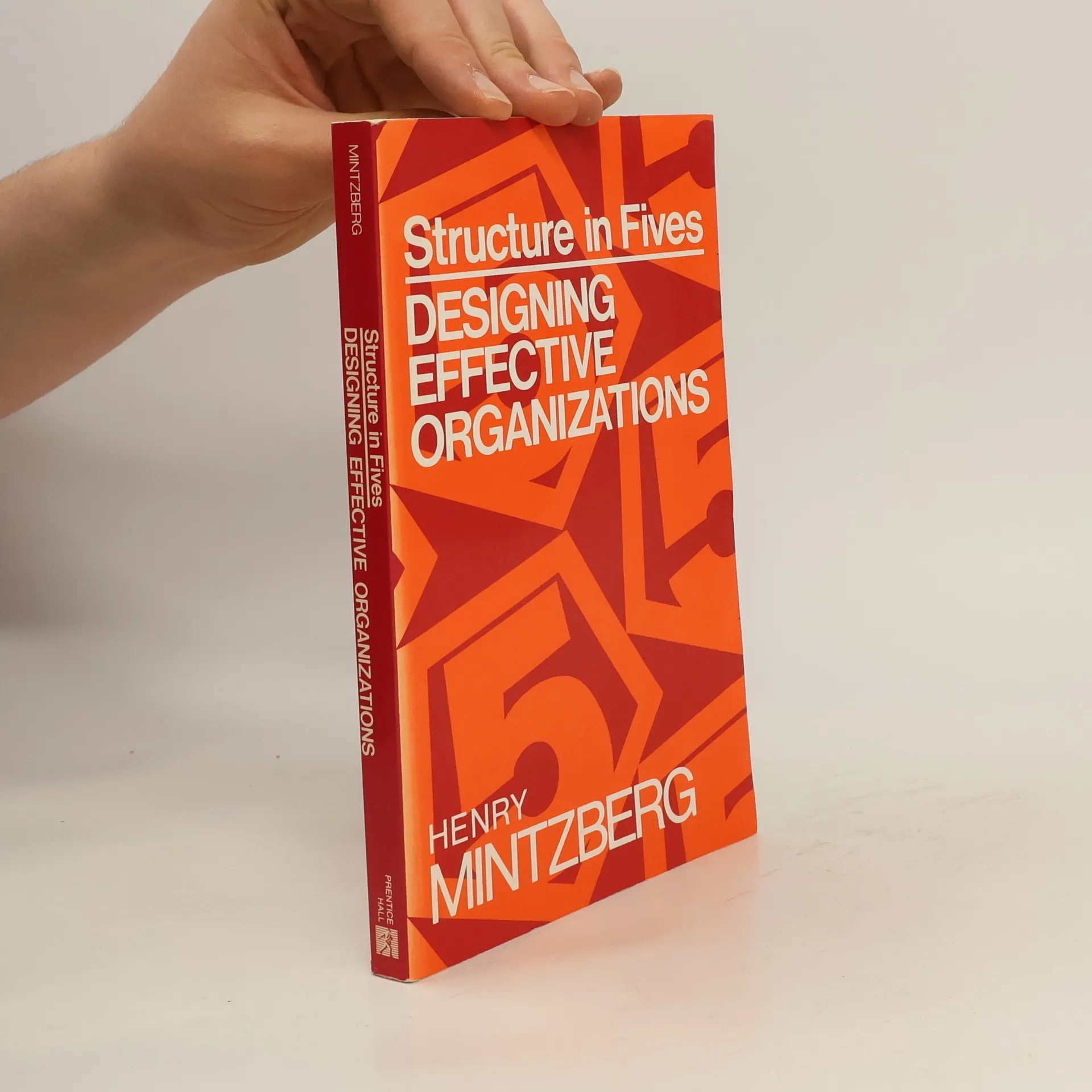
Structure in Fives
- 312 páginas
- 11 horas de lectura
Here's a guide that shows managers how to choose the best organizational design for their business from five basic structures identified by the author. In it readers will discover how to avoid typical mistakes, especially those pertaining to conflict among different divisions.
Reflecting the seminal thinking that has made him the mentor to a younger generation of leading management thinkers, Mintzberg explores the nature of managerial work and the organizational structure and power which affect it.
Harvard Business Review on Leadership
- 238 páginas
- 9 horas de lectura
The Harvard Business Review paperback series is designed to bring today's managers and professionals the fundamental information they need to stay competitive in a fast-moving world. Here are the landmark ideas that have established the Harvard Business Review as required reading for ambitious businesspeople in organizations around the globe. Harvard Business Review on Leadership gathers together eight of the Harvard Business Review's most influential articles on leadership, challenging many long-held assumptions about the true sources of power and authority.
The Rise and Fall of Strategic Planning
Reconceiving Roles for Planning, Plans and Planners
- 458 páginas
- 17 horas de lectura
In this revealing history, Henry Mintzberg, a prominent figure in management thought, critiques the concept of strategic planning, which has captivated organizations since 1965. He argues that the term is an oxymoron, as strategy involves synthesis while planning focuses on analysis, leading to frequent failures in the process. Mintzberg explores the origins and evolution of strategic planning, highlighting its rise and subsequent decline. He advocates for a reimagined approach to strategy creation that prioritizes informal learning and personal vision, redefining the roles of planners. By examining various strategic planning models, he uncovers reasons for their failures and discusses the pitfalls of planning, such as its tendency to undermine commitment, limit vision, stifle change, and foster political environments. Mintzberg identifies three fundamental fallacies: the belief that discontinuities can be predicted, that strategists can remain detached from operations, and that strategy-making can be formalized. He emphasizes a new role for planners, suggesting they should support the strategy-making process rather than be embedded within it, contributing inputs and fostering strategic thinking. This work is essential for anyone involved in organizational planning or strategy-making.
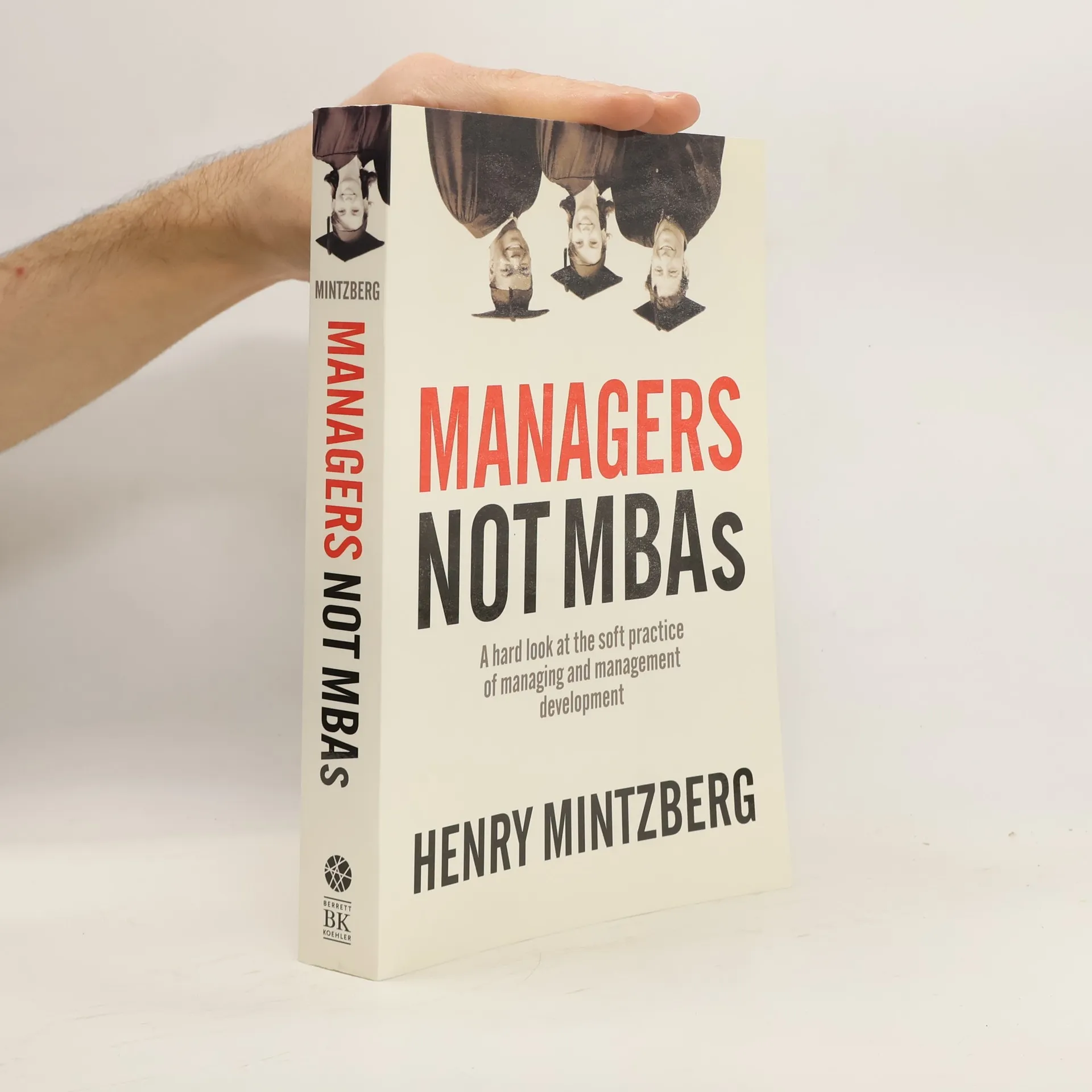
Managers Not MBAs: A Hard Look at the Soft Practice of Managing and Management Development
- 464 páginas
- 17 horas de lectura
In this sweeping critique of how managers are educated and how, as a consequence, management is practiced, Henry Mintzberg offers thoughtful and controversial ideas for reforming both.“The MBA trains the wrong people in the wrong ways with the wrong consequences,” Mintzberg writes. “Using the classroom to help develop people already practicing management is a fine idea, but pretending to create managers out of people who have never managed is a sham.”Leaders cannot be created in a classroom. They arise in context. But people who already practice management can significantly improve their effectiveness given the opportunity to learn thoughtfully from their own experience. Mintzberg calls for a more engaging approach to managing and a more reflective approach to management education. He also outlines how business schools can become true schools of management.
Rebalancing Society: Radical Renewal Beyond Left, Right, and Center
- 168 páginas
- 6 horas de lectura
"Our world is out of balance, says Henry Mintzberg, and the consequences are proving fateful: the degradation of our environment, the demise of our democracies, and the denigration of ourselves, with greed having been raised to some sort of high calling. But we can set things right. Mintzberg argues that a healthy society is built on three balanced pillars: a public sector of respected governments, a private sector of responsible enterprises, and what he calls a plural sector of robust voluntary associations (nonprofits, NGOs, etc.)"--Amazon.com
Bedtime Stories for Managers
- 200 páginas
- 7 horas de lectura
In forty-two succinct, surprising essays, legendary scholar Henry Mintzberg brings management down from the clouds and onto solid ground.If you're like most managers and things keep you up at night, now you can turn to a book that's designed especially for you! But you won't find talking rabbits or princesses here. (There is a cow, but it doesn't jump.) Henry Mintzberg has culled forty-two of the best posts from his widely read blog and turned them into a deceptively light, sneakily serious compendium of sometimes heretical reflections on management.The moral here is managers need to leave their castles and find out what's actually going on in their kingdoms. And like real bedtime stories, these essays have metaphors galore. So prepare to grow strategies like weeds and organize like a cow. Discover the maestro myth of managing, find the soft underbelly of hard data, and learn why downsizing is bloodletting and your board should be a bee. Mintzberg writes, "Just try not to be outraged by anything you read, because some of my most outrageous ideas turn out to be my best. They just take a while to become obvious."
Strategy Safari - Second Edition
- 441 páginas
- 16 horas de lectura
Henry Mintzberg's views are a breath of fresh air which can only encourage the good guys. The Observer My favourite management book of the last 25 years? No contest. The Rise & Fall of Strategic Planning. Tom Peters, management guru Strategy is the most prestigious but also the most confusing part of business. Managers are constantly bombarded with new jargon and the latest fads promising the magic bullet for every strategic problem. The world of strategy can seem to be an impenetrable jungle. Strategy Safari presents a powerful antidote to the dilemma of needing to know about strategy and yet not being able to find any comprehensible guidelines. This revised edition is a comprehensive, colourful and illuminating tour through the wilds of strategic management. In this provocative, jargon-free and extremely readable guide, top strategy authors Mintzberg, Ahlstrand & Lampel clearly set out and critique each of the ten major schools of strategic management thinking to help you grasp what you really need to know. Take the strategy safari your business will thank you for it
Managen
- 390 páginas
- 14 horas de lectura
Managen beleuchtet den vielleicht wichtigsten Job, den es gibt. Seine Dynamik, seine Vielfalt, seine Rätsel und wie Manager ihn effektiv und gut beherrschen. Managen ist eine dynamische Tätigkeit, kein statische Wissenschaft. Mintzberg zeigt, dass Manager vielfach als überlegte und systematische Planer idealisiert werden und diesem Anspruch gar nicht gerecht werden können. Er skizziert Management als dynamischen Prozess. Mintzberg gilt als Enfant terrible unter den Managementvordenkern. Eine seiner Thesen: Management und Leadership sind Bestandteile des gleichen Jobs. Manager, die keine Leader sind, sind langweilig. Und Leader, die nicht managen, wissen nichts vom Geschäft. Die Trennung von Management und Leadership ist Unsinn. Mintzberg fordert auf zu einer längst überfälligen Diskussion über modernes Management: Wie kann man managen, wenn verlässliche Daten fehlen. Wie kann man eine Balance herstellen zwischen notwendiger Veränderung und Kontinuität? Wie kann man Dinge durchdenken, wenn die Zeit dazu fehlt? Effektive Manager sind nicht frei von Fehler, aber sie treffen die in der jeweiligen Situation bestmöglichen Entscheidungen.
Up, up and away - was so verlockend klingt, steht im scharfen Kontrast zur Realität des Fliegens. Über 100 Millionen Passagiere müssen es jährlich allein in Deutschland erfahren.: Wer in den Himmel will, muß durch die Hölle gehen. Doch Hilfe naht: Henry Mintzberg beschreibt das Elend mit Humor und rechnet zugleich mit dessen Verursachern ab.
Die Mintzberg-Struktur
- 413 páginas
- 15 horas de lectura
Zielsetzung dieses Standardwerks ist die Diskussion der Forschungsergebnisse zur Gestaltung effektiver Organisationen aus der Sicht des Praktikers.;* Die stringent aufgebaute Darstellung gilt zunächst der Analyse grundlegender struktureller und situativer Parameter und bietet dann mit der Synthese dieser Elemente fünf Konfigurationen als Abstraktion der organisatorischen Realität. Dabei wird die klare Diktion durch bekannte Beispiele aus Wirtschaft, Industrie und Verwaltung veranschaulicht und in prägnanten Abbildungen und Tabellen zusammengefaßt.;* Als Ergebnis der Studie wird ein Pentagon vorgestellt: Die fünf Konfigurationen bilden die Knotenpunkte eines Systems, in dem nicht nur die "reinen" Konfigurationstypen in ihren verschiedenen Erscheinungsformen, sondern auch organisatorische Mischformen in fließenden Übergängen erfaßt sind. Im Rahmen dieses Systems organisatorischer Realität werden Sie auch "Ihre" Organisation lokalisieren
Unsere Organisationswelt Unsere Gesellschaft ist, zum Guten oder zum Schlechten, eine Gesellschaft von Organi sationen geworden. Wir werden in Organisationen geboren, in ihnen erzogen, so daß wir später in ihnen arbeiten können. Gleichzeitig helfen und unterhalten uns die Organisatio nen. Sie regieren und schikanieren uns (manchmal gleichzeitig). Und am Ende werden wir von ihnen beigesetzt. Abgesehen von einer kleinen Gruppe von Wissenschaftlern, den „Organisationstheoretikern“, die sie erforschen, und den Managern, die ein Interesse an fundierteren Einsichten in ihre Tätigkeit haben, verstehen jedoch nur wenige Menschen diese fremdartigen kollektiven Phänomene, die unser Alltagsleben so stark beeinflussen. Wenn jemand etwas über seine Psyche wissen will, muß er nur in einen Buchladen gehen, und eines von unzähligen Büchern herausgreifen, die sich damit beschäftigen, wie sein Geist, sein Körper oder sein Verhalten angeblich funktionieren. Wenn man aber seine Organisation verstehen will, dann muß man tatsächlich eine Universitätsbuchhand lung finden und sich dann durch das Dickicht einiger akademischer Lehrbücher kämp fen, wenn man sich nicht auf irgendein Textbuch verlassen will, das alles hübsch ordent lich - und wahrscheinlich zu einfach - zusammenfaßt.
Manager: Ce que font vraiment les managers
- 350 páginas
- 13 horas de lectura
Bousculant les idées reçues sur le management et ouvrant de nouvelles perspectives, Mintzberg se propose ici de décrire et interpréter ce que font vraiment les managers au quotidien... et pas seulement dans les entreprises : dans tout type d'organisation. Ce livre est le fruit d'une immersion dans le quotidien de 29 managers, issus de secteurs aussi variés que ceux des affaires, la politique, la santé et le social, exerçant aussi bien dans un camp de réfugiés que dans un orchestre... Donnant sens à la simple réalité concrète et quotidienne de ces hommes et femmes, Mintzberg décrit le management comme une pratique, et non pas comme une science ni une profession, acquise d'abord par l'expérience. Dans Managing, il reprend quelques-unes de ses conclusions antérieures, en reconsidère d'autres, et en introduit de nouvelles. Managing pourrait bien être le livre le plus éclairant sur ce que font les managers, comment ils le font et comment ils pourraient le faire encore mieux.
Grootmeesters in management
- 224 páginas
- 8 horas de lectura
Business Bibliotheek: Leiderschap in de 21ste eeuw
- 126 páginas
- 5 horas de lectura
Interviews met een tiental topmanagers.