Filled with discoveries, this is the dramatic story of Pope Pius XII's struggle to response to the Second World War, the Holocaust, and the Nazi domination of Europe.
David I. Kertzer Libros
20 de febrero de 1948




The Popes Against the Jews
- 368 páginas
- 13 horas de lectura
In this meticulously researched, unflinching, and reasoned study, National Book Award finalist David I. Kertzer presents shocking revelations about the role played by the Vatican in the development of modern anti-Semitism. Working in long-sealed Vatican archives, Kertzer unearths startling evidence to undermine the Church’s argument that it played no direct role in the spread of modern anti-Semitism. In doing so, he challenges the Vatican’s recent official statement on the subject, We Remember. Kertzer tells an unsettling story that has stirred up controversy around the world and sheds a much-needed light on the past.
Politics and Symbols
- 224 páginas
- 8 horas de lectura
In the wake of the fall of the Berlin wall, and with the Communist regimes of Eastern Europe collapsing, Italian Communist Party (PCI) head Achille Occhetto shocked his party in 1989 by insisting that the PCI jettison its old name and become something new. This dramatic book tells of the ensuing struggle within the PCI, which at the time was Italy's second-largest party and the most powerful Communist party in the West. David I. Kertzer's vivid depiction of the conflict brings to life the tactics that party factions employed and the anguish of party members for whom Communism was the core of their identity. Kertzer also tells a larger story from an anthropologist's the story of the importance of symbols, myths, and rituals in modern politics.Those who seek dramatic political change, Kertzer contends, must remake history. He recounts how those who succeeded in transforming the PCI into the new Democratic Party of the Left effectively used ritual and manipulated political symbols. Bringing the views of Antonio Gramsci, Pierre Bourdieu, Michel Foucault, and other political thinkers into his discussion, Kertzer explores theoretical issues involving the relation between symbolism and political power, concluding that modern politics is fundamentally a struggle over symbols and the redefinition of history.
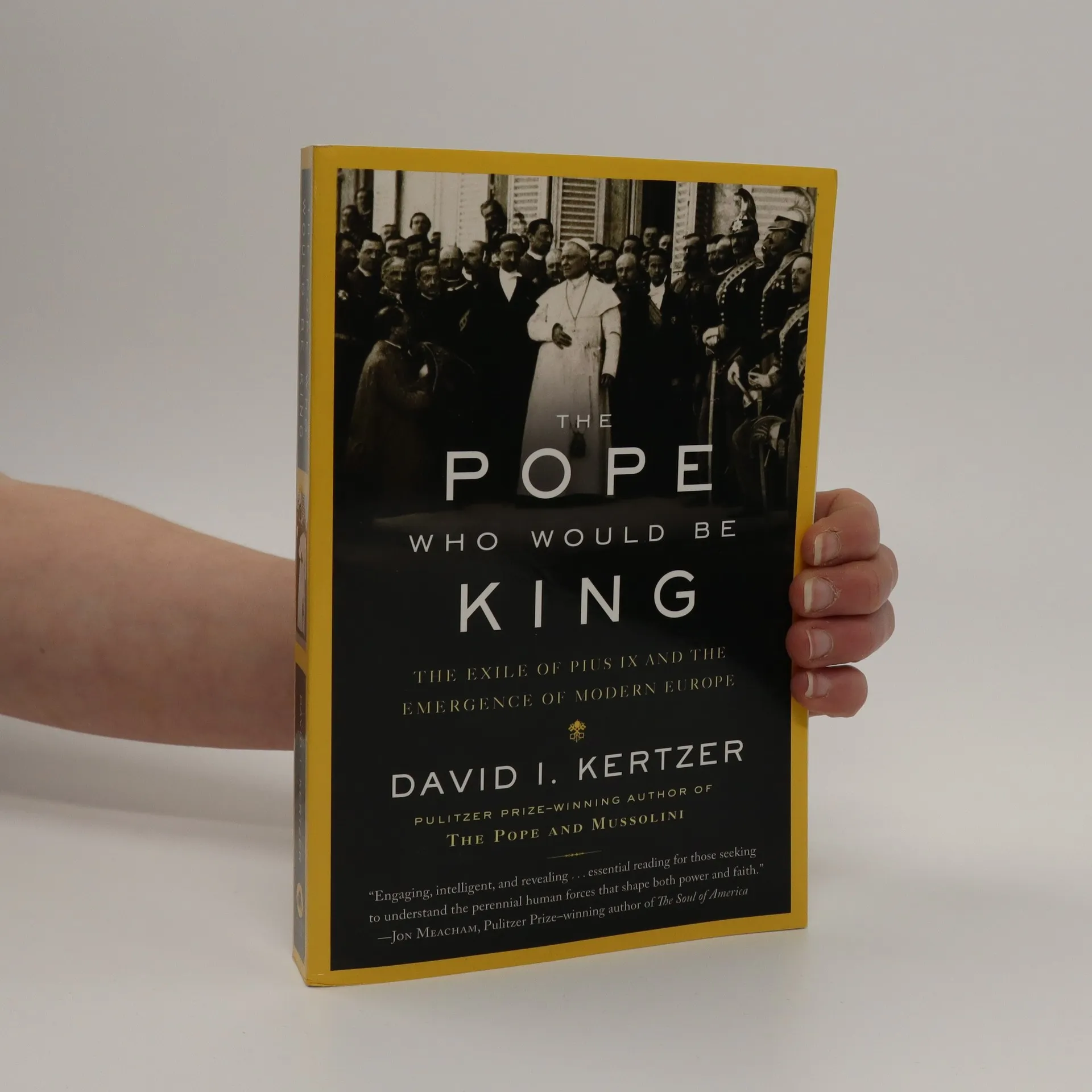
The Pope Who Would Be King
- 512 páginas
- 18 horas de lectura
The Pulitzer-winning author of The Pope and Mussolini takes on a central, untold story of the Papacy, the revolution that stripped the Pope of political power and signaled the birth of modern Europe. The longest-reigning pope, Pope Pius IX, also oversaw one of the greatest periods of tumult and transition in Church history. When Pius IX was elected, the pope was still a king as well as a spiritual leader, welcomed by the citizens of the Papal States who hoped he might bring in modern reforms, such as a constitutional government, after the repressive rule of Pope Gregory XVI. In the first year of his rule, Pius IX tried to please his subjects with incremental changes while holding onto absolute authority he believed was divinely ordained. But, as the revolutionary spirit of 1848 swept through Europe, the Pope found he could not have it both ways. By the end of his rule, the Papacy—and Europe—had completely transformed. In The Pope Who Would Be King, David Kertzer tells the story of the revolution that spelled the end of the papacy as an earthly rule and the birth of modern Europe.
Soon to be a major motion picture from Steven Spielberg. A National Book Award Finalist The extraordinary story of how the vatican's imprisonment of a six-year-old Jewish boy in 1858 helped to bring about the collapse of the popes' worldly power in Italy. Bologna: nightfall, June 1858. A knock sounds at the door of the Jewish merchant Momolo Mortara. Two officers of the Inquisition bust inside and seize Mortara's six-year-old son, Edgardo. As the boy is wrenched from his father's arms, his mother collapses. The reason for his abduction: the boy had been secretly "baptized" by a family servant. According to papal law, the child is therefore a Catholic who can be taken from his family and delivered to a special monastery where his conversion will be completed. With this terrifying scene, prize-winning historian David I. Kertzer begins the true story of how one boy's kidnapping became a pivotal event in the collapse of the Vatican as a secular power. The book evokes the anguish of a modest merchant's family, the rhythms of daily life in a Jewish ghetto, and also explores, through the revolutionary campaigns of Mazzini and Garibaldi and such personages as Napoleon III, the emergence of Italy as a modern national state. Moving and informative, the Kidnapping of Edgardo Mortara reads as both a historical thriller and an authoritative analysis of how a single human tragedy changed the course of history.
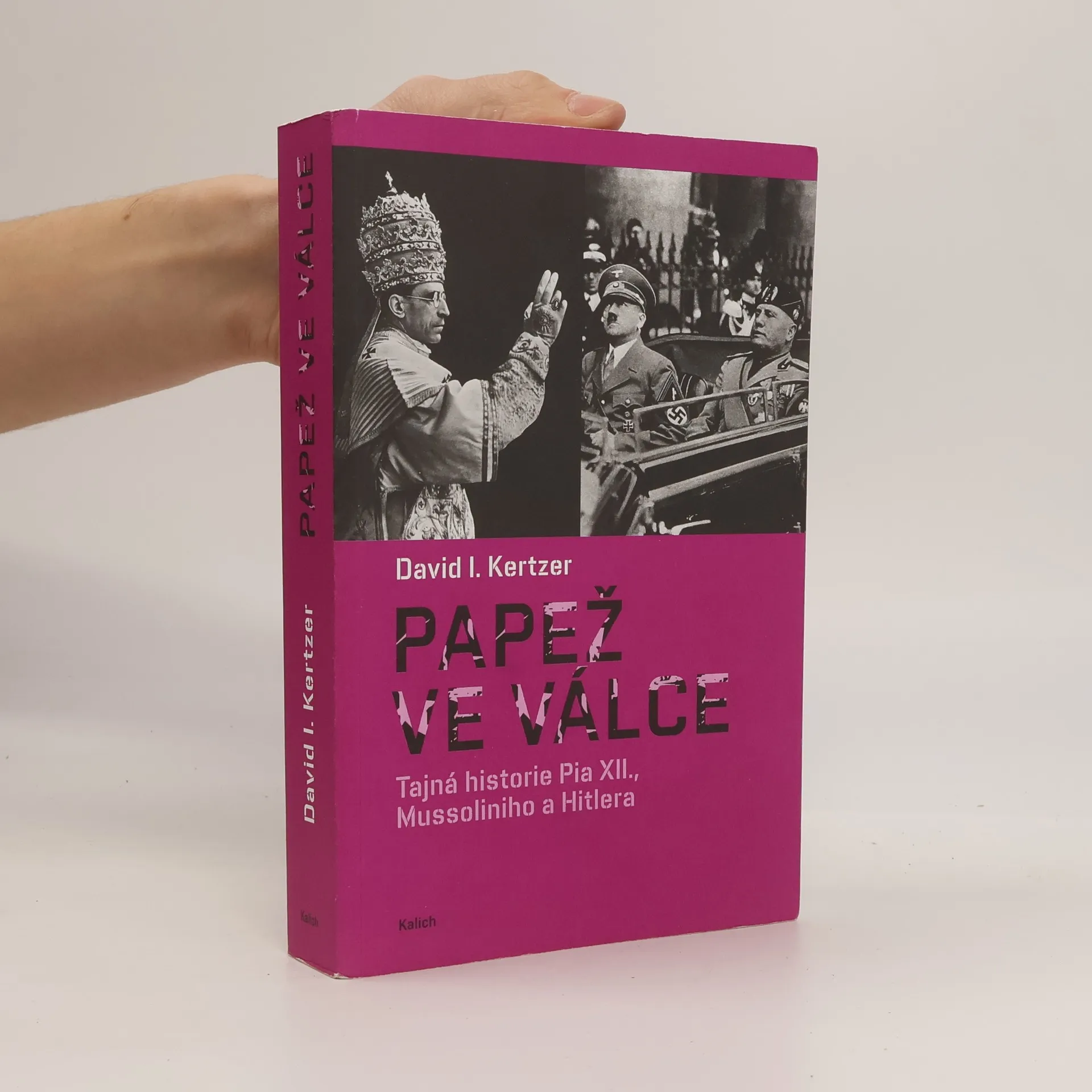
Papež ve válce: Tajná historie Pia XII., Mussoliniho a Hitlera
- 560 páginas
- 20 horas de lectura
V březnu 2020 byly otevřeny archivy z doby pontifikátu Pia XII., takže dnes lze vyprávět ucelený příběh o tom, jaké kroky tento kontroverzní papež podnikal během války. Kniha Papež ve válce nabízí čtenářům první vyčerpávající popis těchto událostí, který z nedávno zpřístupněných archivů čerpá. Její stránky jsou plné dosud neznámých materiálů a nových odhalení. Autor při přípravě této knihy přečetl tisíce těchto dokumentů, především těch, které se bezprostředně dotýkají rozhodnutí, jež Pius XII. učinil v letech 1939—1945. Papež ve válce představuje podrobnou kroniku dramatu, jehož hodnocení začalo již krátce po válce vyvolávat vášnivé debaty.
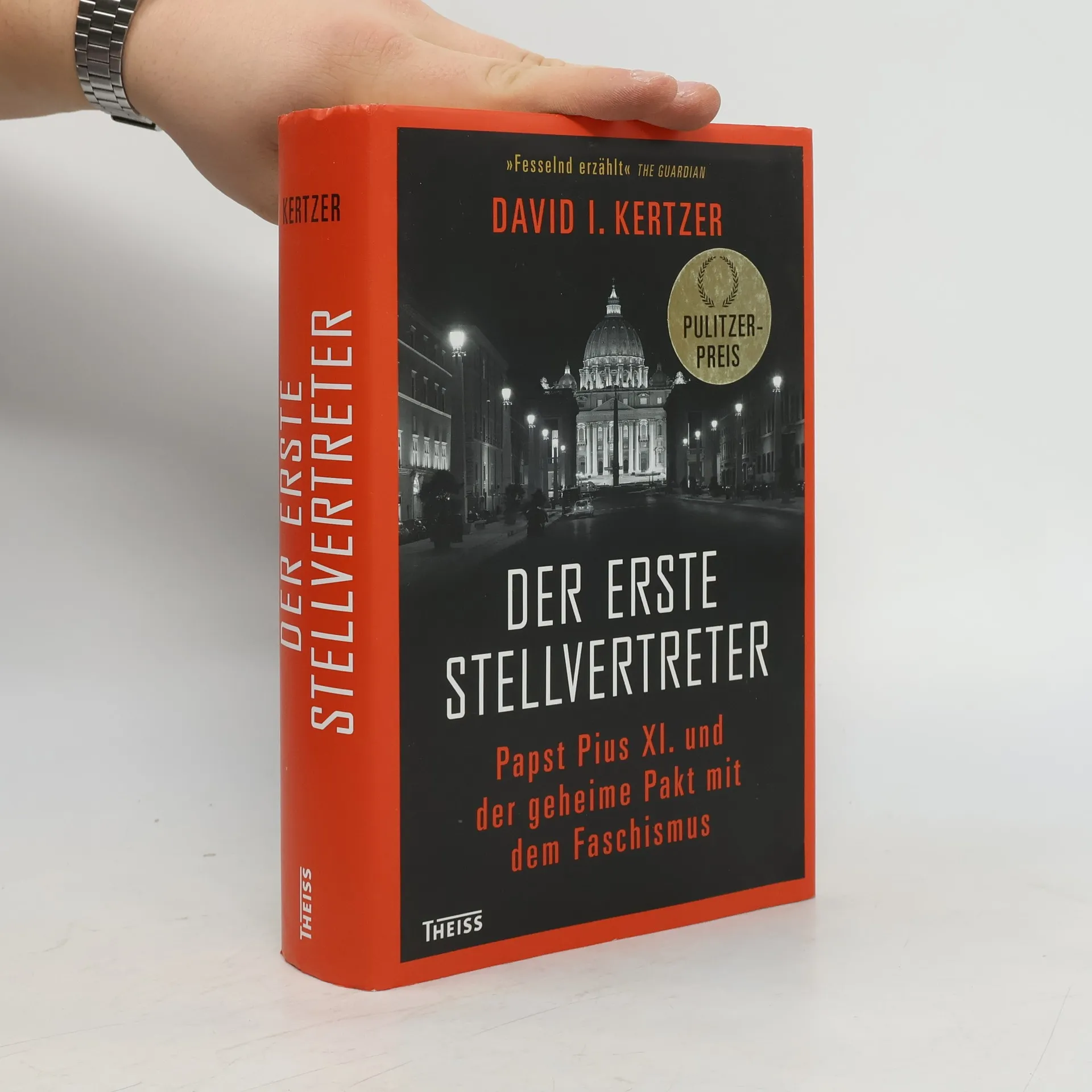
Der erste Stellvertreter
Papst Pius XI. und der geheime Pakt mit dem Faschismus
Wie stand Papst Pius XI. zum Faschismus? Während sein Nachfolger, Papst Pius XII., öffentlich zum Holocaust schwieg, galt Pius XI. (1922-1939), lange Zeit als wahrer Stellvertreter Christi, der auf der Seite der verfolgten Juden stand und Hitler durch die Enzyklika ›Mit brennender Sorge‹ in seine Schranken verwies. In der packenden Geschichte über die Geheimbeziehungen des Vatikan zur faschistischen Führung wird deutlich, dass sich Mussolini und Pius XI. zwar hassten, sich aus Gründen des Machterhalts aber dennoch stützten. Der ungebildete, ungläubige Duce und der gottesfürchtige Kleriker schlossen einen verhängnisvollen Pakt. Erst mit Einführung der Rassengesetze 1938 und der immer größer werdenden Nähe zu Nazi-Deutschland dämmerte es Pius XI., mit wem er da paktiert hatte. Als er starb, konnte sein Nachfolger Eugenio Pacelli diesen Pakt fortsetzen. David Kertzers bahnbrechende Arbeit, die mit dem Pulitzer-Preis ausgezeichnet wurde, enthüllt das ganze Ausmaß der faschistischen Verstrickung.
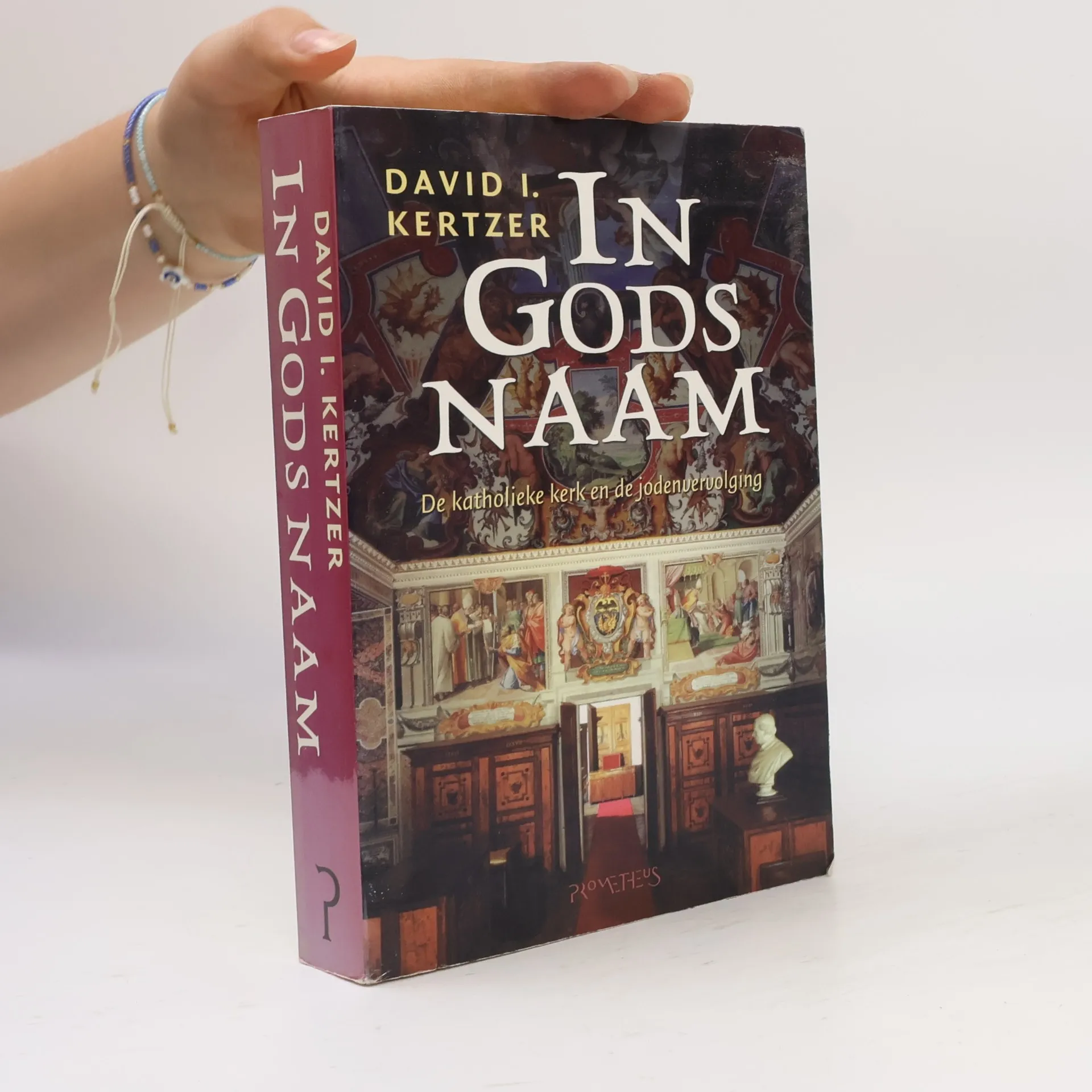
Geschiedenis van het Vaticaans antisemitisme vanaf de val van Napoleon tot de tijd van Hitler.