Why do some democratic governments succeed and others fail? In a book that has received attention from policymakers and civic activists in America and around the world, Robert Putnam and his collaborators offer empirical evidence for the importance of "civic community" in developing successful institutions. Their focus is on a unique experiment begun in 1970 when Italy created new governments for each of its regions. After spending two decades analyzing the efficacy of these governments in such fields as agriculture, housing, and health services, they reveal patterns of associationism, trust, and cooperation that facilitate good governance and economic prosperity.
Robert D. Putnam Libros
Robert Putnam es un científico político y profesor de política pública en la Universidad de Harvard. Su influyente teoría del juego de dos niveles postula que los acuerdos internacionales solo tendrán éxito si también producen beneficios domésticos. En su obra más destacada, argumenta que Estados Unidos ha experimentado un declive sin precedentes en la vida cívica y social desde la década de 1960, lo que ha tenido importantes consecuencias negativas.


American Grace: How Religion Divides and Unites Us
- 720 páginas
- 26 horas de lectura
Based on two new studies, "American Grace" examines the impact of religion on American life and explores how that impact has changed in the last half-century.

Our Kids
- 401 páginas
- 15 horas de lectura
New York Times bestseller and examination of the growing inequality gap from the bestselling author of Bowling Alone.
The Upswing
- 448 páginas
- 16 horas de lectura
A celebrated political scientist shows how we can remedy the current economic, social and political ills - by doing what we did a century ago and becoming once more a 'we' rather than 'I' society
Bowling Alone: Revised and Updated
- 544 páginas
- 20 horas de lectura
Updated to include a new chapter on the influence of social media and the Internet, this 20th anniversary edition remains a seminal work of social analysis, examining the decline of community in today's fractured America. Robert D. Putnam's observation that we no longer bowl in leagues symbolizes a significant social change that underpins his acclaimed bestseller. The book details how Americans have become increasingly disconnected from family, friends, neighbors, and social structures, such as the PTA, churches, clubs, and political parties. In this revised edition, Putnam highlights the shrinking access to "social capital" from communal activities and its serious threat to civic and personal health, resonating even more in our divided country today. He addresses the dual nature of social media and the internet, which offer new opportunities for connection while also fostering unprecedented levels of alienation. Upon its initial publication, Putnam's groundbreaking work revealed that social bonds are the strongest predictor of life satisfaction, with the loss of social capital linked to crime rates and neighborhood quality of life. While the means of connection have evolved, his central argument remains urgent: mending our frayed social capital is essential to preserving the fabric of society.
Bowling alone : the collapse and revival of American community
- 544 páginas
- 20 horas de lectura
Shows how changes in work, family structure, women's roles, and other factors have caused people to become increasingly disconnected from family, friends, neighbors, and democratic structures--and how they may reconnect.
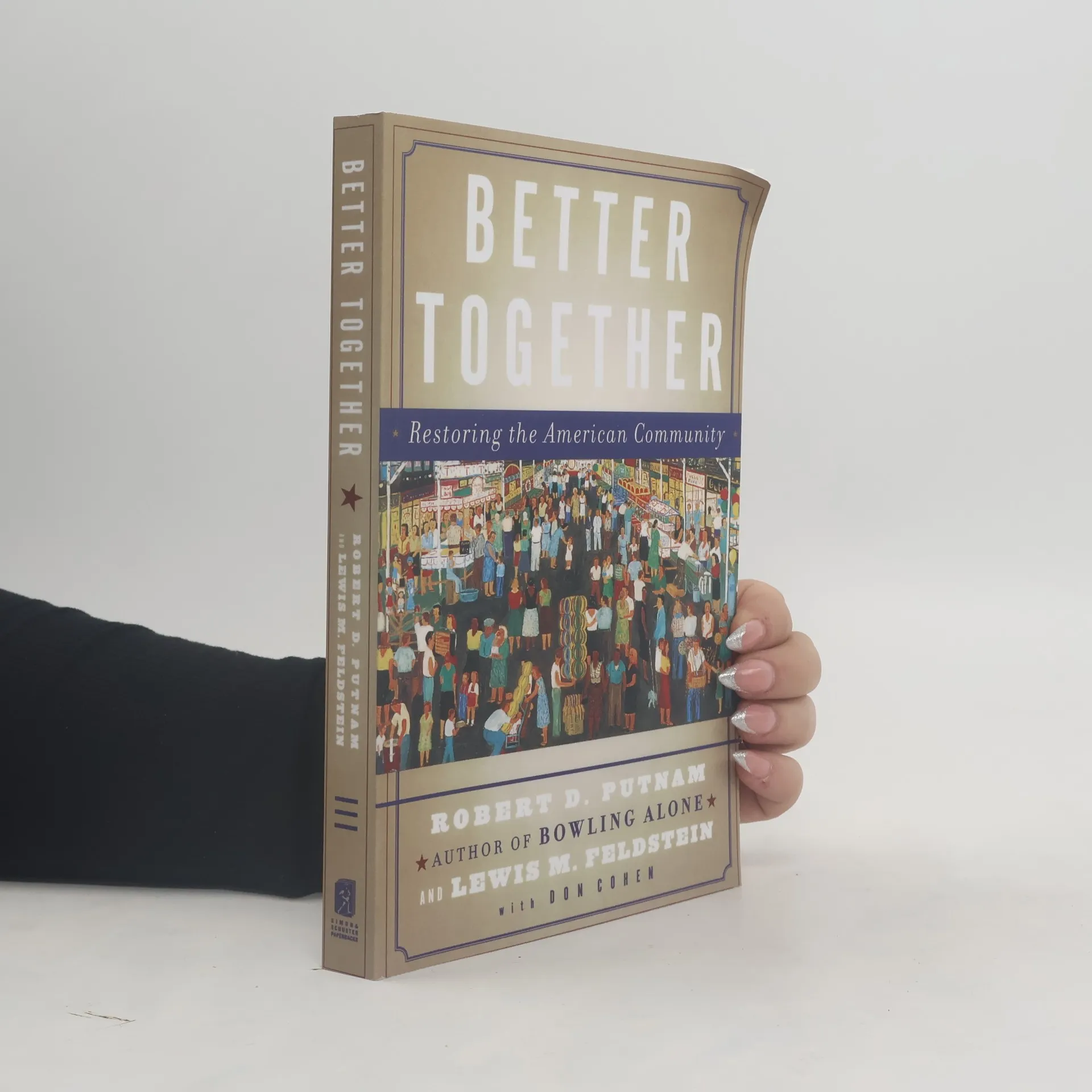
Better Together
- 336 páginas
- 12 horas de lectura
From bestselling author Robert Putnam, comes a groundbreaking follow-up book that puts into practice the lessons learnt from BOWLING ALONE.

Why do some democratic governments succeed and others fail? In a book that has received attention from policymakers and civic activists in America and around the world, Robert Putnam and his collaborators offer empirical evidence for the importance of "civic community" in developing successful institutions. Their focus is on a unique experiment begun in 1970 when Italy created new governments for each of its regions. After spending two decades analyzing the efficacy of these governments in such fields as agriculture, housing, and health services, they reveal patterns of associationism, trust, and cooperation that facilitate good governance and economic prosperity.
This groundbreaking examination delves into the widening inequality gap and the diminishing opportunities for upward mobility in America. The American dream traditionally promises that with education, hard work, and homeownership, anyone can achieve prosperity. However, over the past twenty-five years, a troubling opportunity gap has emerged, challenging the belief that all children, regardless of their background, have a fair chance to succeed. Robert Putnam, praised for his insightful scholarship and engaging writing, offers a personal yet authoritative perspective on this pressing issue. He reflects on his high school class of 1959 in Port Clinton, Ohio, where most students enjoyed better lives than their parents. In contrast, their children and grandchildren now face tougher circumstances and reduced prospects. Through poignant narratives of both affluent and disadvantaged youth from various backgrounds, Putnam combines individual stories with extensive research to illustrate this alarming trend. His work serves as a compelling account of the changing American dream, prompting critical reflection on the future of opportunity in the country.