

This book examines contemporary regional dynamics in East and Southeast Asia, focusing on the impact of Japanese dominance on politics, economics, and culture. Contributors explore whether Japan has achieved the influence it once sought through military means, now relying on economic power and its political and cultural ramifications. The discussion is contextualized by significant changes over the past decade, particularly following the Cold War and the Soviet Union's dissolution, which have shifted regional dynamics and their influence on international and national developments. The volume compares Japan's role in Asian regionalism to European regionalism, particularly Germany's position. It investigates the competitive dynamics of continental versus coastal primacy in China, posing the critical question of whether Chinese or Japanese dominance is more likely in the region. The authors navigate between a neo-mercantilist perspective, which suggests a trend towards closed regional blocs, and a liberal view advocating for global market convergence across national and regional boundaries. Asian regionalism is characterized by two key developments: Japan's economic integration into Asian supplier networks through production alliances and the rise of a pan-Pacific trading region encompassing both Asia and North America. Contributors highlight the emergence of multiple centers of influence in Asia, including China and the Unite
Peter J. Katzenstein Libros



Why are hopes fading for a single European identity? Economic integration has advanced faster and further than predicted, yet the European sense of 'who we are' is fragmenting. Exploiting decades of permissive consensus, Europe's elites designed and completed the single market, the euro, the Schengen passport-free zone, and, most recently, crafted an extraordinarily successful policy of enlargement. At the same time, these attempts to de-politicize politics, to create Europe by stealth, have produced a political backlash. This ambitious survey of identity in Europe captures the experiences of the winners and losers, optimists and pessimists, movers and stayers in a Europe where spatial and cultural borders are becoming ever more permeable. A full understanding of Europe's ambivalence, refracted through its multiple identities, lies at the intersection of competing European political projects and social processes.
Corporatism and Change
Austria, Switzerland, and the Politics of Industry
- 334 páginas
- 12 horas de lectura
Book by Katzenstein, Peter J.
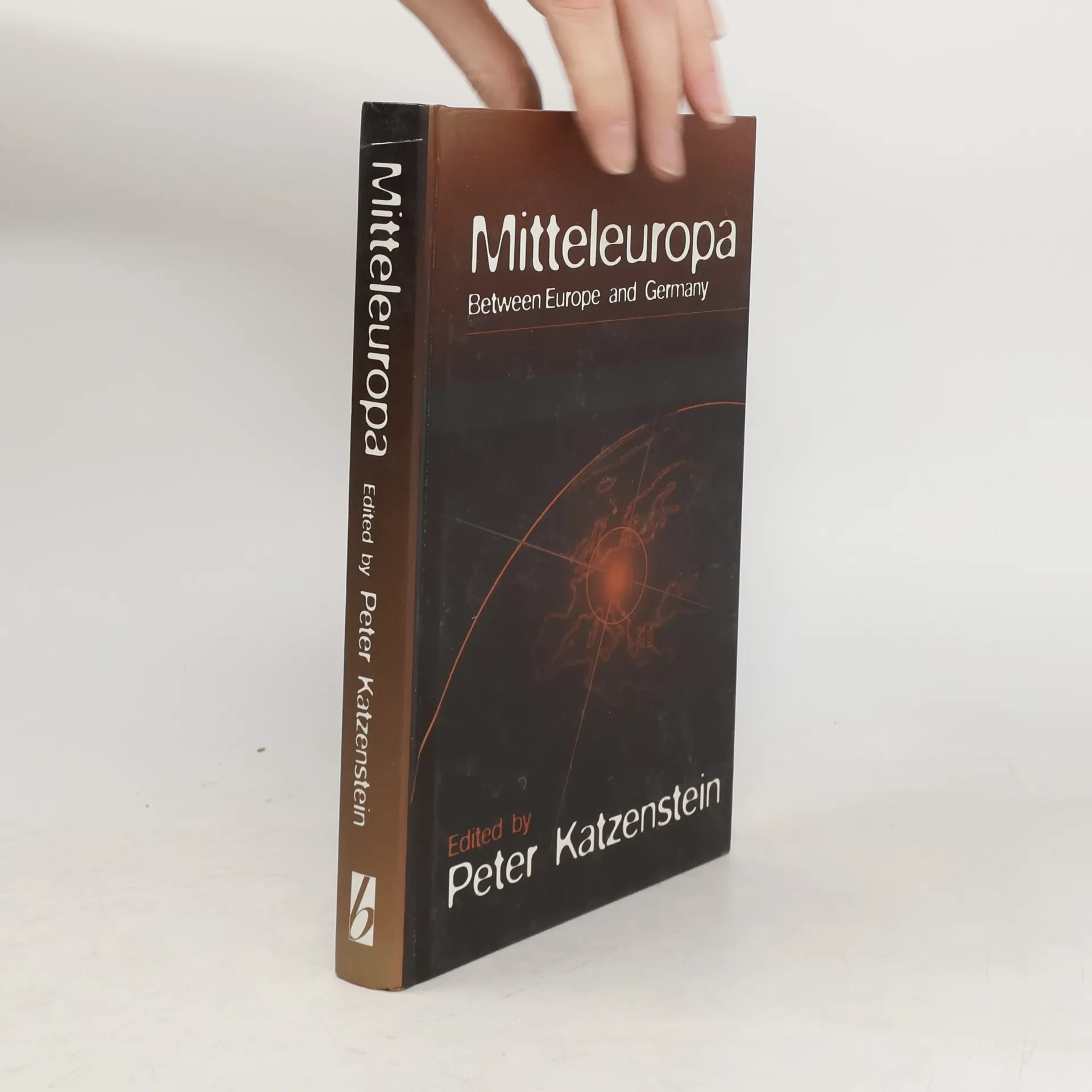
German unification and the political and economic transformations in central Europe signal profound political changes that pose many questions. Will post-Communism push ahead with the task of institutionalizing a democratic capitalism? How will that process be aided or disrupted by international developments in the East and West? And how will central Europe relate to united Germany? Based on original field research this book offers, through more than a dozen case studies, a cautiously optimistic set of answers to these questions. The end of the Cold War and German unification, the empirical evidence indicates, are not returning Germany and central Europe to historically troubled, imbalanced, bilateral relationships. Rather changes in the character of German and European politics as well as the transformations now affecting Poland, Hungary, the Czech Republic and Slovakia point to the emergence of multilateral relationships linking Germany and central Europe in an internationalizing, democratic Europe.