
Bookbot

John E Roemer

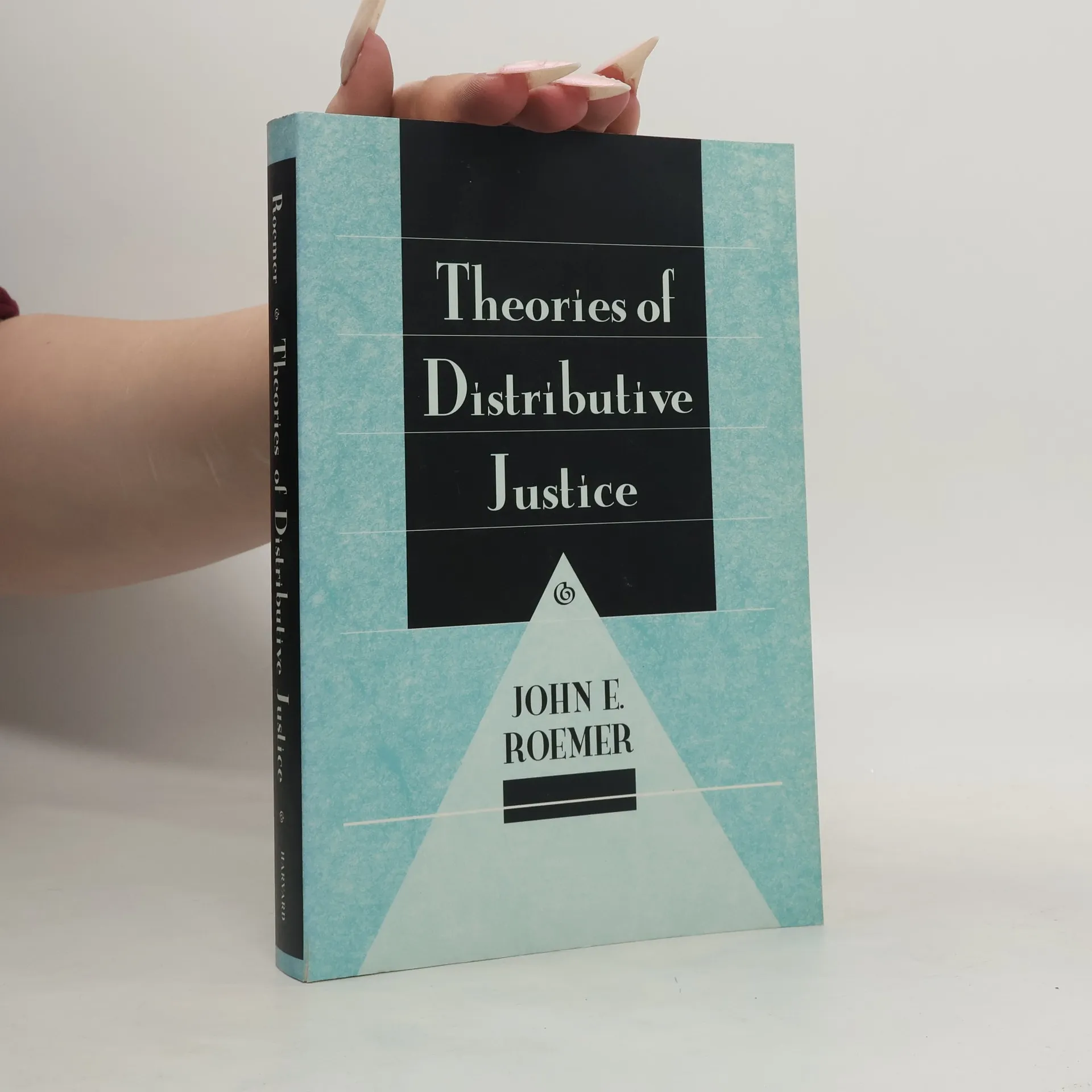
    Theories of Distributive Justice
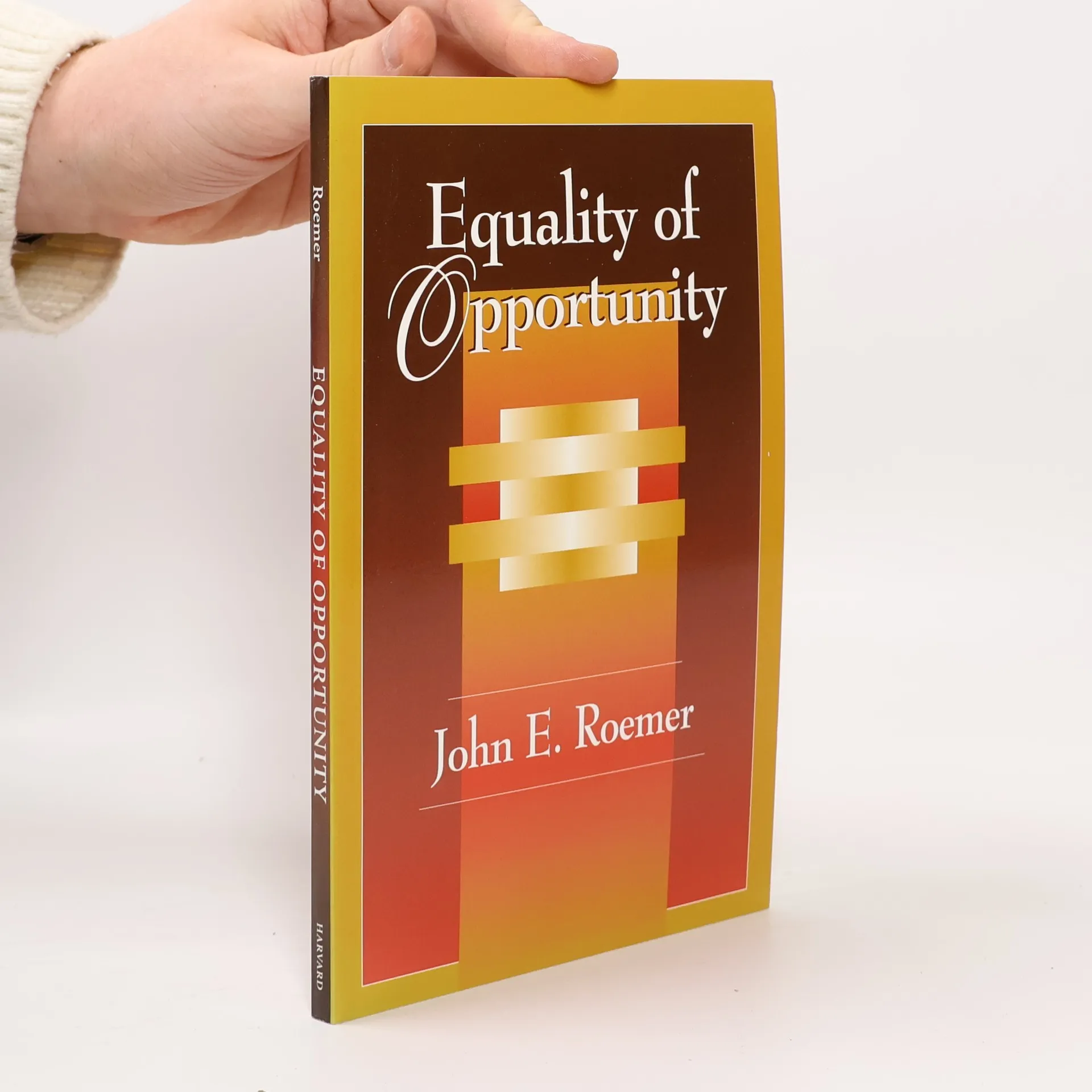
    Equality of Opportunity
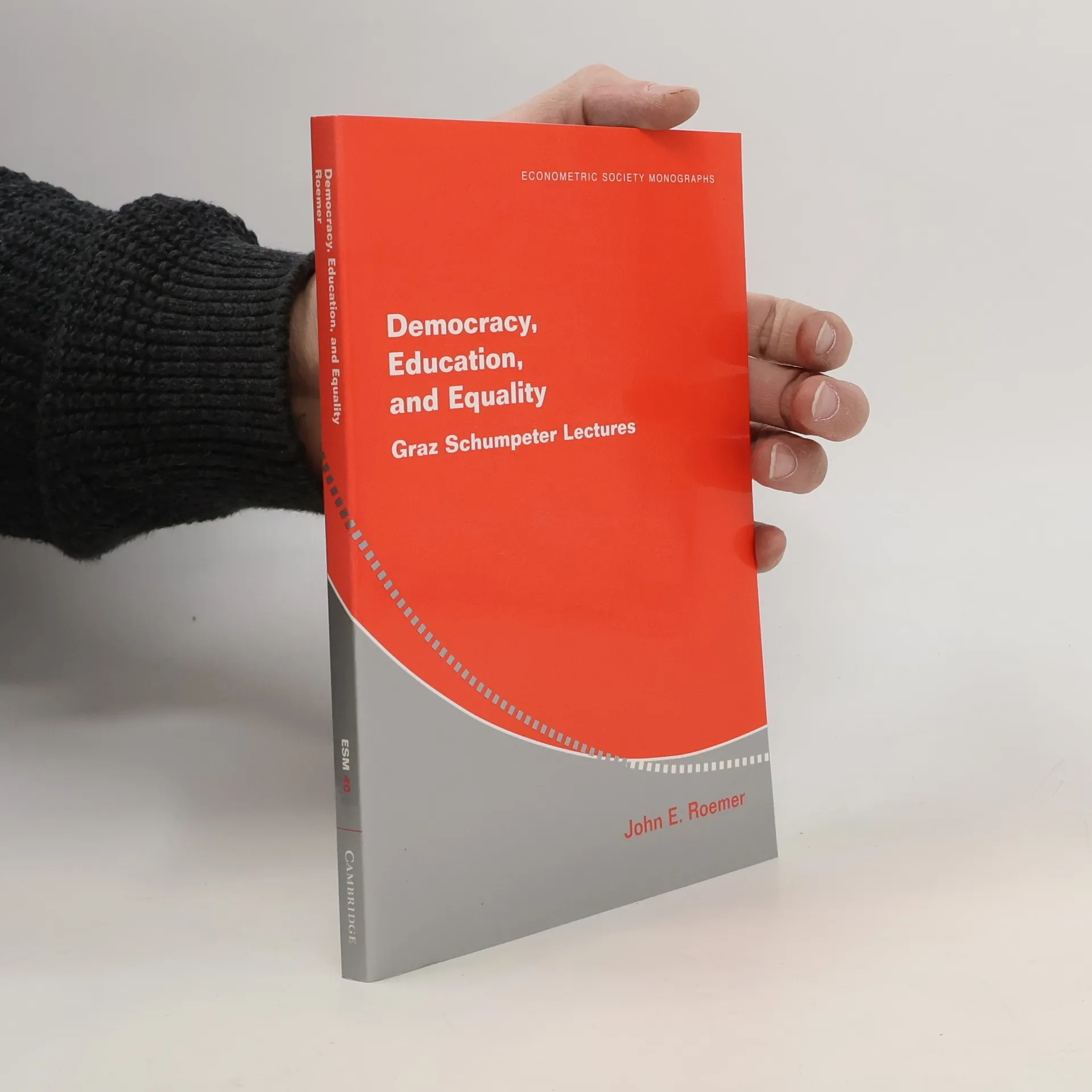
    Democracy, Education, and Equality
    • Democracy, Education, and Equality

      Graz-Schumpeter Lectures

      • 186 páginas
      • 7 horas de lectura

      Many believe that equality of opportunity will be achieved when the prospects of children no longer depend upon the wealth and education of their parents. Many also believe that democracy is the political institution that will bring about justice. This study asks whether democracy, modeled as competition between political parties that represent different interests in the polity, will result in educational funding policies that will, at least eventually, produce citizens with equal capacities (human capital), thus breaking the link between family background and child prospects.

      Democracy, Education, and Equality
    • Equality of Opportunity

      • 128 páginas
      • 5 horas de lectura

      John Roemer points out that there are two views of equality of opportunity that are widely held today. The first, which he calls the nondiscrimination principle, states that in the competition for positions in society, individuals should be judged only on attributes relevant to the performance of the duties of the position in question. Attributes such as race or sex should not be taken into account. The second states that society should do what it can to level the playing field among persons who compete for positions, especially during their formative years, so that all those who have the relevant potential attributes can be considered.Common to both positions is that at some point the principle of equal opportunity holds individuals accountable for achievements of particular objectives, whether they be education, employment, health, or income. Roemer argues that there is consequently a "before" and an "after" in the notion of equality of before the competition starts, opportunities must be equalized, by social intervention if need be; but after it begins, individuals are on their own. The different views of equal opportunity should be judged according to where they place the starting gate which separates "before" from "after." Roemer works out in a precise way how to determine the location of the starting gate in the different views.

      Equality of Opportunity
    • Theories of Distributive Justice

      • 352 páginas
      • 13 horas de lectura

      John Roemer critiques economists' views on justice through a philosophical lens and vice versa, merging economic modeling with philosophical inquiry. His work encourages productive dialogue between philosophers and economists. Roemer enhances economists' understanding of fairness in resource allocation by extending social choice theory to aggregate individual preferences into social preferences. He challenges the standard applications of axiomatic bargaining theory, arguing they overlook crucial information about available resources and preference orderings. By incorporating these factors, he develops resource allocation mechanisms that align better with our intuitions about distributive justice. He also critiques utilitarianism and addresses the optimal population size in a resource-limited world. Roemer delves into key philosophical concepts in distributive justice—such as primary goods, functionings, capabilities, and various forms of responsibility—and illustrates how economic analysis can refine these ideas. He critiques and builds upon contemporary theories of justice from thinkers like Rawls, Sen, Nozick, and Dworkin, ultimately constructing a theory of equality of opportunity based on the insights of Arneson and G. A. Cohen. This work presents significant original findings and serves as a valuable graduate-level resource in both economics and philosophy.

      Theories of Distributive Justice