

Bookbot

J. Dudel

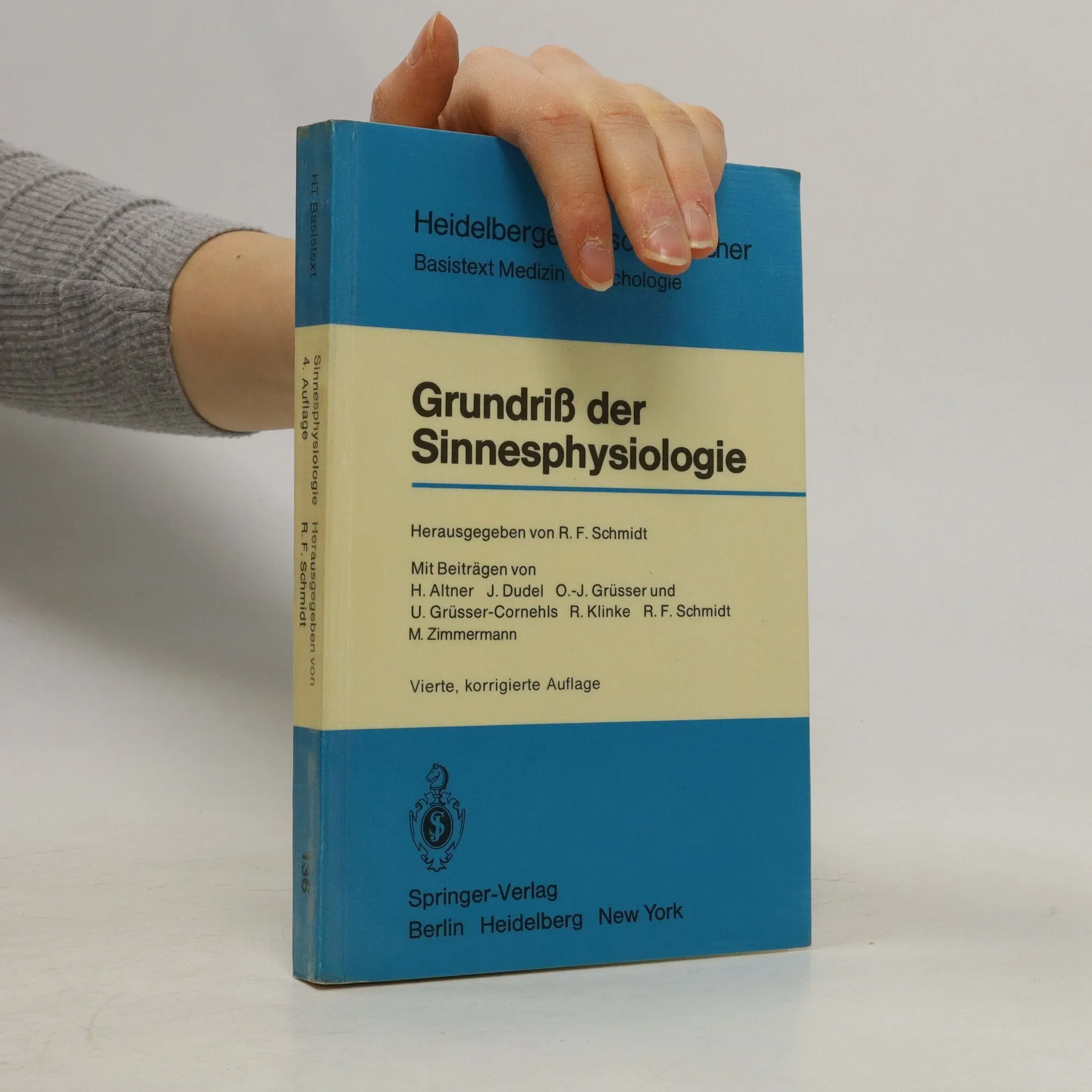
    Grundriß der Sinnesphysiologie
    Grundriss der Neurophysiologie - Korrigierter Nachdruck der vierten, neubearbeiteten und ergänzten Auflage
    Biophysics
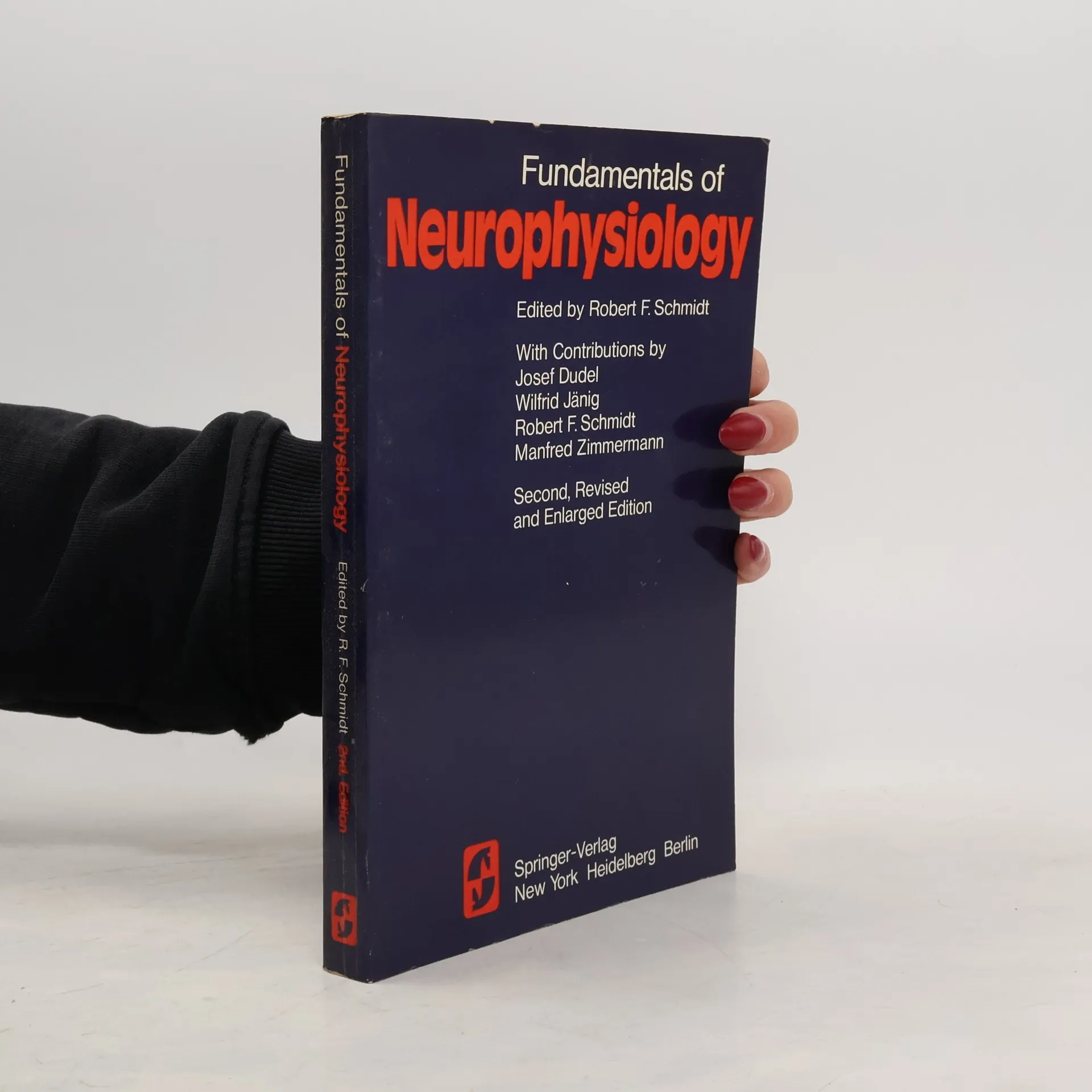
    Fundamentals of Neurophysiology
    • Fundamentals of Neurophysiology

      • 339 páginas
      • 12 horas de lectura

      "Fundamentals of Neurophysiology" explores the foundations of the nervous system, including the structure of nerve cells, supporting and nourishing tissues, and the anatomy of the central nervous system. It addresses the excitation of nerves and muscles, discussing resting potential, sodium pumps, and action potentials. The kinetics of excitation and the propagation of action potentials are also examined. Synaptic transmission is explained through the neuromuscular junction and the quantum nature of chemical transmission, followed by an overview of central excitatory and inhibitory synapses. The physiology of small neuron connections and reflexes includes typical neuronal circuits as well as monosynaptic and polysynaptic motor reflexes. The section on muscles discusses muscle contraction, its dependence on fiber length and shortening velocity, as well as electromechanical coupling and the regulation of contraction. Motor systems encompass spinal motor control, the roles of muscle spindles and Golgi tendon organs, polysynaptic motor reflexes, the functional anatomy of supraspinal motor centers, and the reflexive control of body posture. Finally, the sensory system is addressed, explaining the fundamentals of sensory perception and processing within the nervous system.

      Fundamentals of Neurophysiology
    • Biophysics

      • 941 páginas
      • 33 horas de lectura

      What is biophysics? As with all subjects which straddle traditional boundaries between fields, it eludes a precise definition. Furthermore, it is impossible to do biophysics without having a certain foundation of knowledge in biology, physics, physical chemistry, chemistry and biochemistry. One approach to a biophysics textbook would be to refer the student to the literature of these neighboring fields, and to leave the selection of the appropriate supplementary material up to the student. The editors of this volume are of the opinion that it is more useful and less time-consuming to present a selection of the supplementary knowledge, in concentrated form, together with the subject matter specific to biophysics. The reader will thus find in this book introductions to such subjects as the structure and function of the cell, the chemical structure of biogenic macromolecules, and even theoretical chemistry. What, indeed, is biophysics? Must we consider it to include physiology, electromedicine, radiation medicine, etc. ? The field has evolved continuously in recent years. Molecular understanding oflife processes has come more and more to the fore. Just as the field of molecular physics has developed to describe structures and processes in the realm of non-living systems, there has been a corresponding development of molecular biophysics.

      Biophysics