

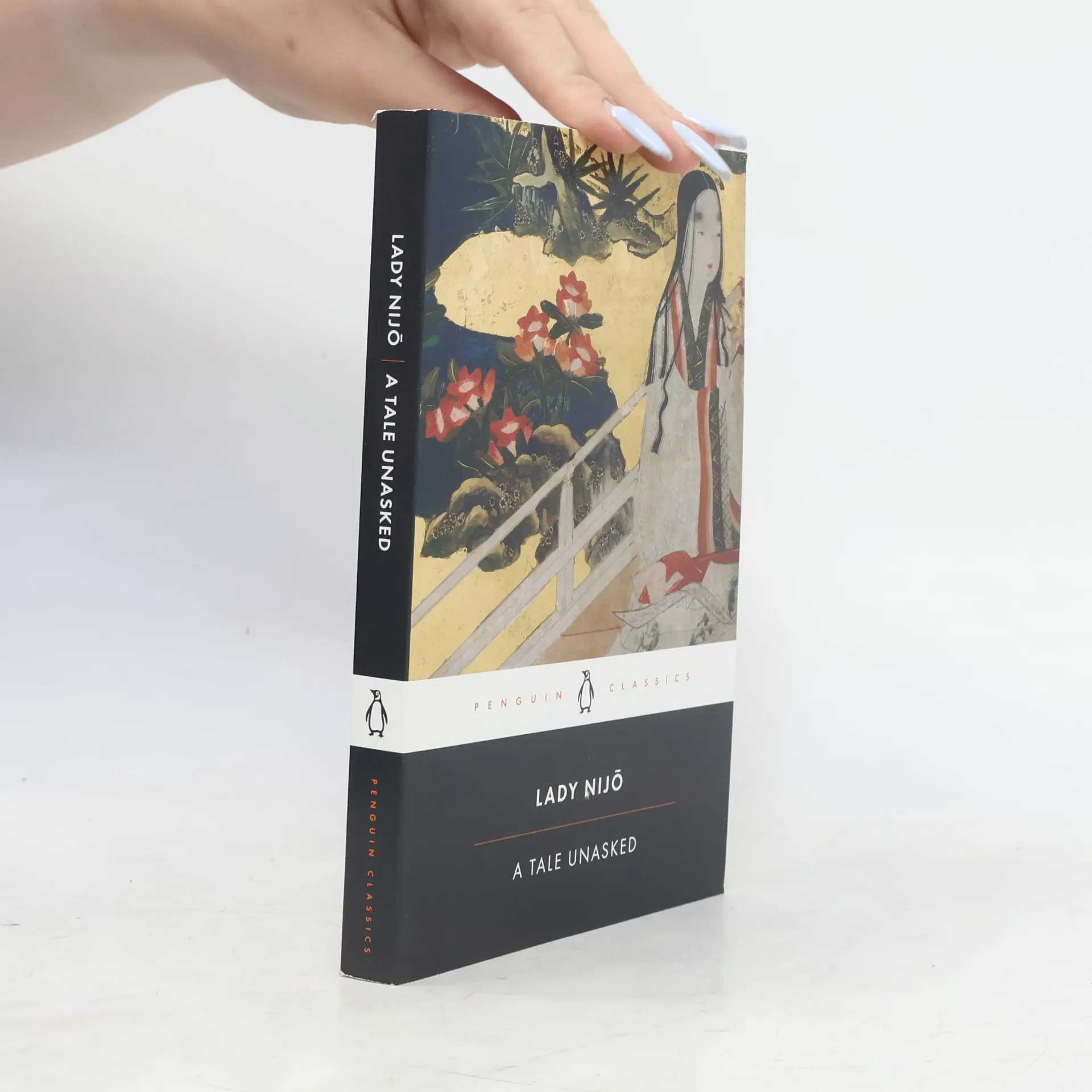
A Tale Unasked
- 336 páginas
- 12 horas de lectura
A new translation of Lady Nijo’s diary—one of classical Japan’s greatest literary works A Penguin Classic Lady Nijo’s A Tale Unasked (Towazugatari) is the last, and arguably the finest, among classical Japanese literature’s famous "women’s diaries." Thought to have been completed around 1307, when the author was in her late forties, the first two-thirds of this autobiographical work document in rich and compelling detail the experiences of an imperial concubine whose time at court was ruled and finally ruined by her passionate and complicated love life. The final third of the work equally memorably describes her peripatetic life after the emperor expelled her from the court in her mid-twenties and she became a nun, wandering the roads of Japan as a form of Buddhist austerity. Meredith McKinney's superb translation breathes new life into Lady Nijo's fascinating diaries, which survived her era in a single copy and were rediscovered only in the 1940s.