
Bookbot

Maxwell Rosenlicht

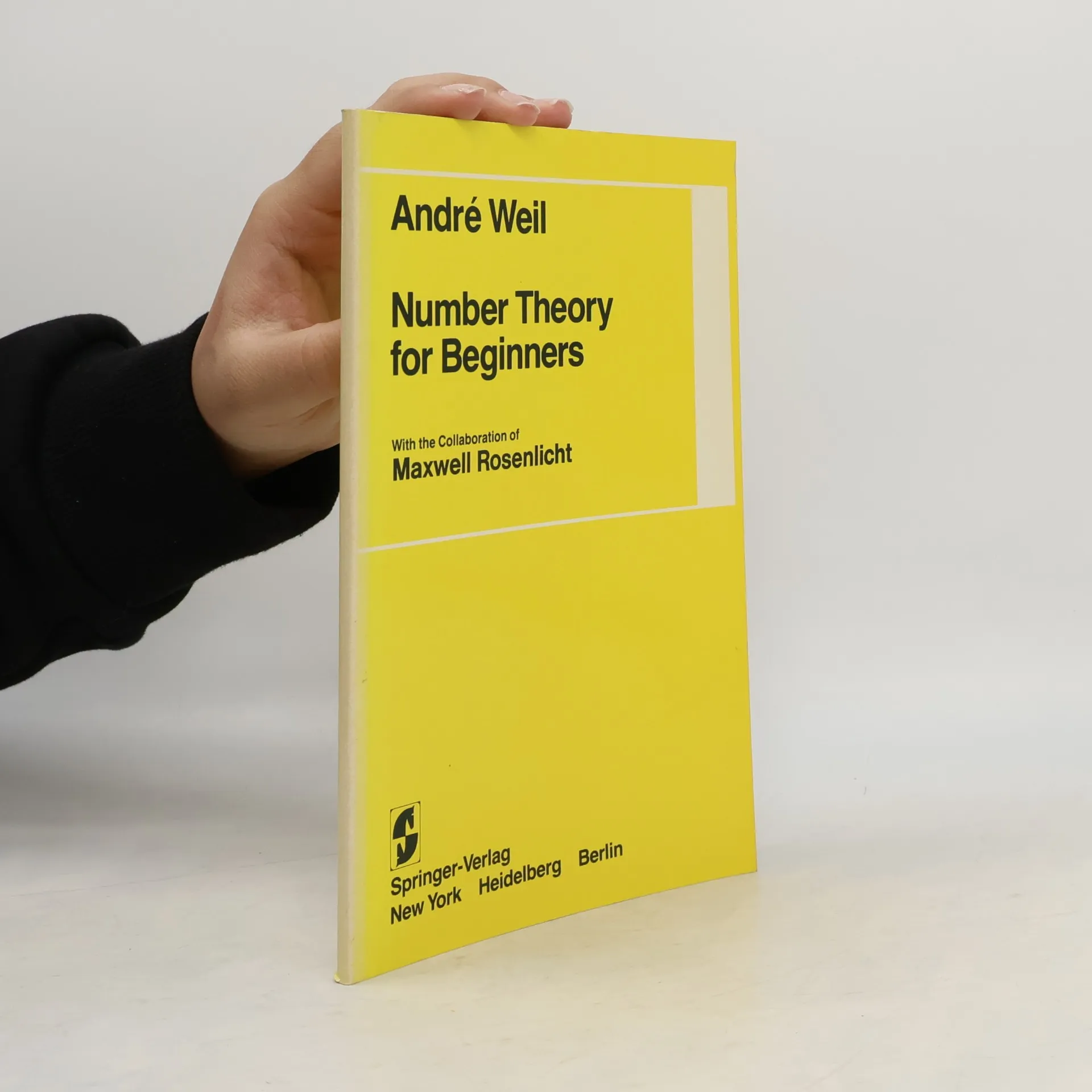
    Number Theory for Beginners
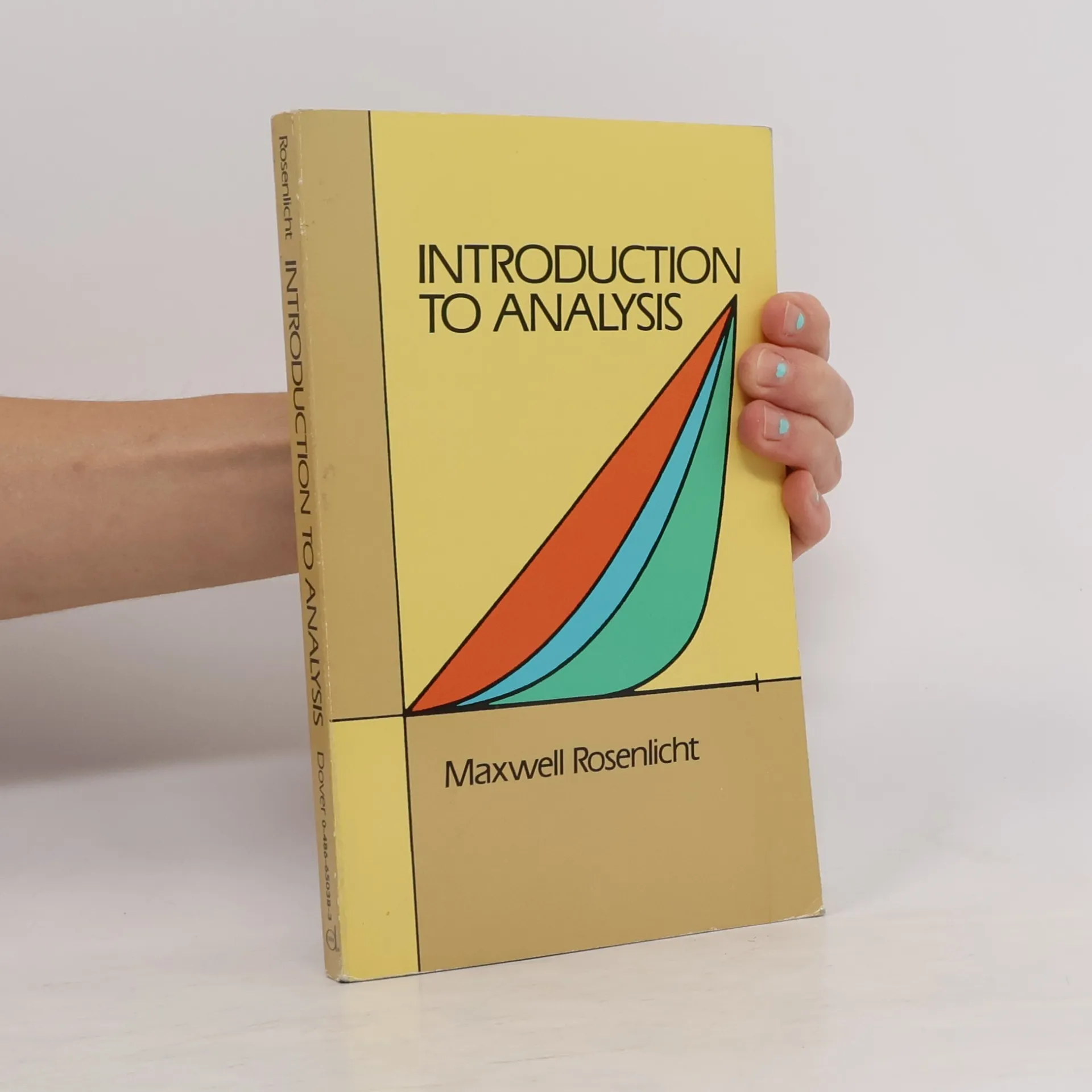
    Dover Books on Mathematics: Introduction to Analysis
    • This well-written text offers excellent instruction in basic real analysis, providing a solid foundation for advanced studies in complex analysis, differential equations, integration theory, and general topology. While a year of calculus is the nominal prerequisite, the material assumes only the axioms of the real number system. Its clarity and simplicity make it accessible to a broad range of students from various fields. Chapters cover set theory, the real number system, metric spaces, continuous functions, differentiation, Riemann integration, limit operations, successive approximations, partial differentiation, and multiple integrals. After introductory material on basic set theory and key properties of the real number system, the author presents a rigorous discussion of metric spaces and continuous functions, addressing open and closed sets, limits, continuity, and convergent sequences of points and functions. Subsequent chapters smoothly integrate elementary calculus with more advanced topics, such as multivariable calculus and existence theorems. Exercises range from easy problems to challenging ones, featuring interesting examples, counterexamples, and advanced results. This text is suitable for a one- or two-quarter or one-semester undergraduate course and has been refined through extensive classroom use, making it an unusually accessible introductory resource.

      Dover Books on Mathematics: Introduction to Analysis
      3,8
    • Number Theory for Beginners

      • 70 páginas
      • 3 horas de lectura

      In the summer quarter of 1949, I taught a ten-weeks introductory course on number theory at the University of Chicago; it was announced in the catalogue as "Alge­ bra 251". What made it possible, in the form which I had planned for it, was the fact that Max Rosenlicht, now of the University of California at Berkeley, was then my assistant. According to his recollection, "this was the first and last time, in the his tory of the Chicago department of mathematics, that an assistant worked for his salary". The course consisted of two lectures a week, supplemented by a weekly "laboratory period" where students were given exercises which they were. asked to solve under Max's supervision and (when necessary) with his help. This idea was borrowed from the "Praktikum" of German universi­ ties. Being alien to the local tradition, it did not work out as well as I had hoped, and student attendance at the problem sessions so on became desultory. v vi Weekly notes were written up by Max Rosenlicht and issued week by week to the students. Rather than a literal reproduction of the course, they should be regarded as its skeleton; they were supplemented by references to stan­ dard text-books on algebra. Max also contributed by far the larger part of the exercises. None of ,this was meant for publication.

      Number Theory for Beginners