
Bookbot

David George Boyce

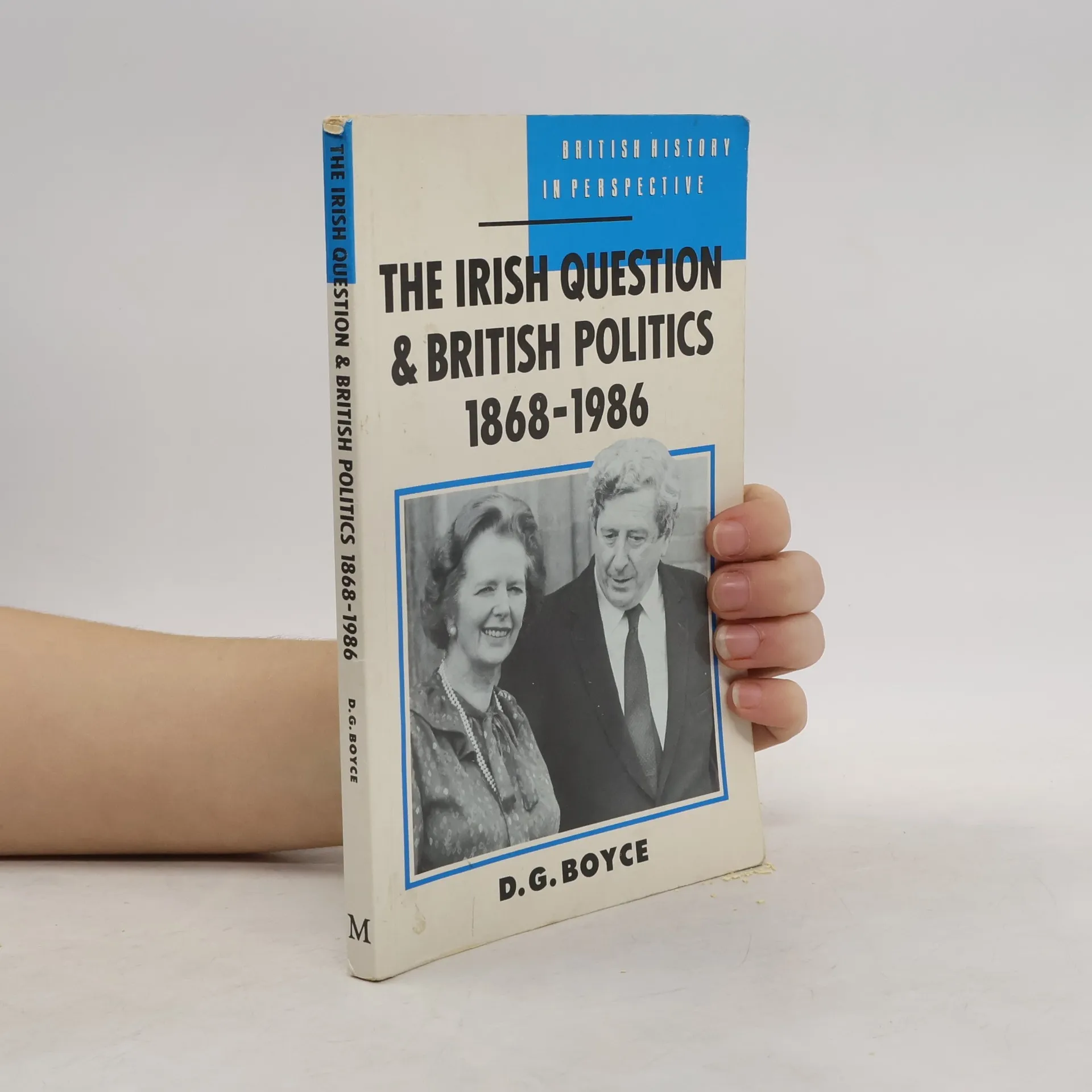
    British History in Perspective: The Irish Question and British Politics 1868-1986
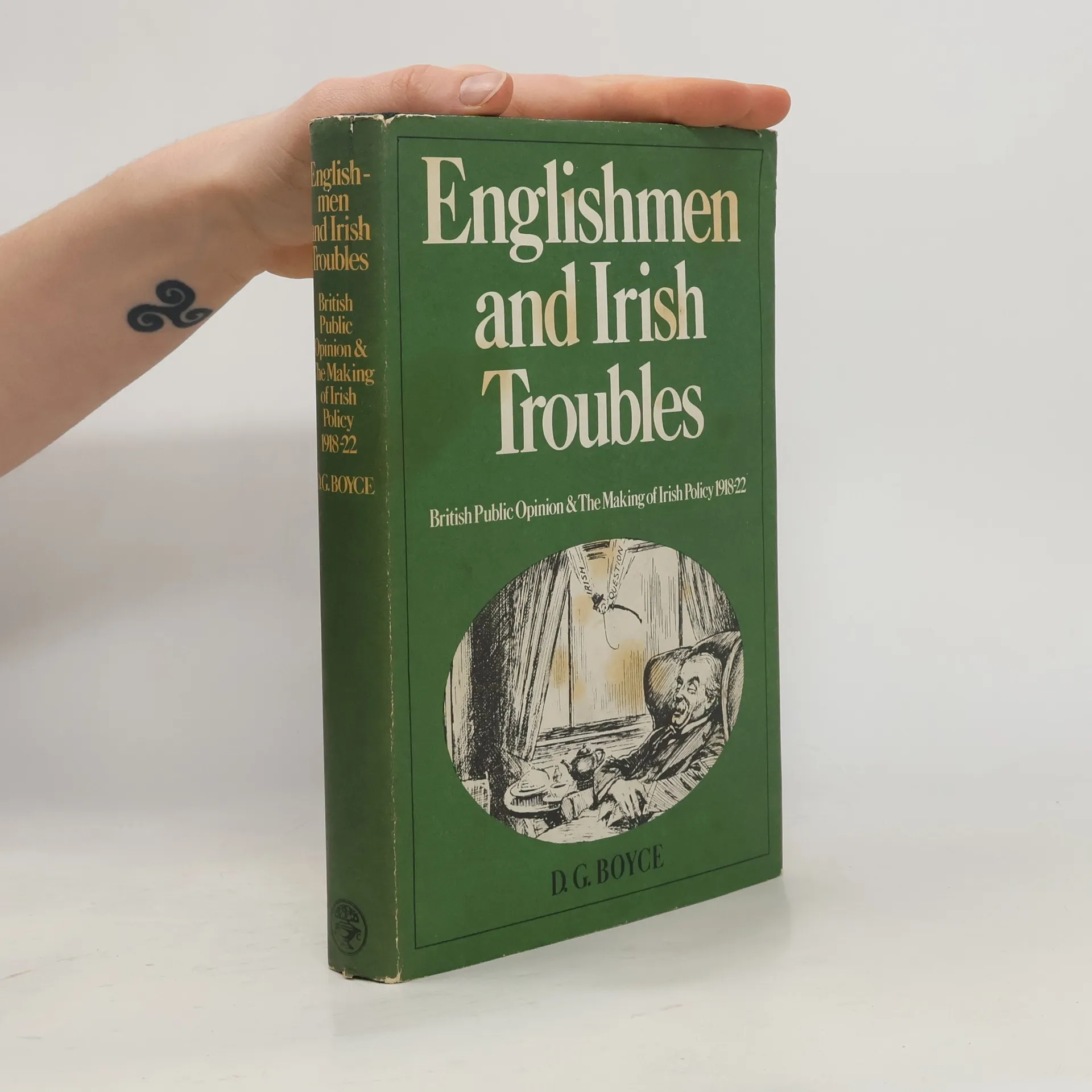
    Englishmen And Irish Troubles; British Public Opinion And The Making Of Irish Policy, 1918-22
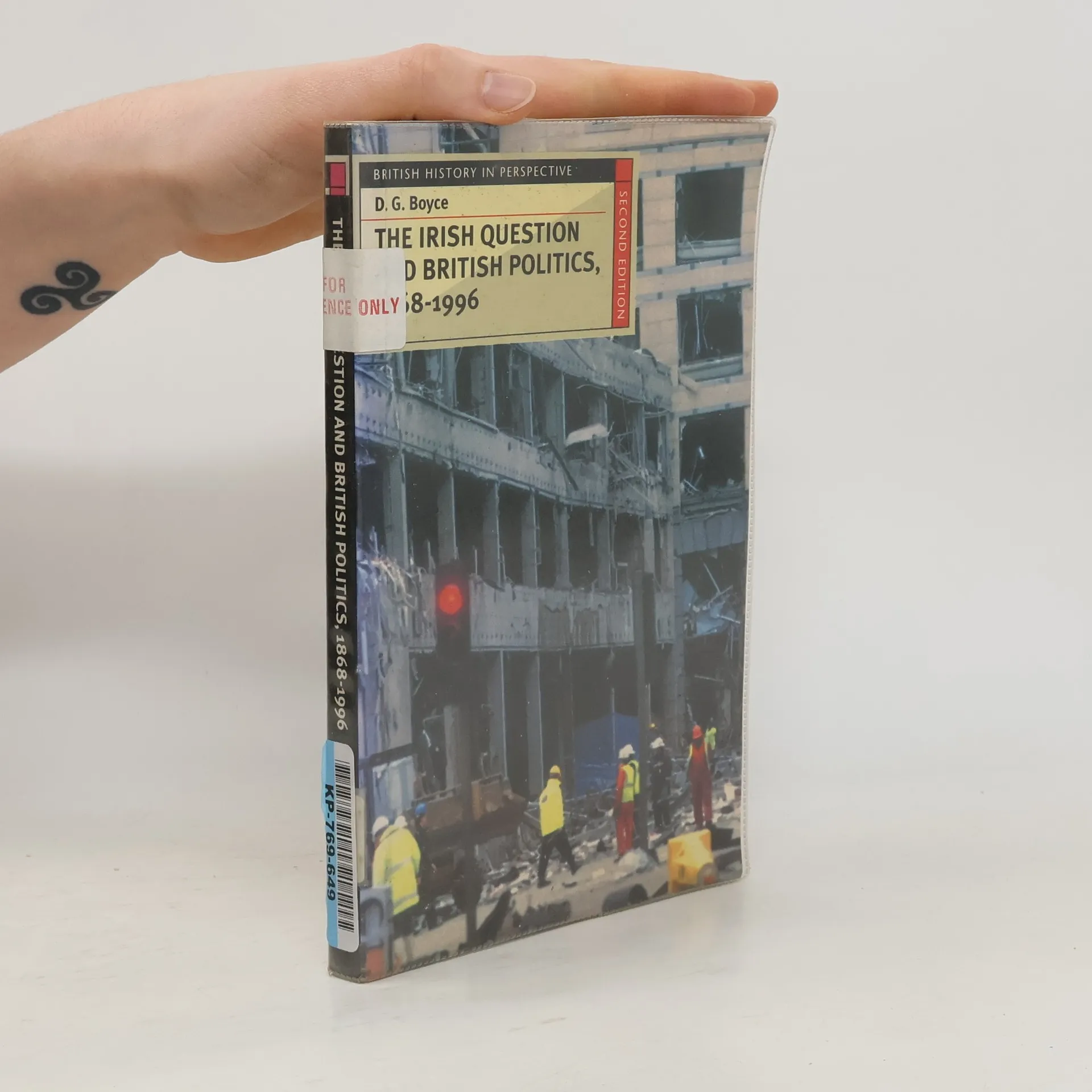
    The Irish Question and British Politics, 1868-1996 - Second Edition
    • The problems of modern Ireland have attracted the attention of many British political leaders from Gladstone to Major. Attempts to formulate a 'solution' have been governed by the British perception of what the problem is, and by the structures, as well as the ideas of British party politics and British political life: Ireland was never a laboratory in which dispassionate political experiments could be conducted. Modern Ireland has been shaped by British policy, and this has itself been influenced by British political habits and traditions, social and economic reforms, and new governmental institutions have been applied by politicians both of the left and the right. The 'Framework Documents' represent the latest attempt to achieve what Gladstone, David Lloyd George and Neville Chamberlain sought, and failed to achieve: a lasting settlement of the political divisions within Ireland, and between Ireland the Great Britain. This book places the Irish question in the wider context of the history of the British Isles, and thus seeks to explain its special place in British history as the 'Oldest Question', and as a question for contemporary Britain. Fully revised and with a new chapter to bring the analysis up to 1996, this new edition of Professor Boyce's work will be widely acclaimed.

      The Irish Question and British Politics, 1868-1996 - Second Edition1996
    • In October 1968, a problem which the British people thought vanished forever re-emerged. For the first time in nearly half a century, Irish questions began to make headlines in the British press, and a catalog of expressions with which past generations were only too familiar--"loyalist," "separatist," "Ulster Volunteer Force," and "Irish Republican Army"--once again became the everyday reading of the British public, to their dismay and disbelief. This book analyzes British attitudes about the "Irish question" between 1918 and 1922, examining the part played by public opinion in the formulation of government policy during this period. It begins with the general election of December 1918, when Lloyd George and his coalition colleagues asked for, and received, a mandate to introduce a measure of self-government to Ireland. The ensuing conflict is traced and the theme pursued up to June 1922, when the British Government accepted the draft constitution of the Irish Free State, thus initiating the Irish civil war. The author has drawn on a wide range of British newspapers, periodicals, pamphlets, and other literature, as well as on private papers of the leading protagonists. His investigation helps to elucidate the complex issue of British involvement in Ireland and the historical processes leading to the crisis which began October 1968. On a broader scale, the book is a fascinating examination of the relationship between public opinion and government policy in a democracy. D. G. Boyce was born in 1942. He was educated at Lurgan College, County Armagh, and Queen's University, Belfast, where he took an honors degree in modern history. He moved to England in October 1968 and worked in the Department of Manuscripts at the Bodleian Library, Oxford, until 1971, when he became Lecturer in Politics at University College, Swansea and has held a personal chair there since 1989. He teaches the politics of Ireland and the evolution and character of modern warfare. His publications include The Irish Question and British Politics, 1868-1996 (1996), The Making of Modern Irish History (1996), and Britain & Decolonisation (1999). He has published articles in learned journals, including Irish Historical Studies, Historical Review, and Journal of Imperial and Commonwealth History. Englishmen and Irish Troubles was his first book.

      Englishmen And Irish Troubles; British Public Opinion And The Making Of Irish Policy, 1918-221972