

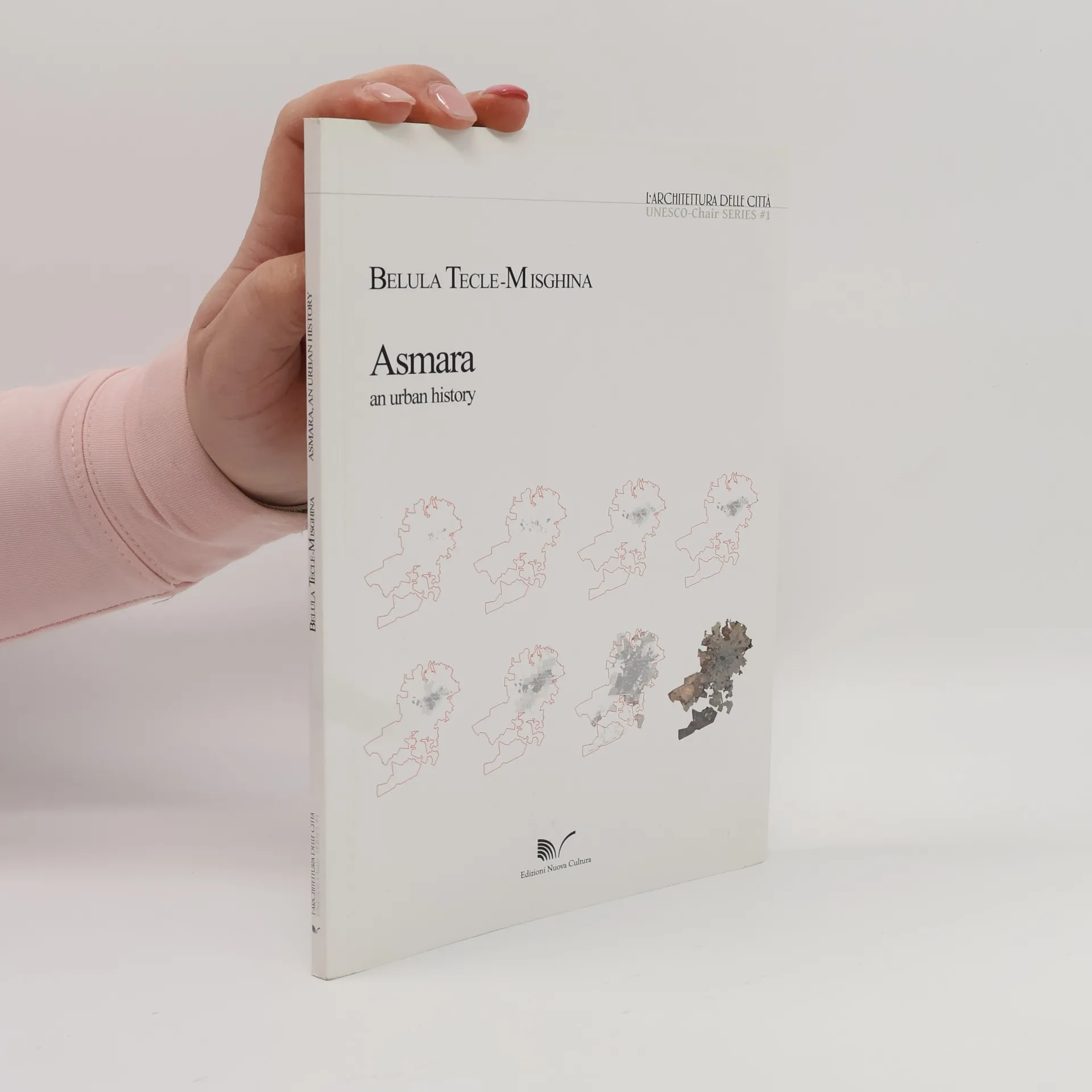
L'architettura delle città - UNESCO Chair Series - 1: Asmara, An Urban History
- 150 páginas
- 6 horas de lectura
Asmara, a young city by African capital standards, serves as a stage for the intense drama of history. Nestled at the edge of mythical civilizations and proud empires, it is a natural acropolis overlooking the “Eritrean” sea and the Afar Rift. Its history reflects a blend of European influence, particularly from Italy, which sought to impose its colonial presence on the highlands of Hamasien. Over less than 130 years, Asmara has witnessed a concentration of events, conflicts, and cultural exchanges that have shaped Eritrea's identity, fiercely defended over decades. Despite numerous works dedicated to this identity, a comprehensive and current history of Eritrea remains elusive, highlighting a significant gap in understanding. The author reconstructs the complex urban growth of Asmara, akin to animating its rich history. In the late 1930s, travel from Naples to Massawa took five days, with various routes leading to Asmara. The extraordinary Teleferica Massawa-Asmara cableway, built between 1935 and 1937, was the longest industrial cableway globally, transporting goods up the plateau. However, it was dismantled after the war and the subsequent British Protectorate. Tecle Misghina’s meticulous research, summarized in this work, reconfigures known and unpublished documents to create a vital chronology and reference arsenal for future studies on Eritrea’s capital.