

Bookbot

Morgan Housel

    Morgan Housel es socio de Collaborative Fund. Es conocido por sus perspicaces comentarios sobre finanzas y comportamiento humano.

    Morgan Housel
    The Concise Psychology of Money
    Same As Ever: Timeless Lessons on Risk, Opportunity and Living a Good Life
    Same as Ever
    The Psychology of Money: Timeless lessons on wealth, greed, and happiness (New Synopsis and Analysis)
    The Art of Spending Money
    La psicoloía del dinero. Cómo piensan los ricos
    • La psicoloía del dinero. Cómo piensan los ricos

      18 claves imperecederas sobre riqueza y felicidad

      La riqueza no es fruto de nuestra inteligencia, talento o trabajo.Es fruto de nuestro comportamiento.En cuestiones de dinero, lo que importa no es lo listo que seas sino cómo te comportas. Tendemos a pensar en la inversión o la gestión de las finanzas personales como una disciplina matemática, en la que los datos y las fórmulas nos dicen exactamente qué hacer. Sin embargo, el rasgo que define a las personas que logran enriquecerse no es su destreza con los números, ni su salario o su talento, sino su historia personal, sus motivaciones y su visión única del mundo.Un genio que pierde el control de sus emociones puede ser un desastre financiero. Y lo mismo vale en caso contrario: gente de a pie sin formación en finanzas puede enriquecerse si cuenta con unos cuantos patrones de comportamiento. Esto, impensable en otras disciplinas como la arquitectura o la medicina, es fundamental en el campo de las finanzas.Este libro, llamado a convertirse en un clásico de las finanzas personales, nos provee del conocimiento esencial para entender la psicología del dinero y nos invita a hacernos una pregunta fundamental que raramente nos hacemos, cuál es nuestra relación con el dinero y qué queremos realmente de él.A partir de 18 claves imperecederas, Morgan Housel nos enseña cómo funciona la psicología del dinero y cuáles son los hábitos y conductas que nos ayudarán no solo a generar riqueza, sino, más importante aún, a conservarla
      La psicoloía del dinero. Cómo piensan los ricos
      4,3
    • The Art of Spending Money

      Simple Choices for a Richer Life

      • 250 páginas
      • 9 horas de lectura

      From the international bestselling author of The Psychology of Money, with 8 million copies sold worldwide - lessons on harnessing the power of money to live a happier life.Can money buy happiness? Yes. Can spending it make you happier? Absolutely. Yet, many of us struggle to unlock its full potential - either by spending on things that don't bring as much joy as they should, or by avoiding investments that would truly enhance our mental well-being.In The Art of Spending Money, award-winning and global bestselling author Morgan Housel offers a refreshingly practical approach to managing wealth while finding deeper meaning and contentment.Instead of one-size-fits-all financial advice, he unpacks the hidden psychology behind our choices - why we confuse envy with admiration, how expectations shape our satisfaction, and why slow, deliberate wealth-building often leads to the best results.More than just a book about money, The Art of Spending Money explores the emotions, biases, and social forces that drive our financial decisions. With sharp insights and practical takeaways, Housel helps you avoid common spending pitfalls, make smarter financial choices, and use money with intention - to not just build wealth, but to actually enjoy it.

      The Art of Spending Money
      4,2
    • Doing well with money isn't necessarily about what you know. It's about how you behave. And behavior is hard to teach, even to really smart people. The field of finance, including investment, personal finance, and business decisions, is typically presented as a mathematical one, where we are given precise instructions based on data and formulas. However, people in the real world don't use spreadsheets to make important financial decisions. At the dinner table or in the conference room, people mix in their own backgrounds, perspectives, egos, prides, marketing strategies, and peculiar motivations to come up with these decisions. To help you better understand one of life's most important themes, award-winning author Morgan Housel presents 19 short stories in his book The Psychology of Money.

      The Psychology of Money: Timeless lessons on wealth, greed, and happiness (New Synopsis and Analysis)
      3,0
    • When planning for the future we often ask, “What will the economy be doing this time next year?” Or, “What will be different ten years from now?” But forecasting is hard. The important events that will shape the future are inherently unpredictable. Instead, we should be asking a different question: What will be the same ten years from now? What will be the same one hundred years from now? Knowledge of the things that never change is more useful, and more important, than an uncertain prediction of an unknowable future. In Same As Ever, bestselling author Morgan Housel shares 24 short stories about the ways that life, behaviour, and business will always be the same. Armed with this knowledge of the unchanging, you will have a powerful new ability to think about risk, opportunity, and how to navigate the uncertainty of the future. As you see familiar themes repeat again and again in the years ahead, you’ll find yourself nodding and saying, “Yep, same as ever.”

      Same as Ever
      4,1
    • Achieving financial success does not solely depend on knowledge. The topic at hand pertains to one's conduct and demeanor. Teaching behavior can be challenging, even when working with knowledgeable individuals. Money, encompassing investing, personal finance, and business decisions, is commonly approached quantitatively, relying on mathematical principles. This approach emphasizes using data and formulas to guide our decision-making process. However, it is important to note that individuals typically do not base their financial decisions solely on spreadsheet calculations in practical scenarios. Decisions are often formulated during formal gatherings such as dining tables or meeting rooms, where a confluence of factors, including personal experiences, individual perspectives, self-importance, promotional efforts, and unconventional motivations, intertwine.

      The Concise Psychology of Money
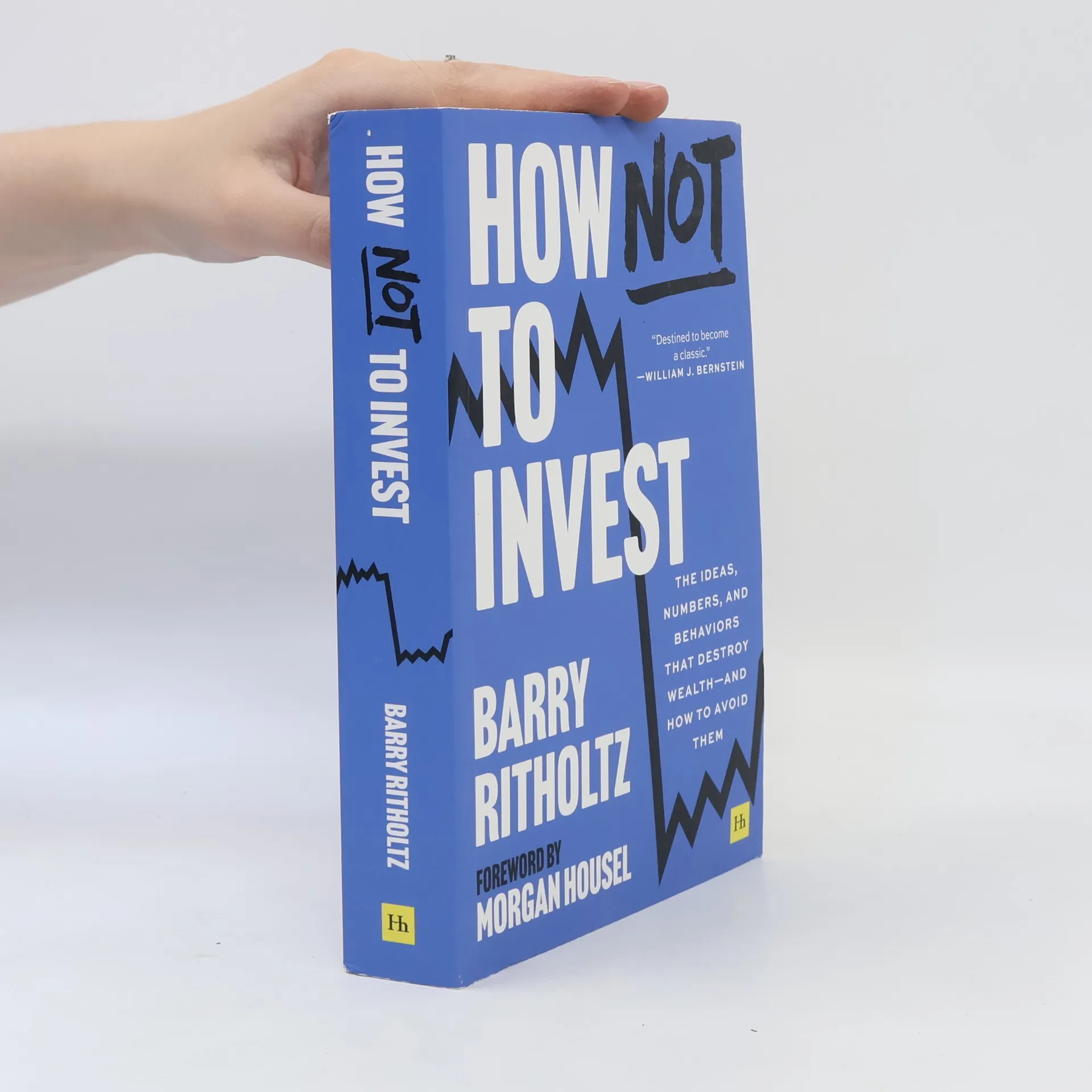
    • How Not to Invest

      The Ideas, Numbers, and Behaviors That Destroy Wealth—And How to Avoid Them

      • 496 páginas
      • 18 horas de lectura

      This book was designed to reduce mistakes. Your mistakes with money. Tiny errors, epic fails and everything in between. You can do thousands of things right, but make just a few of the errors we discuss, and you destroy much of your portfolio. If you could learn how to avoid the unforced errors investors make all the time, you would make your life so much richer and less stressful. The counterintuitive truth is avoiding errors is much more important than scoring wins. How Not To Invest shows you a few simple tools and models that will help you avoid the most common mistakes people make with their money. Learn these, and you are ahead of 98% of your peers. Make fewer errors, end up with more money. How Not To Invest lays out the most common errors investors make. Barry Ritholtz reveals his favorite mistakes, including the lessons we can learn from some of the wealthiest and most error-prone investors. We all make mistakes. The goal with this book is to help you make fewer of them, and to have the mistakes you do make be less expensive.

      How Not to Invest
    • Umiejętne obchodzenie się z pieniędzmi wcale nie zależy wyłącznie od tego, co wiesz. Ważniejsze jest to, jak się zachowujesz. A zachowanie jest czymś, czego trudno nauczyć - nawet bardzo bystre osoby. Większość ludzi myśli, że pieniądze - inwestowanie, finanse osobiste i decyzje biznesowe - to przede wszystkim matematyka. Wystarczy mieć odpowiednie dane i wzory, aby się dowiedzieć, co dokładnie należy robić. Jednak w prawdziwym życiu ludzie nie podejmują decyzji finansowych na podstawie arkuszy kalkulacyjnych. Podejmują je przy stole podczas kolacji albo na firmowym zebraniu, pod wpływem mieszanki takich czynników jak ich osobista historia, unikalny światopogląd, ego, duma, marketing i niezrozumiałe motywacje. W Psychologii pieniędzy Morgan Housel - wielokrotnie nagradzany autor - przedstawia 19 krótkich historii, w których opisuje różne dziwne sposoby myślenia o pieniądzach, a także uczy, jak lepiej zrozumieć jeden z najważniejszych tematów w naszym życiu.

      Psychologia pieniędzy. Ponadczasowe lekcje o bogactwie, chciwości i szczęściu
      4,7
    • Umět zacházet s penězi není nutně otázka toho, co všechno víte. Důležité je, jak se chováte. Jenže vštípit lidem – dokonce i těm opravdu chytrým – správné vzorce chování není snadné. K penězům, investování, osobním financím a podnikatelskému rozhodování se obvykle přistupuje, jako by to byly exaktní disciplíny, kde nám data a vzorce přesně řeknou, co dělat. Ve skutečném světě se ale lidé nerozhodují nad tabulkou v Excelu, nýbrž u večeře nebo na firemní poradě, kde se jejich dosavadní životní zkušenosti a jedinečný pohled na svět splétají s egem, ješitností, marketingem a pokřivenými podněty. V knize Psychologie peněz nabízí uznávaný autor Morgan Housel dvacet krátkých pojednání o tom, jak lidé uvažují o penězích, a učí nás, jak se v tomto veledůležitém tématu lépe vyznat.

      Psychologie peněz. Nadčasové poznatky o bohatství, hamižnosti a štěstí
      4,4
    • La psicologia dei soldi

      Lezioni senza tempo sulla ricchezza, l'avidità e la felicità

      • 250 páginas
      • 9 horas de lectura
      La psicologia dei soldi
      4,1