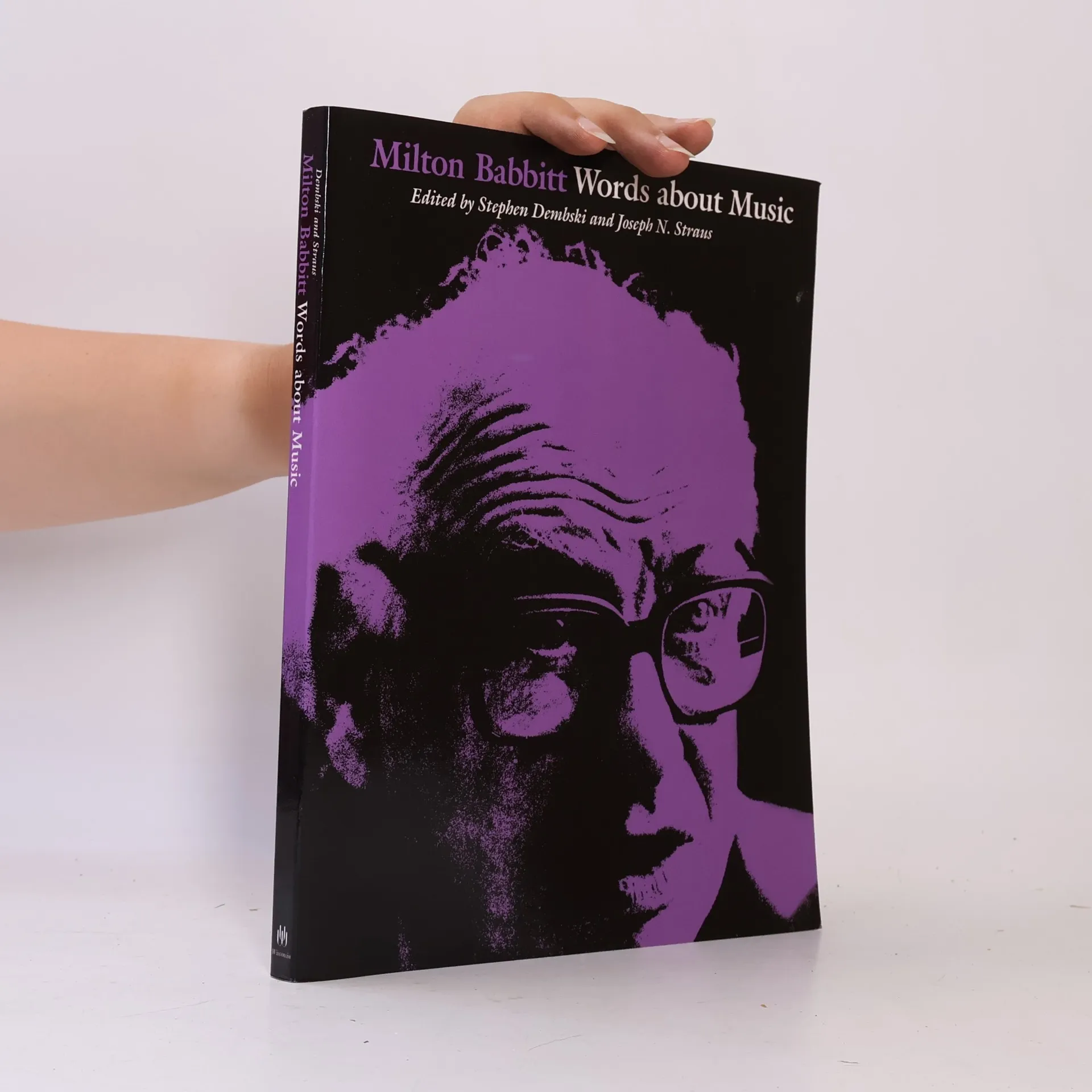
Pulitzer Prize-winning composer Milton Babbitt is regarded as a leading figure in post-World War II American music, known not only for his powerful compositions but also for his engaging teaching and lecturing style. In 1983, he delivered a series of lectures at the University of Wisconsin–Madison, summarizing key musical insights that have shaped his teaching over four decades. This collection presents a comprehensive overview of his thoughts, particularly focusing on the twelve-tone tradition with which he is closely associated. Babbitt explores various aspects of this tradition, addressing specific compositional challenges and evaluating his own role within it. He tackles controversial topics in twentieth-century music, including serialism, atonality, and the listener's responsibility, as well as the role of music in academia. His presentations were tailored for diverse audiences, making his ideas accessible and engaging. This volume captures the brilliance and spontaneity of his spoken language. At the time of publication, Babbitt was Professor Emeritus at Princeton University, having received numerous accolades throughout his career, including the Pulitzer Prize in 1982 and a MacArthur Fellowship in 1986. He was also a member of the National Institute of Arts and Letters and a Fellow of the American Academy of Arts and Sciences.
Joseph N. Straus Orden de los libros (cronológico)